At the weekend I did my winter oxalic acid anti-varroa trickling – about 2-3 weeks later than is often recommended. But I did it, which I’m pleased with.
Having two children under 5 (and Holly’s birthday just before Christmas!) has made for a very hectic December. On top of that Tommy got ill just after Christmas and was waking up hourly crying out in pain. It took a little while to get to the bottom of that, but he’s now received the right antibiotics and seems to be recovered.
When both children are a bit older, and there’s not a pandemic on, and no-one in the house is in agony and needing trips to A&E, I imagine my oxalic acid trickling will be done at the perfect time 😉
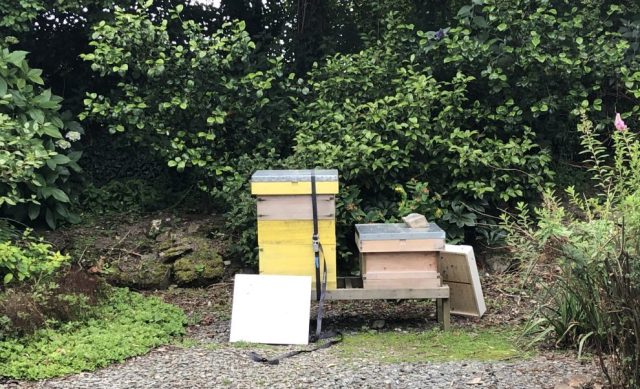
I saw someone recommend using a poly hive roof and super to overwinter, so I’ve given that a go with one of my hives this year. So far so good. I have chicken wire around the hives to try to deter woodpeckers, though thinking about it I probably should put some over the top as well as the sides. Fiddling about with chicken wire has to be one of my least favourite beekeeping tasks though!
I’ve been continuing to help out my local association now and again by updating the website and answering emails sent in by the public. This week someone sent in a photo of a falling apart hive they had seen while out walking, full of ivy and cracks. They were worried about the colony inside, as they had seen bees going in and out on a few occasions. One of our members is going to have a look. It reminded me that bees can be remarkably resilient even in a less than perfect home 🙂