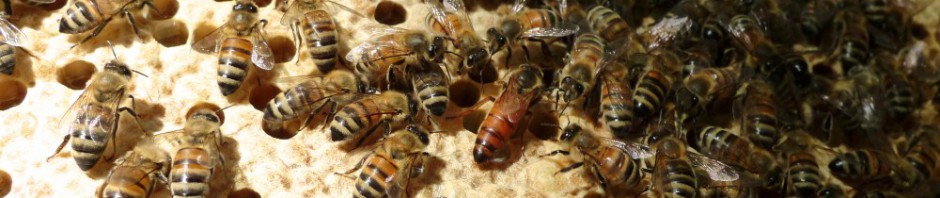
Hello, I’ve not been posting for a while because I’m now a lapsed beekeeper. In the end it felt simpler to stop. It was too hard finding a non rainy day to inspect in between work and the kids, especially in a county which this year had rain every day for over 50 days. And then when the sun does miraculously come out, getting in a hot, bulky beesuit doesn’t feel as tempting as heading to the beach!
I’m still interested in nature and the bees I see around me though. So I’ve decided to write about my little Cornish garden and my attempts to make it wildlife friendly instead. I think this was first suggested by my friend Emma and it planted a seed in me – thanks Em!
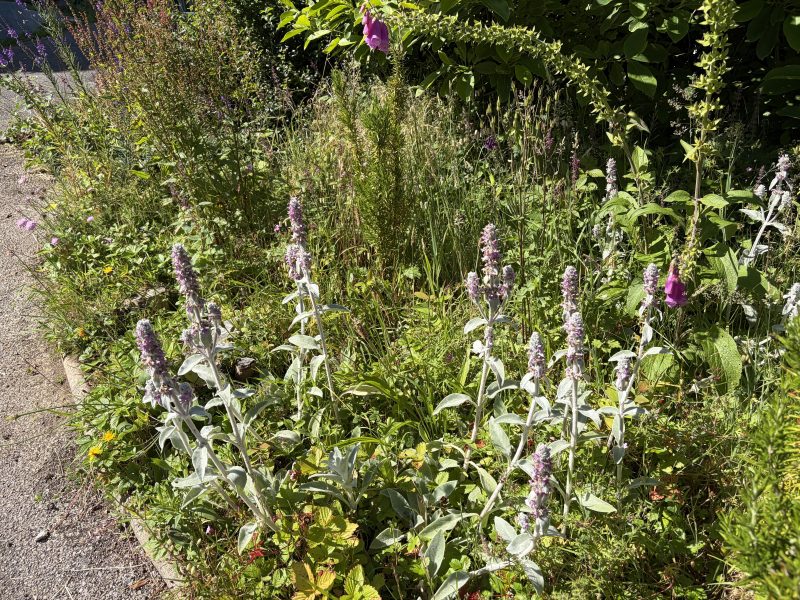
Let’s get into it. In the month of June, there is lots to see in the garden. There were already lots of mature bushes and trees here but some plants I added myself when I moved here around four years ago. One of my favourite and most successful new plants is Lambs ear, pictured below. Its soft, silvery-green leaves are used by wool carder bees for their nests. I used to regularly see wool carders in my old garden but haven’t spotted many here yet, will keep hoping.
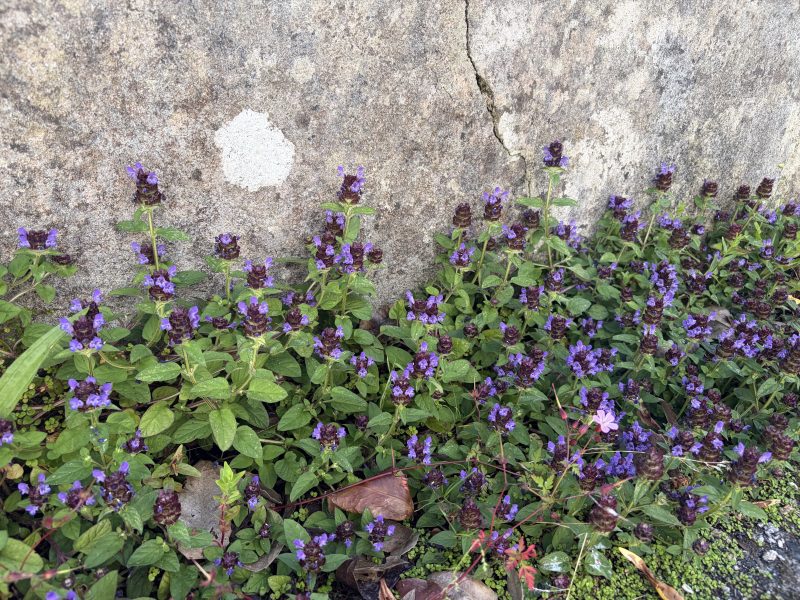
Here is Selfheal, a low-growing little thing with deep purple flowers that I see bumbles buzzing around. It started growing around my wall and I like it too much to get rid of it.
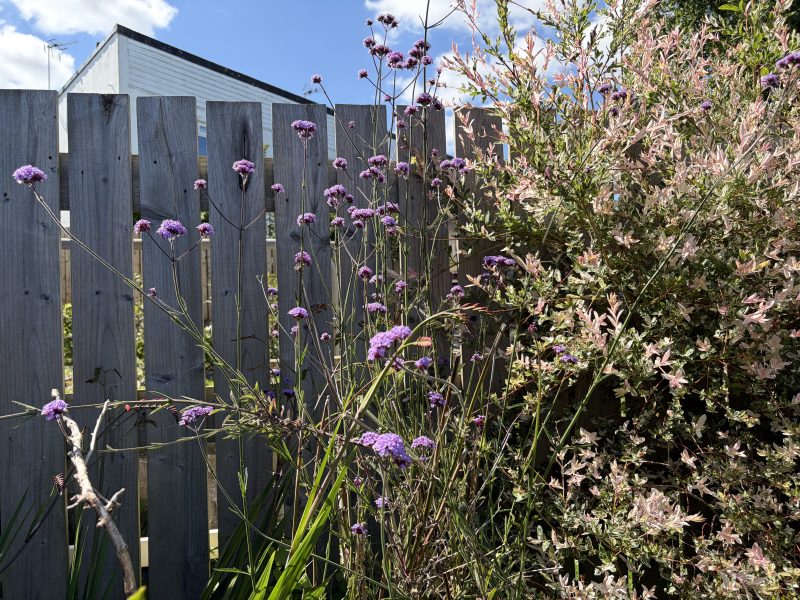
Verbena (the tall purple plant below) was added by me after an existing bush collapsed in a storm, leaving a gap. I was hoping to get butterflies coming for this but haven’t had many. After getting Painted Lady butterflies from a kit, it’s brought home just how delicate and demanding the butterfly life cycle is. They need the right plants for their caterpillars, the caterpillars somehow have to escape being caught by birds, they need somewhere undisturbed to grow in their chrysalis for a few weeks, then they need suitable flowers for their butterfly stage!
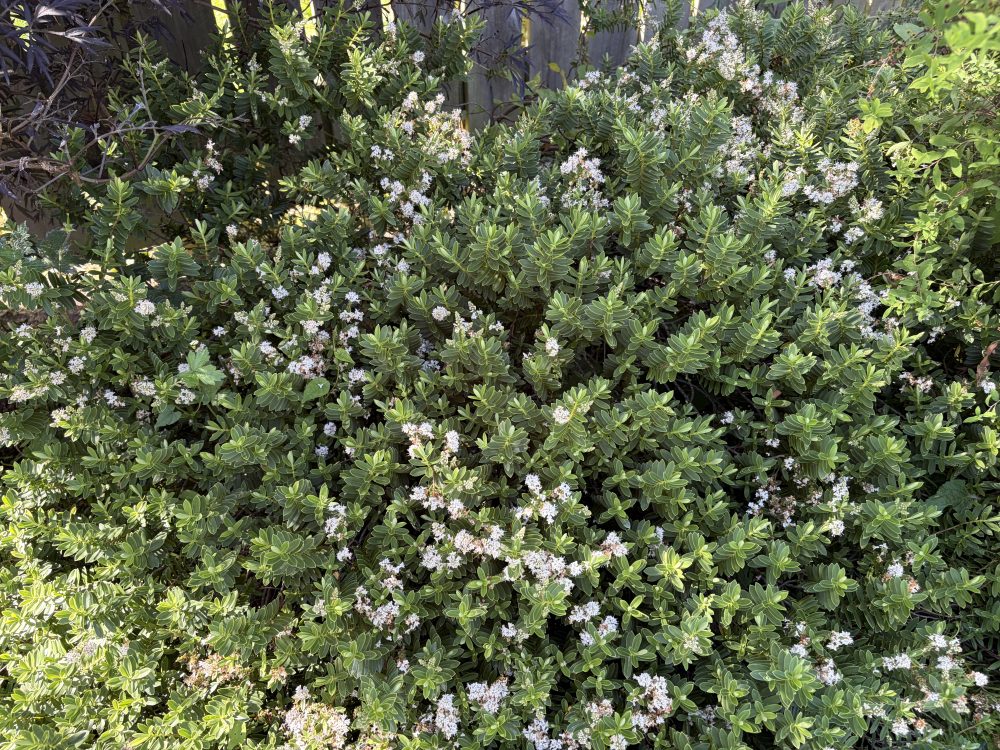
Below is Hebe. Two of these light pink hebe bushes were already here when I arrived and I love them. Really popular with visting bumble bees.
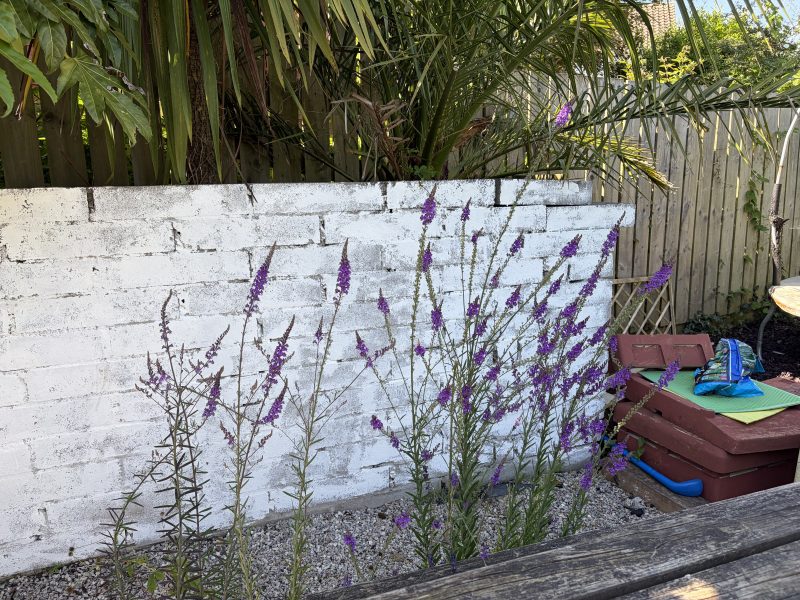
Purple toadflax below, a wildflower that sprung up on its own. I love its deep purple. It never takes long for a bumble bee to show up to this patch.
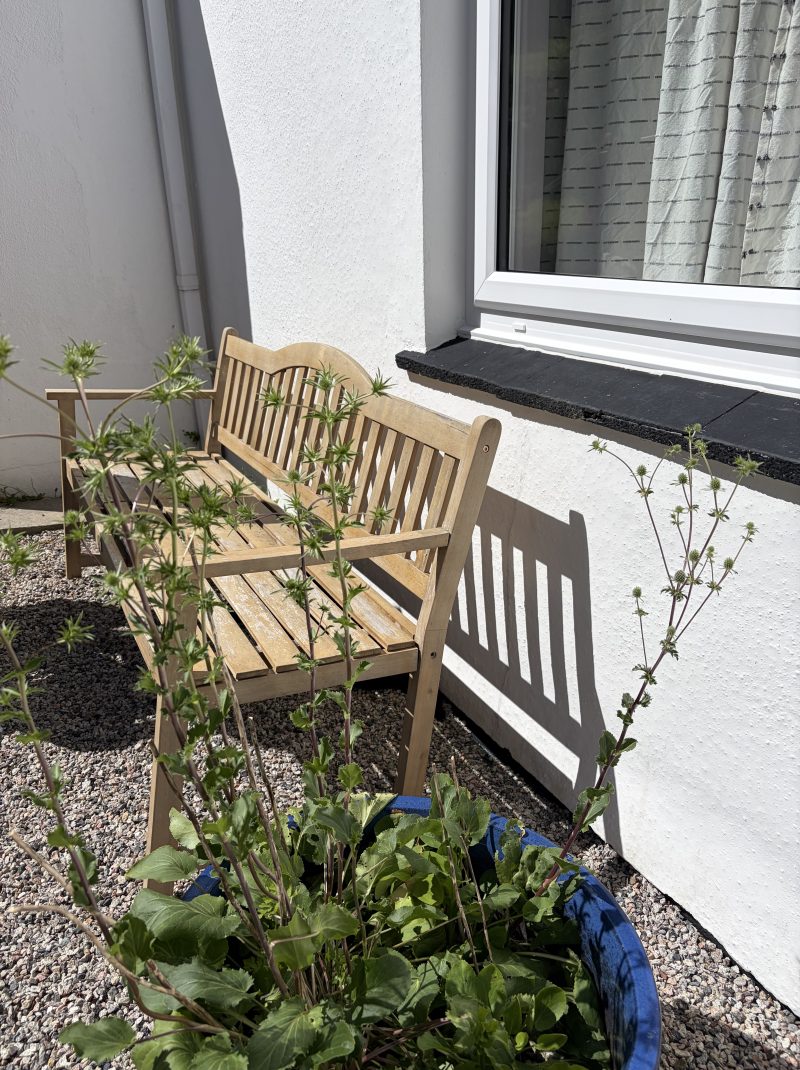
And below Erynigum planum, a close relative of sea holly which I planted in a big pot. I thought this only flowered every two years, but to my joy it’s started making flowers again this year! Once the purple thistle like flowers emerge they will be absolutely covered in bees. I lthe to sit on the bench and watch them, this part of the garden faces south and is a total sun trap. Well that’s it for now, on another post soon will try to do an overview of the garden and what’s in it. It’s not huge but still I’m finding there is so much you can do to help wildlife while still enjoying the garden yourself 🙂


I’m in a new garden now with a lot less flowers, and so a lot less pollinators. I will be planting, of course, but trying to keep the upkeep minimal. Looks like we will have similar aims? Amelia
LikeLike
Thanks Amelia – your blog has always been a big inspiration to me 🙂 Hope you can find some hardy flowers that need little looking after and draw more pollinators in 🙂
LikeLiked by 1 person
Welcome back Emily!
It’s so nice to see and read your articles again. I too am taking a break from beekeeping after a winter loss.
It feels fine as I have a good stockpile of honey and all my hives are clean and baited for some lucky swarm to move into.
Here on the west coast of Canada our English Lavender is in full bloom and they are covered in several varieties of bees. So nice to see.
All the best and enjoy your summer with your family. Looks like it’s already getting pretty hot.
With gratitude and kindness,
Greg
Sent from my iPhone
LikeLike
Thanks so much Greg and sorry to hear about your bees, it’s a tricky hobby for sure. You’ve done well to have a stockpile of honey. Love the smell of Lavender 🙂
LikeLike
Good to hear from you and nice update.
Here, I do my part by having a number of hummingbird feeders just for bees (it’s easier to provide for them than to fight them).
While we have a few potted plants, I don’t have the right setup for perennials. However, we are planning to add a raised bed strictly for flowers I know bees will like (based on what we saw while we lived in Colorado).
LikeLike
Thanks, I’ve enjoyed seeing your hummingbird feeders over the years 🙂 Looking forward to the new flower bed too.
LikeLiked by 1 person
Good to hear from you, Emily and to read about your garden. I wanted some lambs ears in our Devon garden, I planted some but it was overwhelmed by comfrey and died. On the positive side the comfrey is very good for bees. I havent seen any wool carders in local public gardens this year, even though there are clumps of lambs ears, I guess things just come and go.
LikeLike
Thanks Philip. By luck I saw the first carder bee today! I believe it’s a male defending his territory, he even tried to see me off. Maybe you will start seeing some soon too.
LikeLiked by 1 person
I shall keep looking but I am unsure what the effect of this heat will be.
LikeLike
The garden looks lovely.
I really like Hebes, but when we plant them here the deer graze them down to nothing and they die.
LikeLike
Hello, Emily. I like it that you give purple toad flax a place of prominence. It really is such a useful pollinator plant.
LikeLike