All about the hunny

Long-time readers may remember my post back in 2011, ‘Bringing home the hunny‘. This was the last time we had a significant honey harvest. Back then we found our honey wouldn’t spin out in Emma’s fancy electric centrifugal extractor. By this summer the memory of that had faded, so as we prepared to extract the honey in Emma’s dad’s kitchen we were optimistic that this year would be easier.

First, we decapped the honey with a decapping fork. Once the wax cappings are removed the honey can be spun out in the extractor. Steven Benbow has a nice description of an extractor as “a sort of giant salad spinner for honeycombs” in his book The Urban Beekeeper. Those white buckets we’re using belong to Emma’s dad, who is a butcher and runs his own wholesale company (now semi-retired and only working six days a week).

Wax uncapping

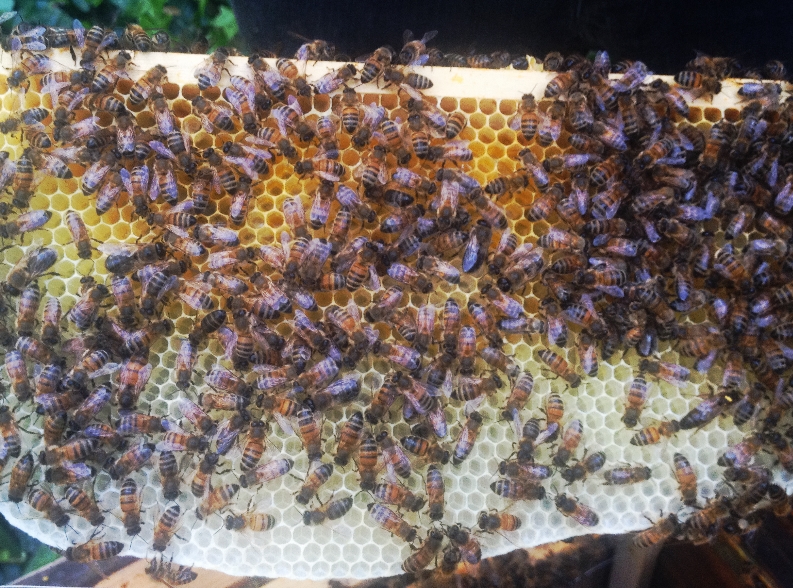
The darker honey in the foreground comes from my allotment hive in Northfields, west Ealing. The lighter honey on the right comes from Myrtle’s hive a few miles away in Perivale. Emma preferred Myrtle’s honey as she found it more delicate and floral, while I preferred the darker allotment honey as I felt it had more oomph to it.

Honey bucket

Decapped allotment honey – dark and rich. Time to extract.

Extractor

So we put the first three decapped frames in the electric extractor, and left it to spin – and spin, and spin. Every few minutes we checked hopefully to see how much was coming out. But only a trickle gathered at the bottom. Eventually, after about twenty minutes of churning, smoke began coming from the engine. At that point we admitted defeat. Our bees have decided that if we’re going to take their honey, we’re going to have to work for it!

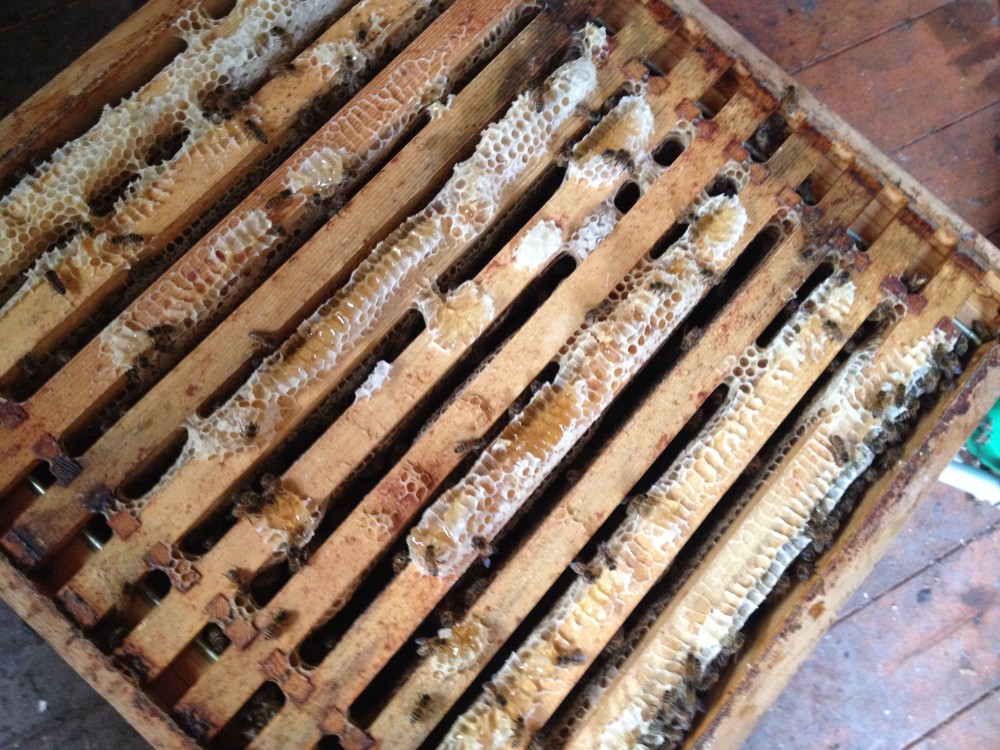
Time for Plan B(ee). We cut the honey away from the foundation and mashed it through colanders. This removed most of the wax, but it will need to be more finely filtered using muslin.
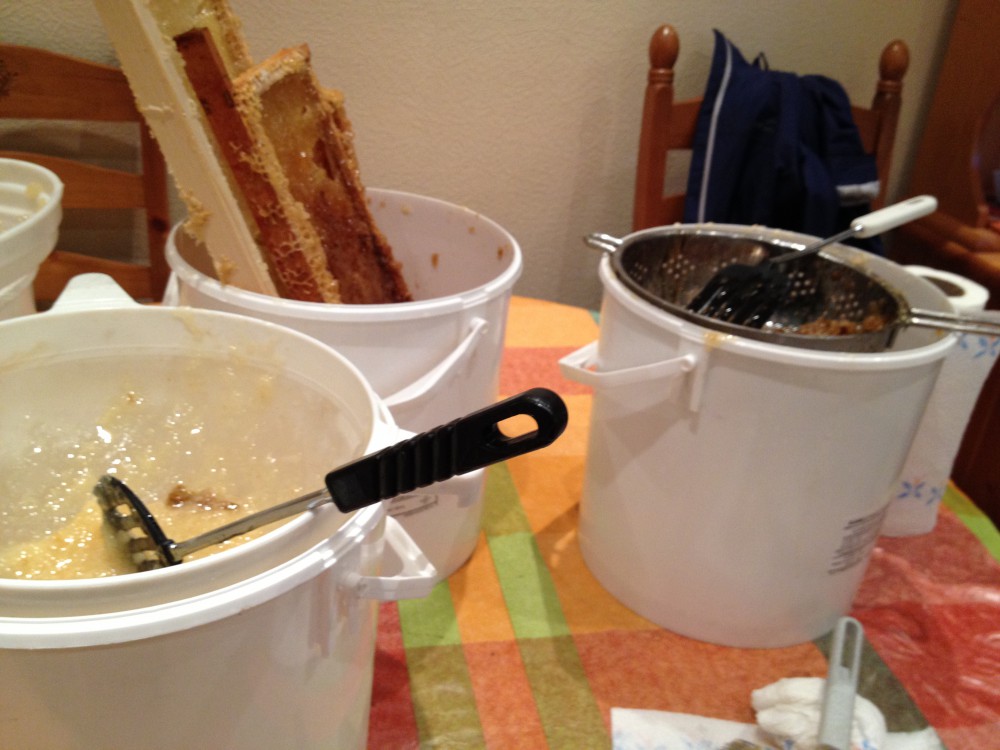
Honey sieving

It’s a slow, time-consuming process. Emma is completing it at her flat – thanks Emma!

Honey buckets

Sadly, it means we have lost the valuable wax honeycomb cells the bees worked hard to produce. If we could have extracted the honey by spinning it out in the extractor, the comb would have remained intact and would have given our bees a head start next year.

So why is our honey so thick and awkward?

Well, what is honey? Most of us know it’s concentrated nectar, reduced in water content by the bees to around 18% water, at which point they cap the honey cells with wax and it’s ready to be extracted. Once nectar has been evaporated down to 18% water, what’s left is mainly sugar in the form of fructose and glucose. But the proportions of sugar types can vary enormously, so that some honeys will contain more fructose than glucose and vice-versa. On average honey will contain 38-40% fructose, 31-35% glucose, 1-3% sucrose and 17-19% water, along with about 2% minerals, pollen, protein and amino acids (The Honey Bee Around & About by Celia F Davis, Bee Craft Ltd 2009).

The type of sugars contained in honey are one of the factors affecting its viscosity – its thickness. Ted Hooper in his classic Guide to Bees and Honey (2010) explains the varying viscosity of honey:

“Viscosity is the name given to the property of a fluid which causes it to flow slowly, or which resists an object falling through it. … The viscosity of honey is mainly controlled by its gravity, and the lower the water content… the greater will be the viscosity.”

He goes on to say:

“Viscosity is also increased by the amount of colloid material in the honey. The colloids, which are probably small pieces of solid substances and large molecules and include proteins [pollen?], have a similar electric charge and so repel each other. This repulsion again offers a resistance to movement and increases the viscosity, higher in dark than light honey. The extreme example of this is heather honey which has moved beyond a viscous fluid to become a gel.”

He also mentions that honeys with a greater than average proportion of glucose to fructose will granulate more quickly, as glucose is less soluble in water than fructose and crystallises more quickly – oilseed rape honey is an example of this. High viscosity honey also slows down the rate of crystallisation, as molecules of sugar migrate through the honey more slowly. I would say our honey has a high fructose to glucose ratio, as it shows no signs of granulating yet. The 2011 honey we got never did crystallise.

About heather honey, Ted says “Extracting is a problem because the honey is a jelly and will not spin out of combs in the normal way. The jelly is thixotropic, and thus if it is stirred it becomes a fluid and can be extract normally. A form of stirring can be done in the comb using an implement which looks like a scrubbing brush set with fine steel needles for bristles.”

If we had such an implement, perhaps that would have helped – but it sounds very messy! We would love to get our honey tested to find out where the bees have been. Although it’s thick like heather honey, it seems unlikely that the bees have found large quantities of heather in west London. Elder (and younger!) beekeepers, have you ever had such problems extracting?

EDIT: Emma has now written a post on how she’s been getting our stubborn honey out. She’s been hard at work stirring each cell individually with a key… How to extract honey too thick to spin out of a perfectly good extractor.

Wildflowers, Walpole Park

Wildflowers, Walpole Park

Posted in Honey, Uncategorized | 42 Comments

Starting a new year with the bees

It is time to start a new bee year. The last few months have been intense, involving weekly inspections and plenty of queen cell discovery, all leading up to the great honey harvest. Beekeepers at the apiary are asking “How much did you get?” – the most I’ve heard anyone say is an incredible five supers from one hive!

Now our focus must change to getting our hives ready for winter. I have a great determination to lose no colonies over the bitter months – ambitious I know, but I’ve not lost any bees in seven years and will fight as hard as I can to keep it that way. Apiguard, oxalic acid, dummy boards, insulation, fondant – whatever it takes.

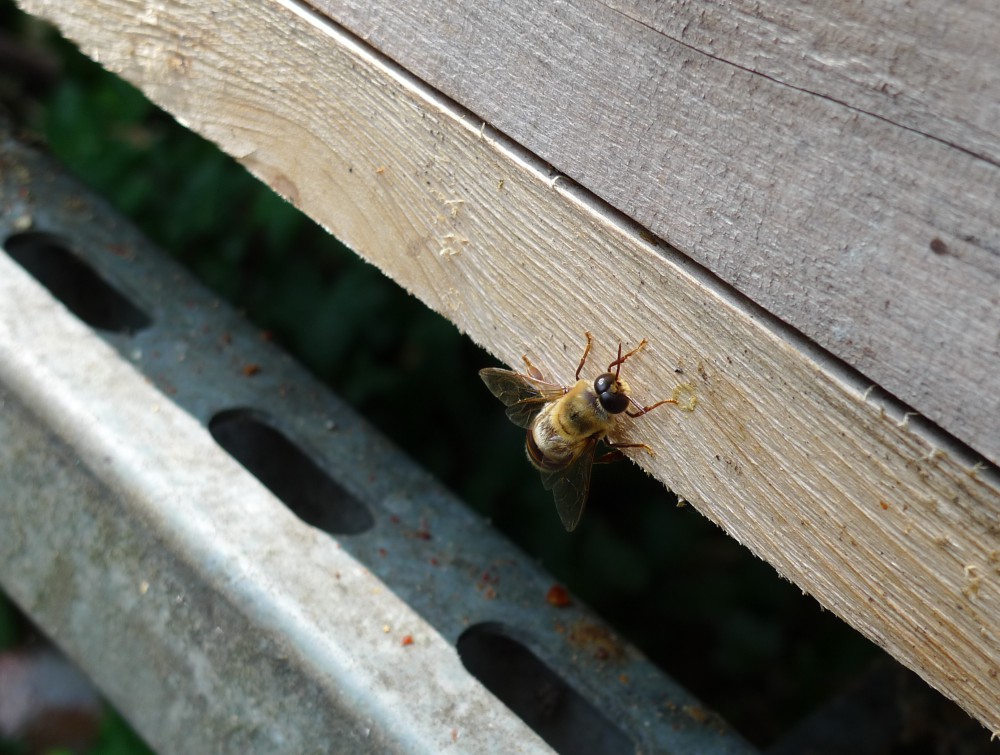
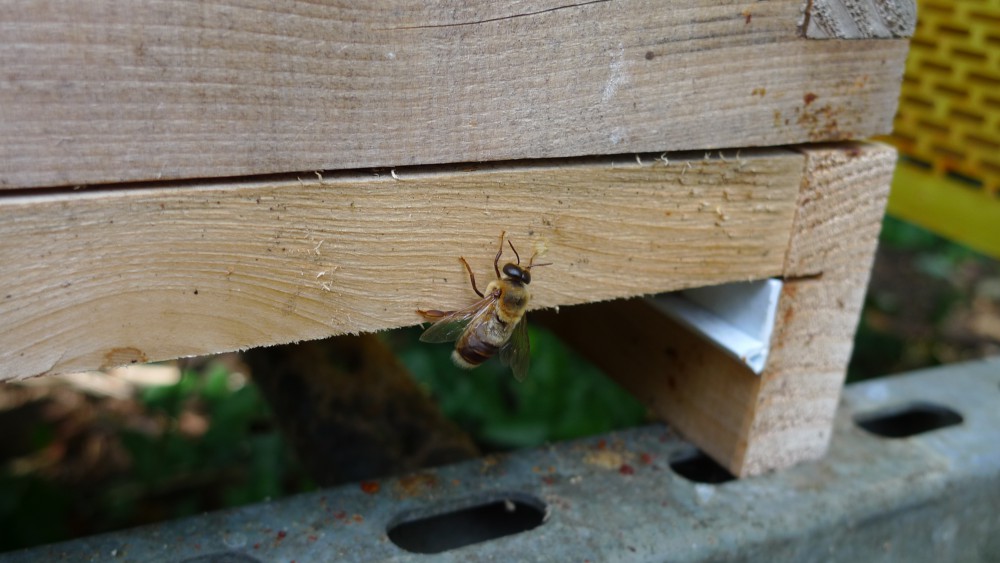
Entrance with drone

Entrance reducers help the bees defend the entrance now that wasps are hanging around. The wasps look for any little gaps in the hive where they can get in and steal honey. They are nature’s cleaners too, finishing off any dying bees lying on the ground.

Wasp on Chamomile's hive

There are few drones left now. John Chapple was going around with a bottle – he collects them to sell to a Chinese restaurant. The restaurant wants 500 drones a week, but John is struggling to find that many at this time of the year. After visiting all the hive entrances, he told us he’d collected 109.

Young drone

Here’s one John missed. He’s light and fluffy looking, making me think he may be a young drone. All his magnificent muscles are probably for nothing, as there will be few virgins flying now.

Young drone 2

I tried something new this week and inspected all four hives without any smoke at all. I find keeping the smoker lit one of the most frustrating elements of beekeeping. I also worry about the effect of the smoke on the bees – after all, it makes my eyes sting, so how does it feel to tiny compound eyes?

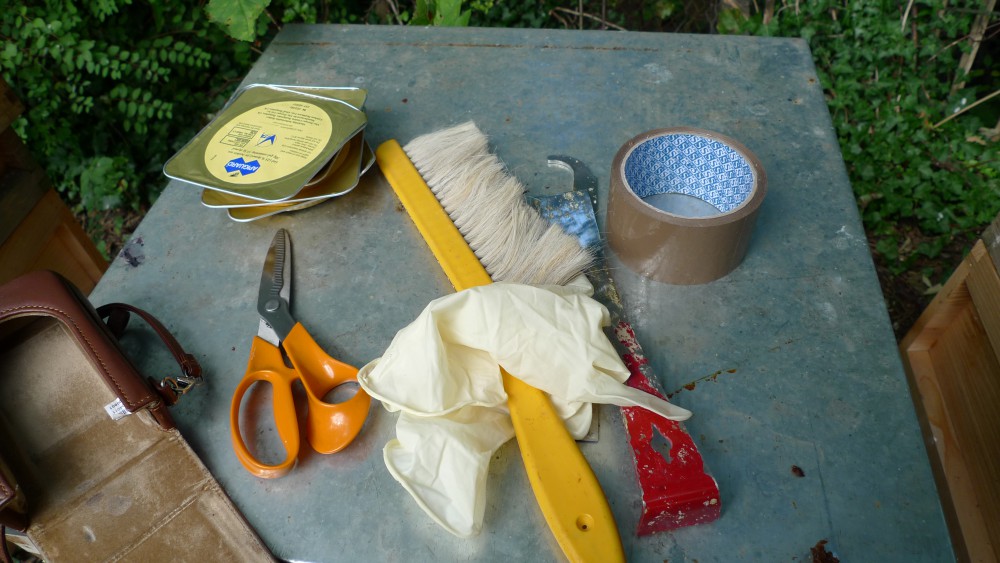
Autumn equipment

The afternoon’s equipment.

Queen Pepper

Queen Pepper

The bees were absolutely fine without smoke. I was wearing thin latex gloves, so they could have stung me if they wanted to. There was a hairy moment when one started crawling up under my sleeve, but I got her out in time. Rather than smoking before putting the boxes back together I used a brush to clear the bees out of the way.

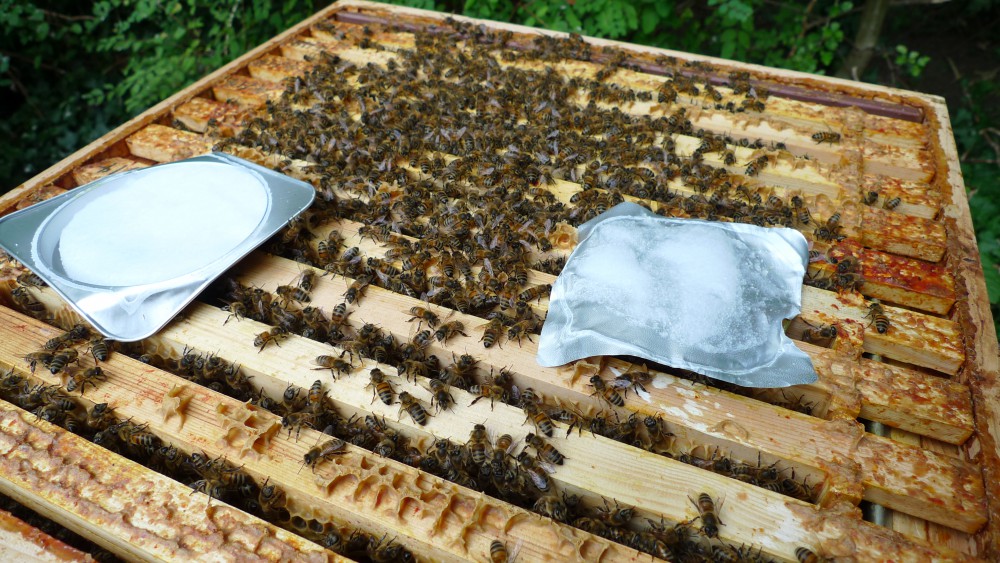
Apiguard

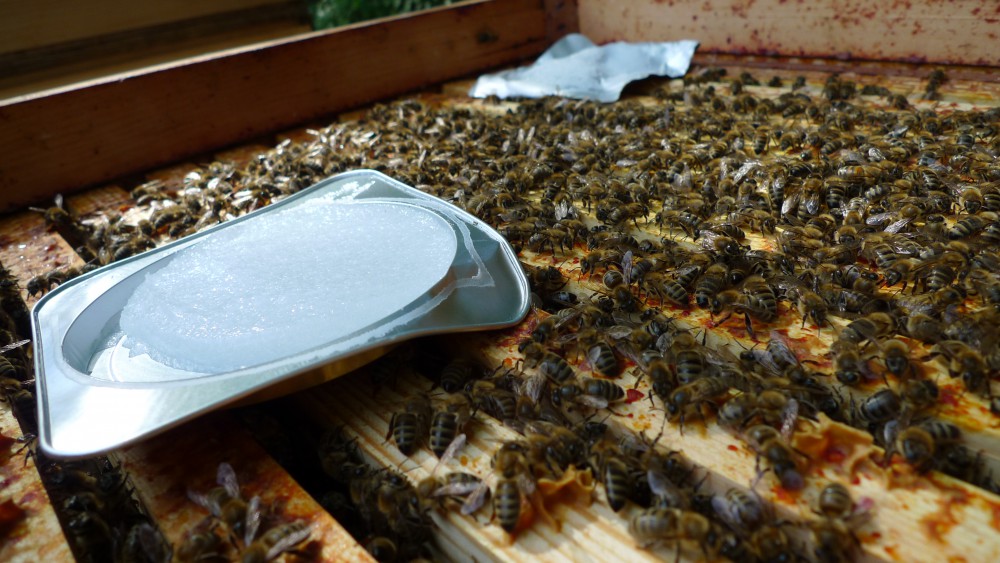
Apiguard time for the bees. I taped up the varroa boards under the floors so that the vapour circulates round the hives.

Apiguard

“What is Apiguard and how does it work?” – you may or may not be thinking. For anyone who doesn’t know, it’s a natural thymol (derived from thyme) based treatment that kills varroa mites. The bees remove the gel from the tray to clean the hive and remove the strong thymol smell. The Apiguard gel sticks to their body hairs and becomes distributed around the hive, killing an average of 93% of the mites under normal conditions.

Apiguard’s manufacturers, Vita, explain in their FAQs section the way that Apigard works on the mites: “As a protein denaturant it disrupts cell membranes and affects all cellular processes. It is a very general mode of action rather than being highly specific. It should be more difficult for the varroa mite to change all of its body functions to become resistant to thymol” (compared to Pryrethroid varroa treatments).

For Apiguard to be most effective, the external temperature should be above 15°C (60°F). At the moment the forecast is just above that for the next week, hovering between 17-19°C. In an ideal world we would have begun treatment earlier in August, but in an ideal world the bees would be in my massive back garden within view of my deckchair, pizza oven and mini-bar, rather than two bus rides away.

Dead bee with pollen

This little one broke my heart. I found her in one of the roofs – she seems to have got lost up there and not found her way back down. She had worked so hard collecting her huge bags of pollen yet never managed to unload them.

Brian inspecting his top-bar hive

Brian inspecting his top-bar hive

More top-bar action – John Chapple felt the bees at Brian’s entrance looked listless and that there wasn’t as much activity as he’d have expected for a sunny day. Brian went looking for brood but sadly two of his combs broke off while inspecting, so he called it a day before finding any.

Brian, John, Tom

Tom has seen some ivy out in flower along the canals already, so the seasons really are ahead this year. How are your autumn/winter preparations going?

Posted in Uncategorized | 26 Comments

We eat cookies and meet a new monarch

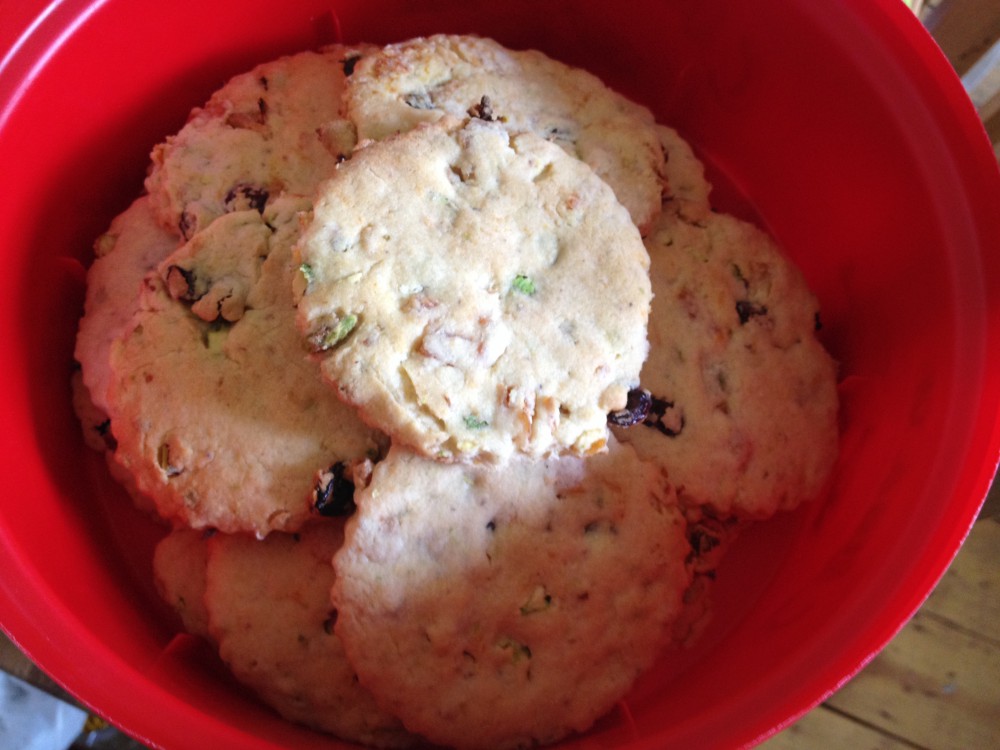
Apricot, pistachio & raisin cookies

Apricot, pistachio & raisin cookies

Yesterday I made these cookies before leaving for beekeeping. They’re apricot & pistachio cookies from a book called ‘TrEATs: Delicious food gifts to make at home‘ by April Carter. I bought the book from April after taking a cupcake decorating course she taught. I was pleased with these and have frozen some to take into work on Monday. Clare brought down some gorgeous chocolate brownies to the apiary and Alan had tea ready at 2pm on the dot, what a treat.

Rick inspecting

Rick inspecting

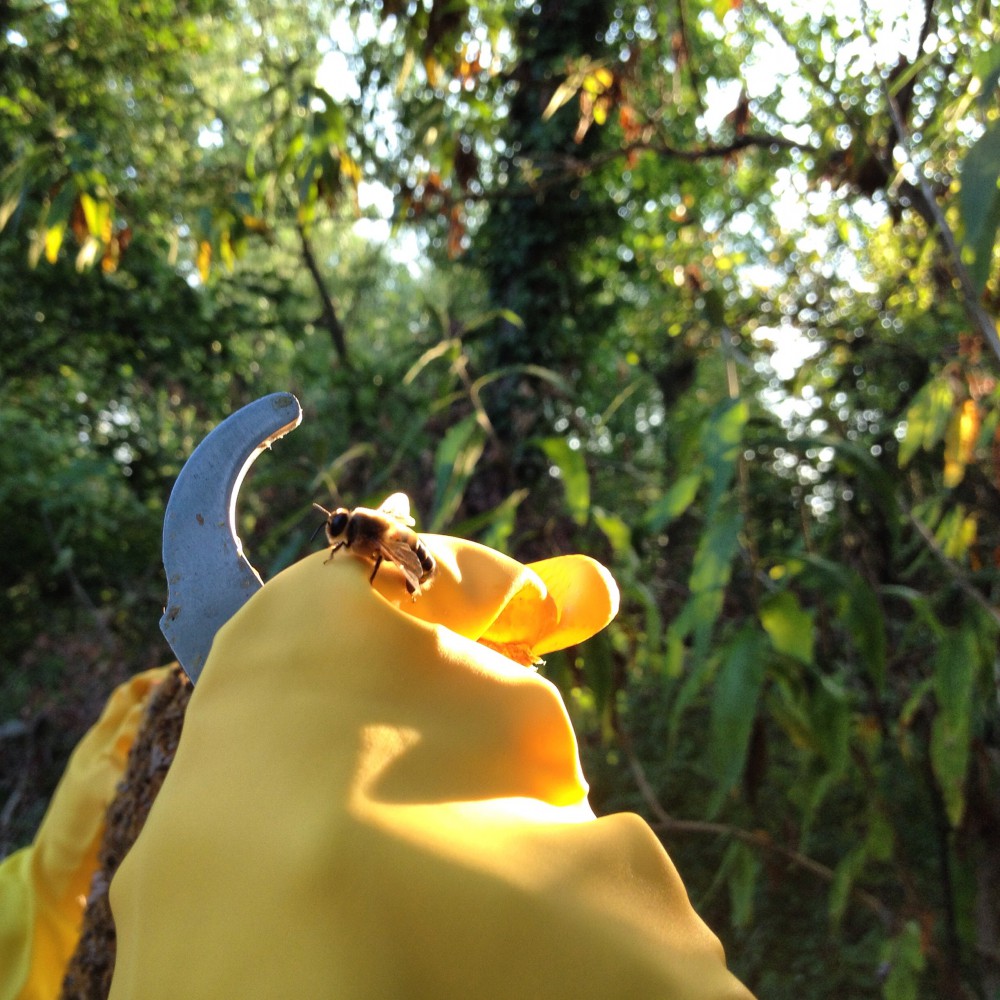
We had a new visitor to see the hives – Rick works for the British Transport Police in one of their control rooms, sending police out to incidents as they occur. His job has obviously prepared him well for unexpected events as he was not worried when a bee stung him on the first frame he’d ever inspected. He had been bare handed, so Emma provided him with some nice yellow Marigolds and he was able to inspect Pepper’s bees without any further pain.

Poor Rick also had to contend with his borrowed bee suit – every time he leaned forward to replace a frame the fabric top of the veil fell over his eyes so he couldn’t see anything!

Rick inspecting

Rick inspecting

We approached Myrtle’s old colony preparing ourselves for the worst – no eggs, no queen. Joy of joys, in the middle I found a brand new queen, who we think must be Myrtle’s daughter – her line continues! She has really got the hang of laying too, with one egg per cell right at the bottom. The top of her abdomen is golden brown and the end black and pointy. I like dark queens so this pleased me. Emma has a name in mind for her Majesty, but she hasn’t revealed it yet.

Emma inspecting

Between us we spotted three of our four queens and saw eggs in all four hives – for once, all are queen-right ! The only downside was that I was able to show Rick what bees with deformed wing virus look like. Emma is going to put Apiguard in the colonies tomorrow – I can’t wait to count the mites that land on the monitoring board.

Bees at entrance

Pepper’s bees at their entrance. We have put the entrance reducers in now as the nectar flow has ended and there are plenty of hungry wasps about.

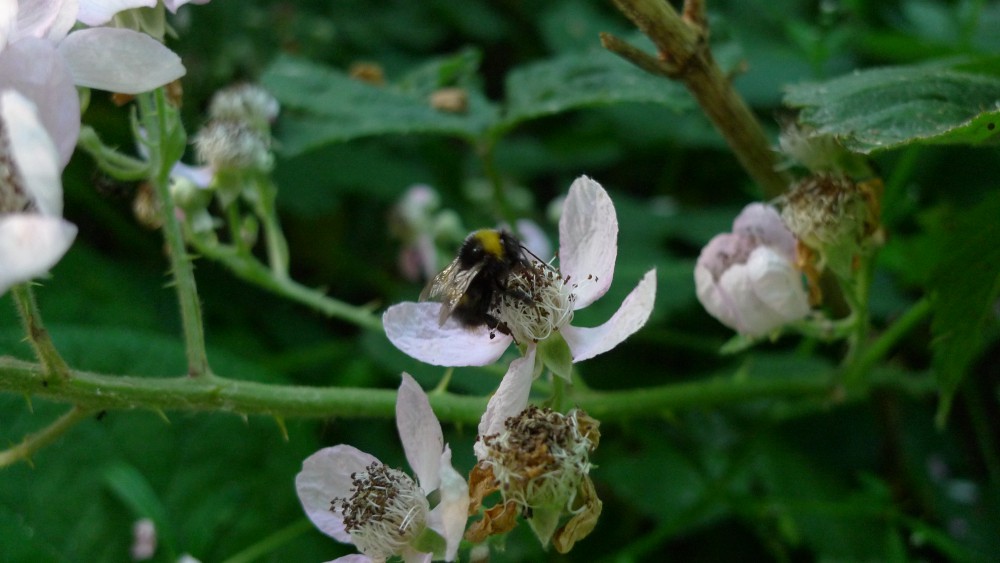
Bumblebee on bramble

Bumblebee on bramble

After we’d finished inspecting I went home to fetch my bike and pedalled over to check Queen Stella’s bees at my allotment. As I wanted to take honey off I didn’t bring my bulky smoker and inspected without any smoke. Not a single bee stung me or tried to either. No need to bother using a clearer board with the gentle allotment bees, I just brushed the bees off three frames and bagged them up.

Whilst inspecting the brood frames I spotted a dastardly mite making her way across the capped brood, probably looking for an uncapped cell to climb in and reproduce inside. I picked it up with my fingers and squished it with my hive tool. Much as I’m against killing insects in general, I felt no remorse for this act I’m afraid. On the contrary – I had a big grin of satisfaction on my face.

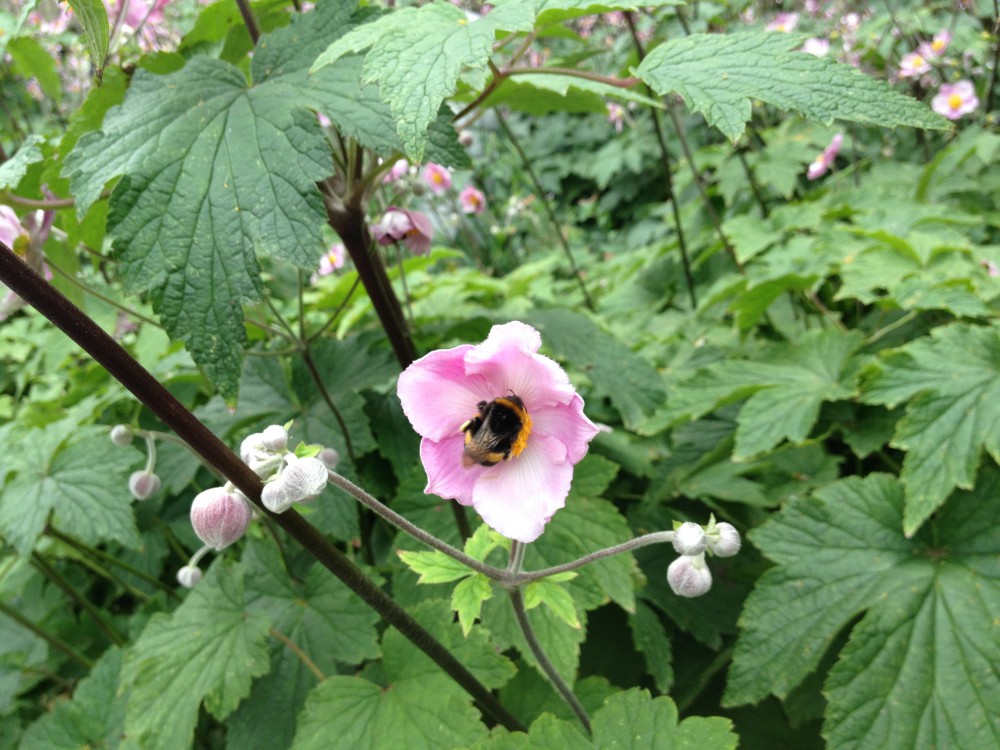
Bumblebee on Japanese anemone

Bumblebee on Japanese anemone

My friendly allotment neighbour Patrick was busy digging his veggies. I gave him a honey frame and in return he gave me some beetroot, leeks and cabbage from his plot. There’s something fun about being given vegetables that were in the soil a moment ago. Later today I’m taking my honey frames to Emma’s dad’s house and we’re going to extract ourselves some of the golden stuff.

Posted in Uncategorized | 15 Comments

The honey month

August is the end of the beekeeping year. If the beekeeper has been lucky, it culminates in the sticky process of extracting golden honey. For the last few days I have been eating honey spooned over raspberries, strawberries and peaches. Soon it will be apple season and I’ll drizzle it over warm stewed apples. I must also remember to eat it spread over toast, all warm and gooey.

This year has been good to us. On Saturday Jonesie, Emma and I were all busy clearing our bees down from the supers, ready to take the honey off. One of Jonesie’s colonies must have had an inkling what was going on, as they chased us around the apiary. Below you can see Jonesie hiding from them. A visitor made the mistake of entering without any suit on and quickly ran away yelping!

Jonesie hiding from his bees

Jonesie hiding from his bees

The hives have black tape around them to stop any wasps or bees getting in. We put a clearer board underneath the supers so that the bees could go down but not back up, and then collected the frames on Sunday. We have taken two supers and will soon take another, so I am hopeful that we will actually have surplus honey to sell this year, as well as giving it to friends and family and leaving enough for the bees.

Now that the honey has been spirited away ready for extraction, we can begin varroa treatment using Apiguard. While inspecting I noticed a few bees with deformed wings and also black shiny bodies caused by Chronic bee paralysis virus (CBPV), which is associated with varroa. It is so sad to see the bees with tattered, useless wings, so it will feel good to nuke some mites.

Emma inspecting

Emma inspecting

By the way the National Honey Show website has a good recorded lecture, ‘Ghosts in the Hive – Varroa’s life cycle inside a Honey Bee Colony‘, in which scientist Ricarda Kather talks about her research on the mites. One of the topics she talks about is how varroa mimics the smell of their host bee whilst riding on its back, so that the mites pass undetected by bees. Within the space of three hours a mite can adjust its odour to every single bee it clings to, from nurse bees to foragers (bees smell different as they get older). They can do this even when dead, so the process must happen automatically without any effort being required by the mite.

Bottoms up

Bottoms up

Above you can see our bees doing a yoga class, displaying excellent balance and posture as they do the downward dog position. They are also revealing their Nasonov glands at the tip of their abdomen, releasing a pheromone to attract fellow colony members back home. They tend to do this when hive parts are moved – here the crown board had been propped up next to the hive.

Here are a few photos of the summer.

Dandelions by water

Dandelions by water.

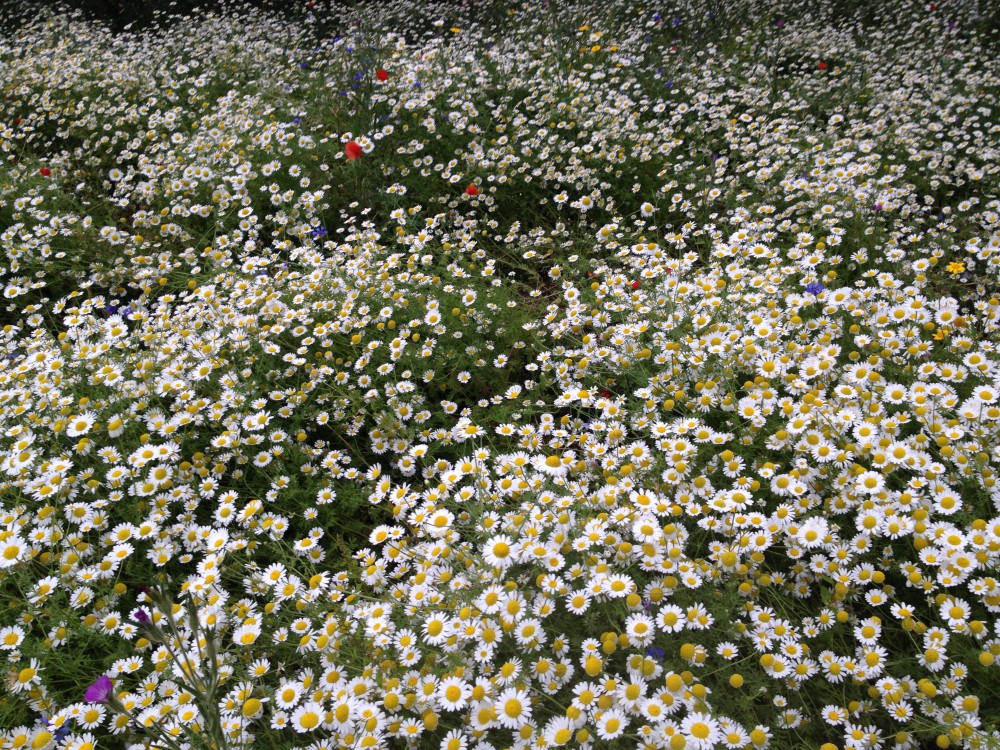
Wildflower meadow

Daisies planted in a wildflower style meadow, Walpole Park in Ealing

Clouds

Evening clouds over Elthorne Park

Tower of London poppies

And finally, this year Britain and other European countries are commemorating the hundred year anniversary of the start of the First World War, known at the time as the Great War. During my lunch break last week I walked down to the Tower of London Bloodswept Lands and Seas of Red art installation. The Tower of London website says:

“Created by ceramic artist Paul Cummins, with setting by stage designer Tom Piper, 888,246 ceramic poppies will progressively fill the Tower’s famous moat over the summer. Each poppy represents a British military fatality during the war.”

It is quite shocking to look down on the moat and realise that each of these thousands of poppies represents a person, someone who died in a place of misery due to the greed of others. The display has beauty in the form of the flowers but also a certain horror, as its flowing lines resemble a splattered river of blood. So much wasted life because of the selfish ambitions of a few. What have people learnt from this? A quick read of the news each morning suggests nothing much at all.

Posted in Honey | Tagged | 34 Comments

A wonderful day to be a beekeeper

I felt so lucky to be heading down to the apiary in glorious heat today. I know a lot of people don’t like this hot weather, and I’m sorry about that, but I have to admit I love it. We’ll have plenty of rain, wind, frost and storms ahead in the autumn and winter for you cold weather lovers I’m sure.

Brian cutting into his top bar hive

Brian cutting into his top bar hive

Last week I had a photo of Brian’s clever top-bar hive design in my post ‘Bees, honey, flowers, cake and a party‘. Today you can see him cutting into the hive like a cake. What he’s doing here is cutting down around the edges where the comb has been fixed to the hive walls, so he can lift the comb out and inspect it. The little cluster of bees you can see on top are gathered round the space where the bees go up into the super, which he’s lifted off before inspecting.

Brian inspecting

Brian inspecting

I love the shape of these combs, like bunting or flags. The bottom corner of the triangle wibbled as he lifted each one out. As top-bar hive combs don’t usually have a wooden bottom and sides, they tend to be more delicate than National hive combs. However people who are good at wood working can choose to provide them with a hollow frame tailored to the size of their top-bar hive, to make the comb sturdier.

Brian inspecting

Unfortunately there was no sign of eggs or uncapped brood in the colony. Just plenty of honey, pollen and some capped brood.

Brian blowing on the bees

Brian blowing on the bees

Here Brian is blowing on the bees to try and move them out of the way so he can check for eggs. He didn’t find any but he could give them eggs from another top-bar hive he has.

By the way all the time he was inspecting we had some live African style tribal music coming from the Mencap centre next door. It had a lot of rhythmic drumming that made me want to dance. Who knows what effect it had on the bees, I was concerned it might whip them up into a frenzy but bee business continued as usual.

Me in my suit

Me in my suit


This is a photo I took of myself in my bee suit before inspecting our four hives. Afterwards I was far too tired and sweaty to be taking any photos. I’m using surgical style gloves at the moment but they get uncomfortably sticky and clingy very quickly. It feels great to rip them off and inspect bare handed, except then my hands get covered with yellow propolis. Also the feeling of the bees on my bare hands is a little distracting.

Honeybee on Japanese anemone

Honeybee on Japanese anemone

All was well inside our new queen Pepper’s hive, with lots of eggs. They have drawn out a few of their super frames. I don’t expect to harvest anything from that hive, but am hopeful they might complete the super by late autumn with the ivy flow, giving them good winter stores. Chili’s hive is in a pretty similar situation.

Worryingly I spotted a poor bee with useless shrivelled slivers of wings in Chamomile’s colony, a sign of deformed wing virus (associated with varroa). I thought I also saw a mite on a drone’s back. And in Chili’s colony I saw workers chasing a black and shiny hairless worker – a symptom of chronic bee paralysis virus (CBPV), also associated with varroa. We shall be doing Apiguard treatment on all our colonies in August.

A drone in love with Emma

A drone in love with Emma – he stayed on her hands fanning himself on Tuesday evening while she inspected several frames.

Last week Emma wrote about our favourite colony, previously headed up by Queen Myrtle, in her post Pink queens and a swarm? Sadly it seems our most gentle queen is no more. As the colony had produced queen cells, I am desperately hoping one of her daughters is in there and will begin laying soon. There was no sign of eggs this week, so I tried putting a frame of eggs from Chamomile’s hive in there, as a test. If they make queen cells from it, that suggests they’re queen-less. If not, hopefully all is well and a daughter of Myrtle will mate and begin laying soon.

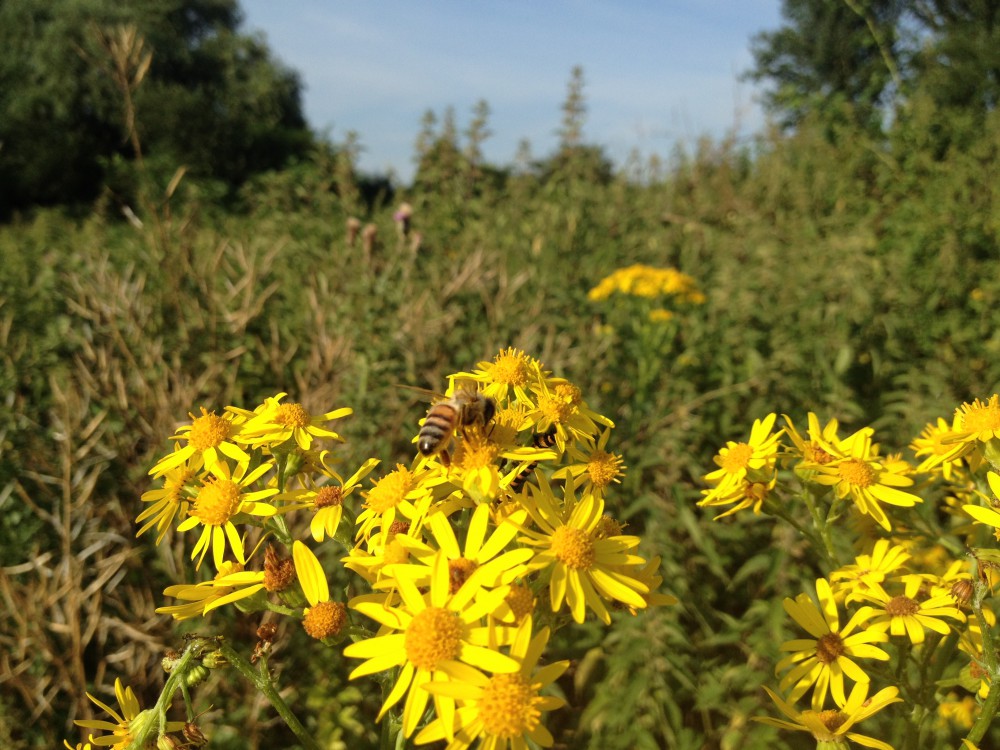
Honeybee on ragwort

Honeybee on ragwort

My reason for particularly liking Myrtle’s bees are that they are the direct descendants of a colony which was kindly given to me and another Emily by a Ealing beekeeper named Ann Fox six years ago. Since then the colony has made itself new queens most years, but they are all ancestors of that original colony and queen. They’re lovely bees – absolutely nothing phases them – and have been very productive this year too. So fingers crossed Myrtle’s genes live on.

Posted in Uncategorized | Tagged | 17 Comments

Bees, honey, flowers, cake and a party

In an unexpected turn of events, a rainy, miserable week was followed by a gorgeous sunny Saturday. So off to the apiary it was, where I met Brian checking out his super. He has placed a queen excluder and normal National super on top of his top-bar hive and the bees are now starting to go up there and draw out the foundation. Brian sees it as a way to get the best of both worlds – foundationless brood frames with easier-to-extract super frames.

Brian's hive

Once Emma arrived we inspected our hives. We found lots of this beautiful stuff…

Honey!!

And more perfectly capped HONEY. Our boxes are heavy. I can just about lift a super (which contains around 30 pounds of honey) on my own, but it is much easier with a hive partner to help. Trying to move the boxes around without squashing any of the 60,000 constantly moving bees inside is a task and a half too, but we try to keep casualties to an absolute minimum.

Capped honey

As one of the artificially swarmed colonies from May containing a new queen had gone queen-less, last week we combined it back with their mother Chamomile’s hive. So five hives have become four.

We combined using the usual newspaper method, placing newspaper with a few slits in above Chamomile’s brood box and then placing the queen-less brood box on top (we checked through several times to make sure there was no queen in there). I was more nervous about this than usual as there were a few cells with multiple eggs in, a sign of laying workers. Would these workers kill Chamomile?

The answer this week is nope. I found plenty of neat eggs up in the top brood box, one per cell, so Chamomile has been up there investigating. Down below we spotted Chamomile, a long golden queen, although perplexingly we also found a few queen cells. It’s late in the season to swarm and there were only a few cells, so we’re hoping this is a case of supersedure and are leaving the bees to get on with producing their new queens.

Beehive cake

Bee cake made by Penny Pedley – can you spot the queen?

After a hot couple of hours inspecting we went on to Andy’s 60th birthday party. The party had a bit of a bee theme to it, with this spectacular honey cake made by Andy’s wife Penny. The little bees were made of chocolate raisins with almond wings.

Andy Pedley and Scarlett blowing out his cake

Andy and his great-niece Scarlett blowing out his cake.

We all got a piece of cake, as well as plenty of other delicious food, beer and Pimms. Scarlett Johansson and Benedict Cumberbatch were also at the party.

Andy's birthday card

A few more photos from the week…

Cupcake decorating

Cupcakes from a evening cake decorating course I did at City Lit, near Covent Garden.

Radbourne Walk poppies

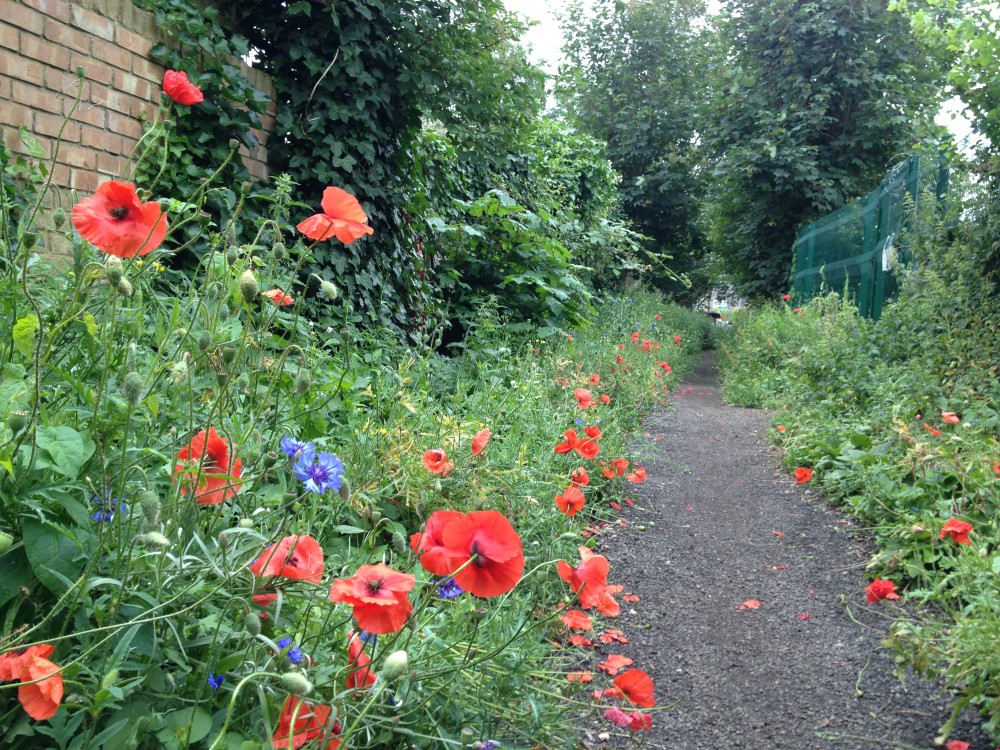
Poppies and cornflowers growing along the Radbourne Walk wildlife gardening project I helped out earlier with this year. Unfortunately Council staff turned up a few weeks ago (even though it had been agreed earlier in the year they wouldn’t) and strimmed down many of the newly planted flowers. So some of my taxes this year went on destroying the work I and many others sweated over. An allotment holder noticed and managed to stop them, but by that time most of the alleyway had been strimmed. The Council have again agreed not to do this next time.

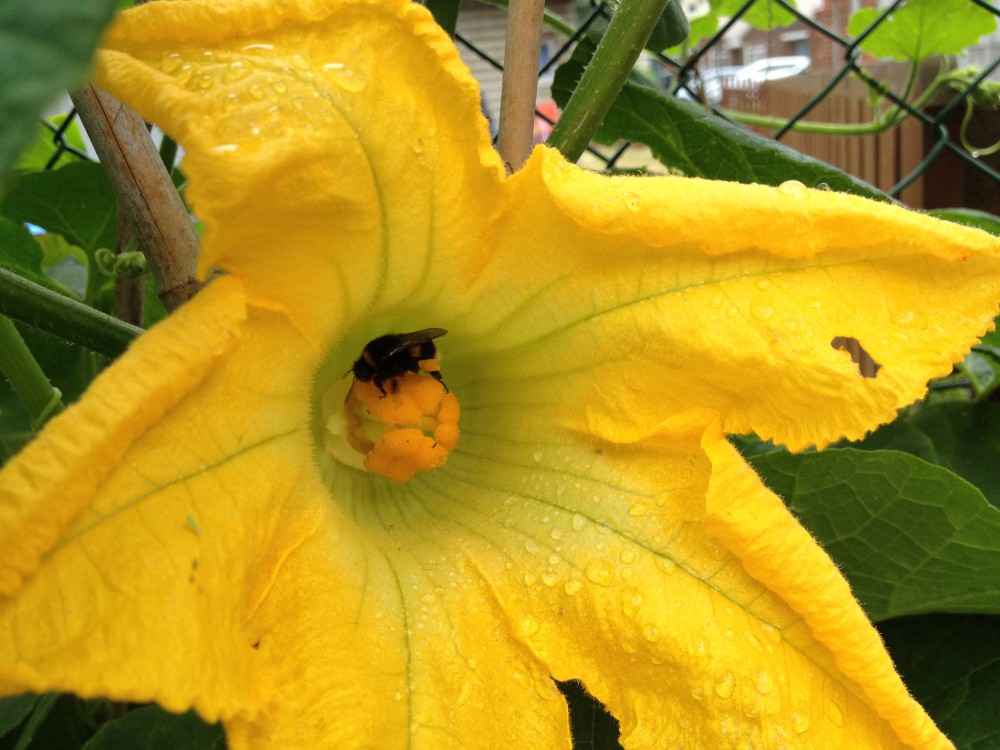
To end on a more positive note, here is a bumble bee enjoying a pumpkin flower.

Bumble in pumpkin flower

Posted in Uncategorized | Tagged | 28 Comments

Thoughts on keeping bees alone

I’m finding inspecting my allotment bees a new thing, quite different to the beekeeping I’ve done in the past. These are the first bees I’m inspecting alone on a regular basis.

I cycle to the allotment alone – this in itself is a new experience! Before Drew gave me my bike a year ago I hadn’t cycled in city streets since I was a teenager. And back then I’d cycled on pavements and in parks, not on the roads. Cycling gives me a peculiar feeling of freedom tinged with fear. It is a joyful thing to zoom along with my heavy beekeeping equipment balanced in a basket, but cars behind me in narrow streets bring an element of stress.

Cornflowers and daisies

Once at the allotment, I unlock the gate and wheel my bike down the grassy paths between the plots, past beautiful flowers and a huge variety of vegetables. It doesn’t take long to reach my plot, where I light my smoker alone on a bench under the apple tree. This week, I had a huge problem getting any of my matches to turn to flame. Maybe they had got soggy at some point. It was a relief when I heard that rushing noise and got my egg boxes to burn. Then the smoker went out – twice!

IMG_3612

Without any other humans around, it’s just me and the bees. I concentrate and lose myself in their hum. My main focus is on trying not to squash any as I move the combs out to inspect. I am afraid not of them but for them – they are so little, so delicate! A misplaced thumb can still them forever. It is they who should be terrified of me. Like cycling, for me beekeeping is freedom and joy with nagging twinges of worry. I hate the crunching noise of a squashed bee.

Bee in bindweed

Absorbed in slow, steady movements, looking out for eggs and potential queen cells, I have no time to think about anything else. Troubles are forgotten as I twist the frames round and watch the bees dancing on the comb. This is the gift the bees give me.

Moths

This year the allotment hive, headed up by the newly named Queen Stella, have been curiously well behaved. They have made no attempt to swarm – but neither have they made much honey. They are plodding along. The photo below is of a super belonging to a luckier beekeeper.

Honey super

I’m not sure whether beekeeping alone makes me a better beekeeper or not. I probably make less silly mistakes, because I’m not being distracted by trying to carry on a conversation or answer questions while I inspect. I lose my hive tool slightly less often.

On the other hand, if I always did beekeeping alone I could miss out on alternative ideas and ways of doing things that have not occurred to me. It is always good to learn from other beekeepers, to watch them and pick up on successful or indeed disastrous movements and techniques they use. And of course the bonus of having a hive partner is that you have someone to help lift heavy boxes and chat with over tea.

What do you think, do you prefer beekeeping alone or with a audience?

Posted in Urban beekeeping | 47 Comments

A tale of two queens

After a gloriously hot Friday, it was disappointing to be making my way to the apiary in rain on Saturday afternoon. Luckily the rain soon cleared and even turned to sunshine later, leaving Emma and I free to inspect our five hives.

A bee came to inspect our smoker, so Emma removed her before she got overheated.

Emma rescues a bee from the smoker

Emma rescues a bee from the smoker

Inside the hives all was well. The new queens have started laying in our two new unnamed colonies, formed from artificial swarms on Chilli and Chamomile’s hives on 10th May. This is good, but we still have a lot of decisions ahead as five hives are too much for us. We are likely to sell one or two later in the summer, or possibly combine colonies. After inspecting Myrtle’s hive too, and putting a super on top, we stopped for a tea break.

My cousin Joanna gave me some bucks fizz marmalade for our wedding, so I had brought along a marmalade cake to keep our energy levels up. It’s a bit nutty, a bit spicy and of course orangey.

Marmalade cake

After tea and cake Freddie and Emma inspected Chilli and Chamomile’s colonies. I was distracted by Jonesie’s hive as he had discovered gazillions of queen cells in there, all containing a larvae and unsealed. As the cells were all unsealed we expected the colony had not swarmed yet and went through looking for the queen. Four times we went through checking every frame, the bottom of the box and super too, in case she was slimmed down for swarming and had got through the queen excluder.

Considering she was marked and had been seen a week ago with her mark on, we came to the conclusion that she wasn’t in the hive. Although it is unusual for a colony to swarm before queen cells are sealed, perhaps the spectacular weather on Friday encouraged them to get going. Jonesie decided to take most of the queen cells down and leave a couple, to reduce the likelihood of further cast swarms from the already depleted colony.

Queen cells

Removing queen cells

Tom found a queen cell in his hive too. He has been noticing a lot of queen cells at the top and middle of frames this year, instead of at the bottom as queen cells often are. Has anyone else been experiencing this?

Queen cells

Here’s Jonesie holding up one of his foundationless frames. It’s interesting to see how the bees begin building. To produce wax, worker bees older than 10-12 days old eat nectar and hang in chains; this raises their body temperature and causes their eight wax glands on the underside of their abdomens to secrete tiny flakes of wax. They then chew the wax and manipulate it into the precise shapes of comb using their mandibles and forelegs.

Foundationless frame

After all the inspecting was done Tom and I stopped by at his hive in Hanwell on the way home. There I was lucky enough to see the rare sight of two queens in one hive.

Here’s mum…

Marked queen

And here’s her new blonder daughter. I’ve added little crowns to help you spot them 🙂

Double queens

Now you have to find them on your own…

Two queens 2

I’ve heard bee inspectors say two queens in a hive is commoner than most beekeepers think. Often beekeepers will be looking for one queen and stop looking for others once they see her. When superseding the old queen it makes sense for the colony to keep her around until her new daughter queen has got into the swing of laying.

A lovely end to a day of inspecting!

Posted in Queens | Tagged | 25 Comments

Busy beekeeping on a June weekend

Today is the first day since Saturday I’ve really had time to sit down and write, but Saturday seems a long way away now. A rainy morning had turned into a sunny afternoon when Emma and I met to check our five (five!!!) hives.

We are trying to inspect more quickly recently, both because we have more frames to inspect and because we hope if we keep the hives open for less time ultimately the bees might do better and we’ll get more honey. This is tricky as obviously at the apiary beginners are often watching; they want to try inspecting for themselves and have plenty of questions to ask. This is good and I enjoy answering the questions, but at the same time we need to balance their needs with the wellbeing of our bees, plus our own desire to enjoy the beekeeping we do.

One of our queens - not sure which!

One of our queens – not sure which!

Luckily our five hives weren’t particularly naughty this week. We have been feeding over the last fortnight as the June forage gap hit London; also the hives had been weakened after Chamomile and Chilli’s colonies were split when they produced queen cells. Obviously we would rather not have to feed sugar syrup – it’s a lot of work to keep making it up! – but eating syrup is better for the bees than eating nothing. As Emma said to a beginner who commented “I’ve read that feeding syrup is bad for bees?” – well, starving is bad for bees too.

Queen in cage

In the photo above we had put one of our queens in a cage in case we needed to do anything with her later, for instance if we had found any queen cells whilst inspecting the colony we might have wanted to do an artificial swarm and split the hive. I liked how quickly the bees surrounded the cage, drawn to her pheromones as if engaged in a rescue attempt.

We managed to inspect all five colonies with only one sting received, which was caused when I accidentally squashed one, so my fault. Myrtle’s ladies continue to be the sweetest bees on the planet, while Chamomile’s and Chilli’s are rather more feisty. It’s too soon to say what the two new colonies created by the artificial swarms will be like in temperament. Although we’ve spotted a new queen in both, neither queen is laying yet. We are giving them a couple more weeks to prove themselves.

Allotment apiary

Of course, there is a sixth hive too. All is going well at the allotment apiary. I enjoy how easy it is to ride my bike there, my equipment in my basket. The bees there are fairly low on stores too, but luckily not so low they need feeding. As this hive is all my own now rather than shared with Emma, I’ve decided to name the queen after my favourite great aunt, who passed away a few years ago. She will be Queen Stella.

Queen Stella’s bees display a remarkable behaviour that I’ve seen two weeks running now and previously had never seen before in our hives. It’s the  DVAV (dorsoventral abdominal vibrating dance). When I was revising for my Module 6 exam on honeybee behaviour, I learnt that this is believed to be ‘get a move on’ message. A worker will mount or grab another bee and vibrate their abdomen on top of her. It’s used to recruit more foragers during a nectar flow and also on queens just before a swarm exits the nest.

As the colony was low on stores, perhaps Queen Stella’s bees felt it was about time some foragers went out shopping. I saw a few of them going around, grabbing other workers and vibrating them for a second, then letting go and moving on. I tried to discern some pattern to which bees they chose to vibrate, but all the bees looked the same to me. In reality perhaps they were choosing to buzz older foraging bees rather than younger nurse bees.

I’ll leave you with a few photos of bees and flowers I took around the allotment.

Bumble on bramble

Bumble on bramble

Bumblebee on blue flower

Tiny bee on wildflowers

Bramble flowers against the sky

Big pink and white flower

Foxgloves

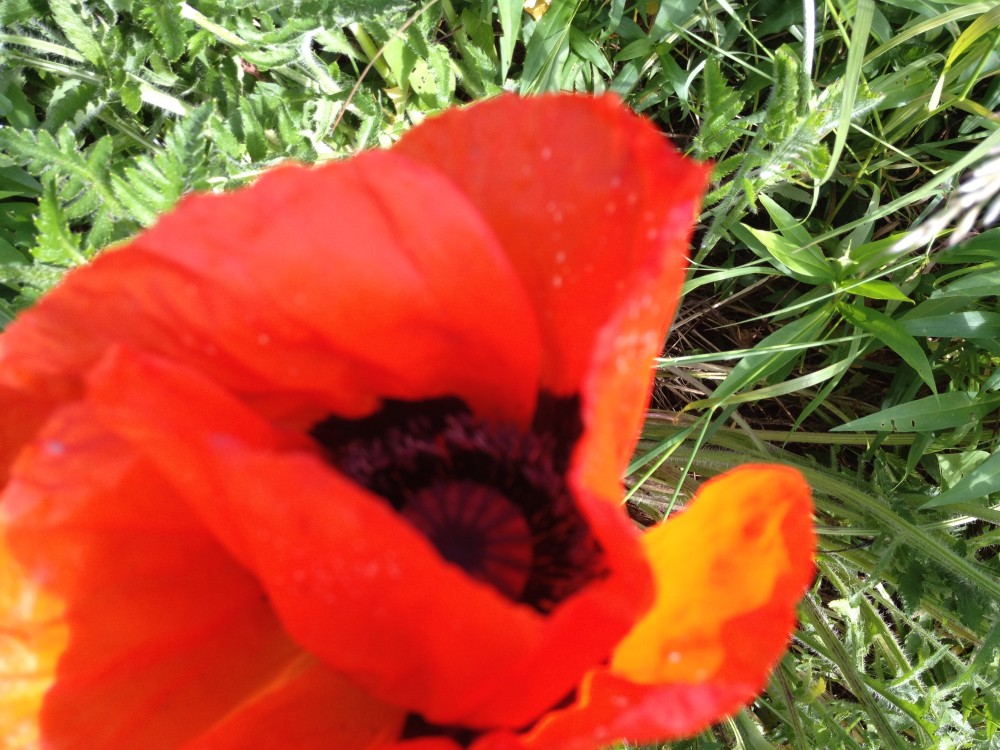
Poppy

Posted in Uncategorized | Tagged , | 24 Comments

Beasts of Borneo

Some photos taken by Drew on our honeymoon. Disclaimer: no bees or cake, just plenty of fascinating animals.

Our first proper destination in Borneo was Danum Valley, a rainforest in Sabah (Malaysia, North-East Borneo). We had hikes organised for us in the jungle, which we wore special ‘gaiters’ (leech socks) for. A leech did get me once, but it didn’t hurt, just left a big mark after I wrenched it off. It was very hot, but bearable because the huge trees provided shade. In the evenings the eerie sound of cicadas throbbed round our ears, echoing far around the forest.

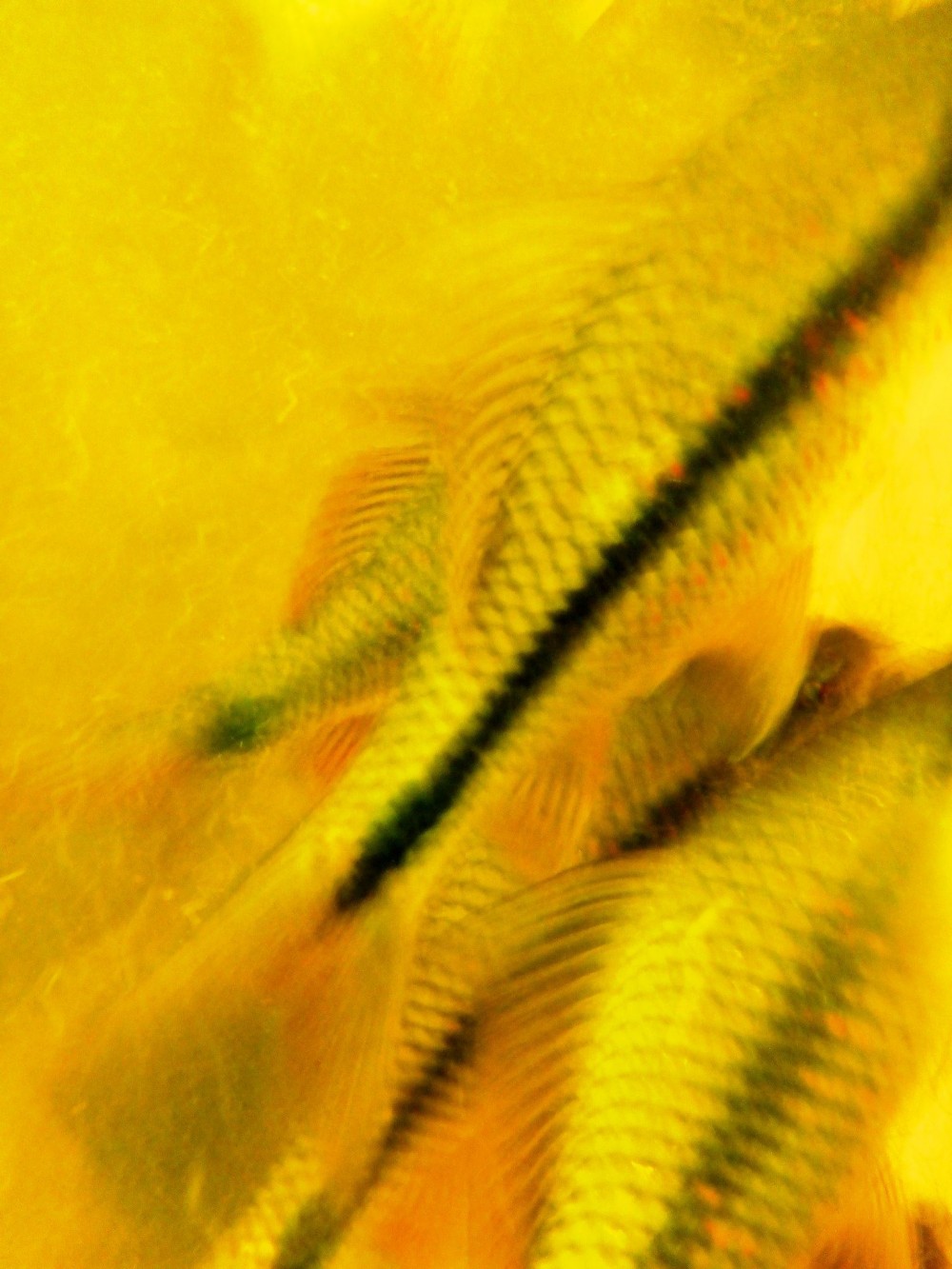
Fish

Fish under water, Danum Valley. We had climbed high up a steep hill in the rainforest to an ancestral place of burial for the local people, panting and sweating all the way. We were rewarded on the journey down by stopping to swim in a pool beneath a waterfall inhabited by these fish. As soon as you stuck any part of your body in the water, the fish were upon you nibbling away with rather sharp teeth. They were a lot bigger than the fish used for foot massages in spas!

Elephants

On the final day we left the rainforest, we were excited to spot a small herd of pygmy elephants. As we watched from the car this mother and calf quickly headed into the dense trees.

Our next destination was the village of Bilit, along the Kinabatangan river. Our hotel ran a morning and evening boat trip to see the wildlife along the river – here we saw orang-utans, long-tailed macaque monkeys, pig tailed macaques, proboscis monkeys and silver languor monkeys. Lots of birds too – rhinoceros hornbill, pied hornbill, oriental garter, blue-eared kingfisher, fish eagle, crested serpent eagle, storm stork and purple heron.

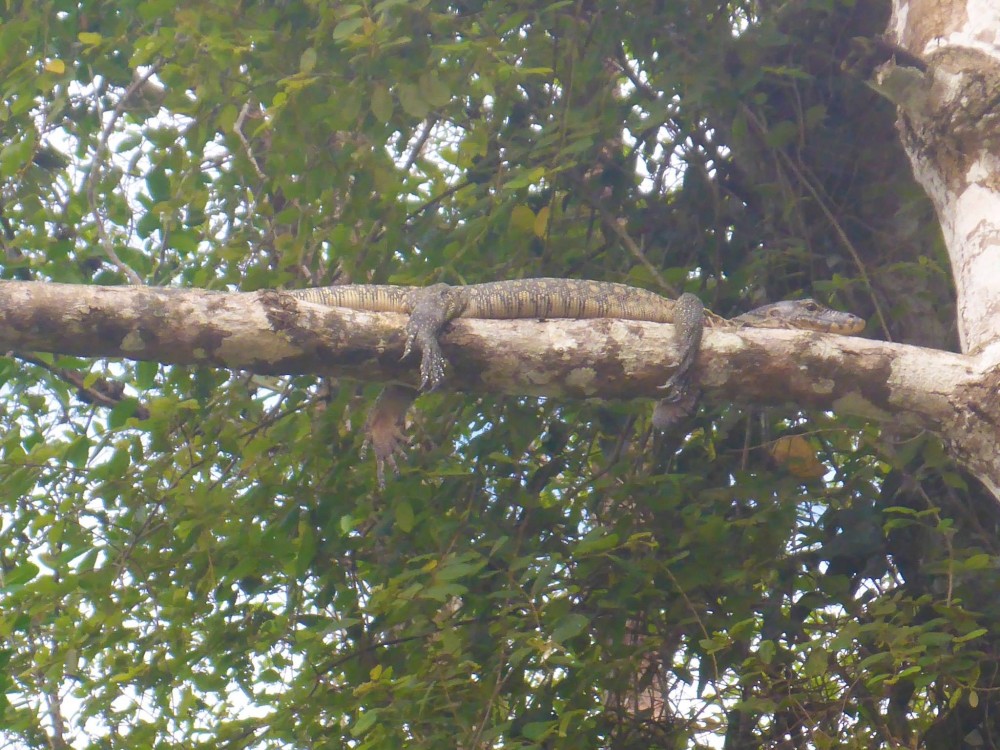
The monkeys in particular were hard to photograph as they were shy and high up in the trees. I like this photo of a sleeping monitor lizard – it looks so comfy, doesn’t it?

Monitor lizard

Monitor lizard

Hotels in Borneo tend to have open air restaurants, so that you can eat and watch the wildlife around you. The night time revealed huge beetles, moths and butterflies drawn to the lights. In turn predators were attracted to the flapping insects – bats whooshed past, lizards darted and this huge spider cast a wide net. Very successfully, judging by the size of it! Although its underside is white, its front had dramatic yellow and black markings.

Spider!

Spider!

Trees by the river

Trees by the river

The morning mists make the river look especially beautiful.

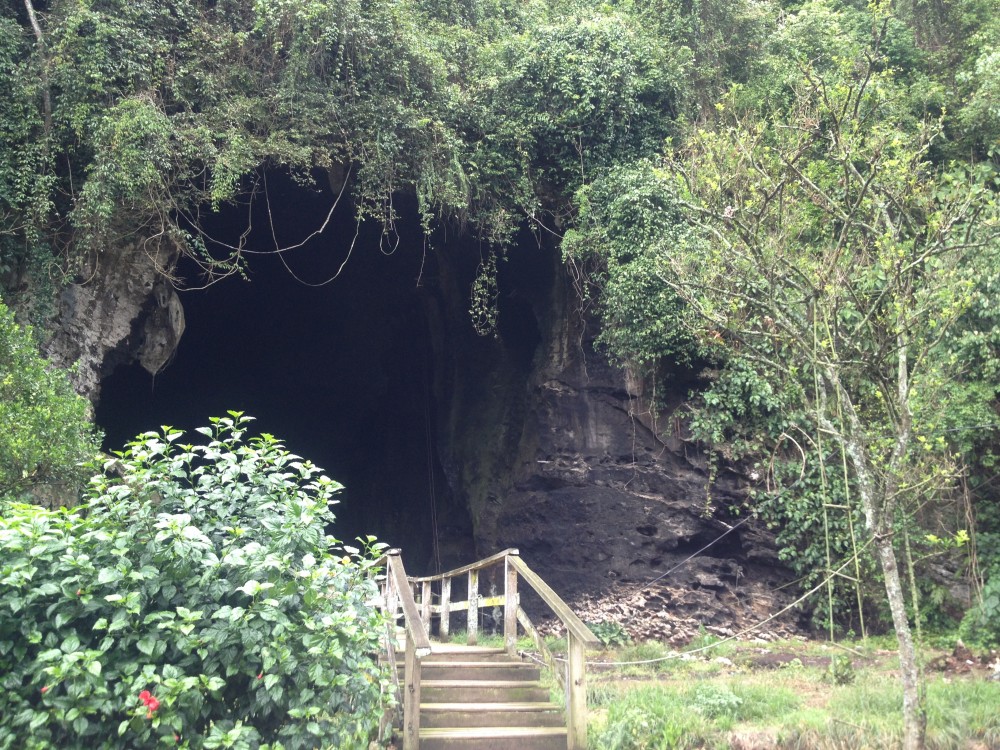
Gomantong caves

Gomantong caves

We also took a trip to Gomantong caves, where thousands of bats and swiftlets live. The cave is guarded day and night because the swiftlets make the valuable nests of solidified saliva that go in Birds Nest Soup! I felt sorry for the guards inside as it’s proper stinky, but apparently they are paid well.

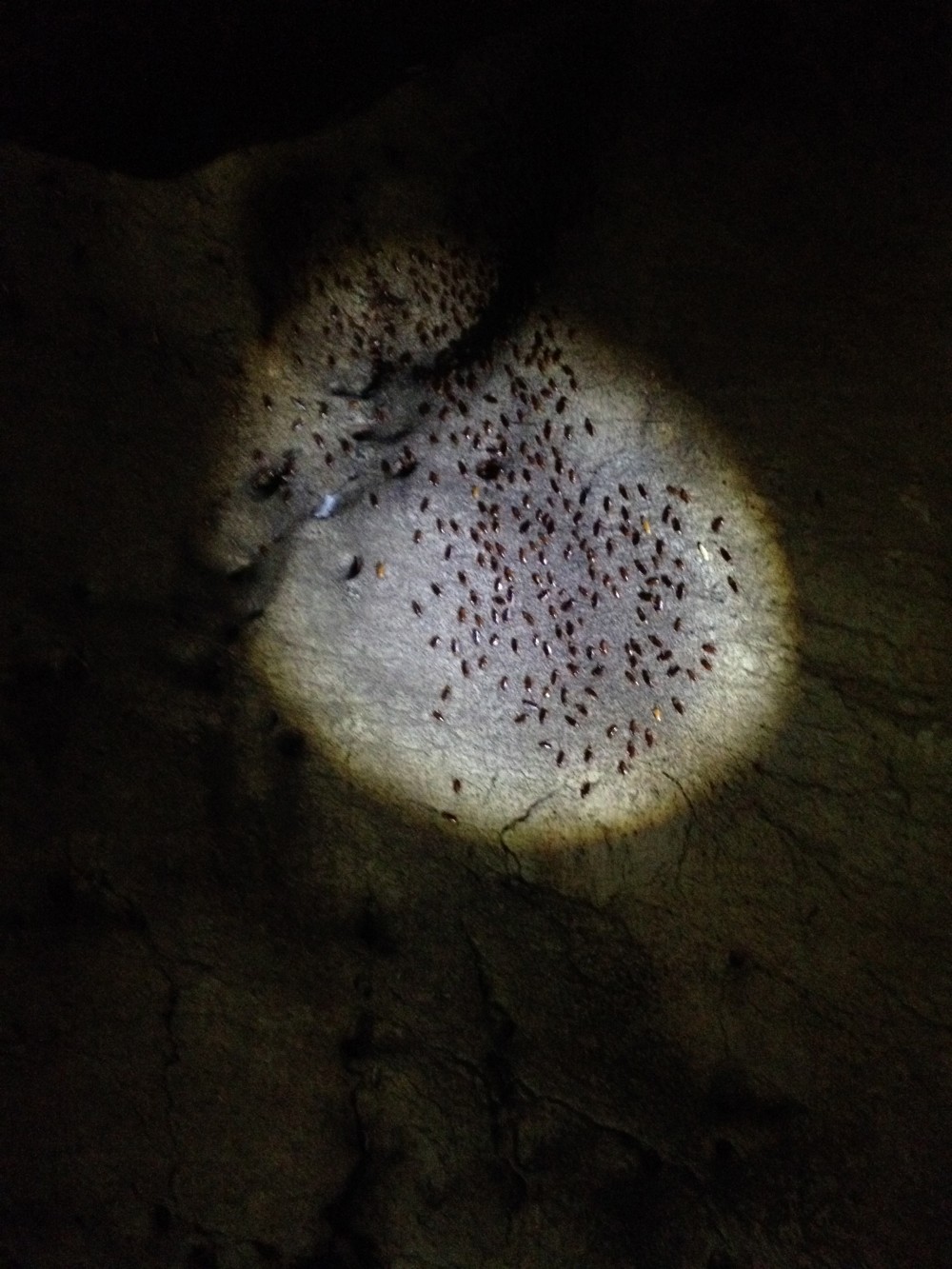
Before going in we made sure to have hats on. I wore my rain jacket and pulled the hood over my head. I was careful to look down whilst walking and only look up whilst standing still, as the floor was extremely slippery with guano. Torches were needed, both to see and to scare away the cockroaches that scuttled round our feet. The cockroaches feed on dead birds and bats that fall to the cave floor. It was a majestic sight but amazingly disgusting too.

Cockroaches on the wall

Cockroaches on the cave wall

After our stay in Myne Resort by Bilit we moved further down the river, staying by the village of Abai. When we put our hand in the water, it was as warm as a bath!

River

Crocodiles lurk deep down below, but, even better, we came across more pygmy elephants. As we were on the boat we could get really close, close enough to look them in the eye as they ate. They made low rumbling noises that would have terrified me had I been standing by them on land.

At night the magical sight of hundreds of twinkling fireflies revealed themselves. Our guide whistled ‘We wish you a merry Christmas’. Did you know some fireflies are cannibals? Females of certain species will be attracted to the lights of males for a meal rather than a mating.

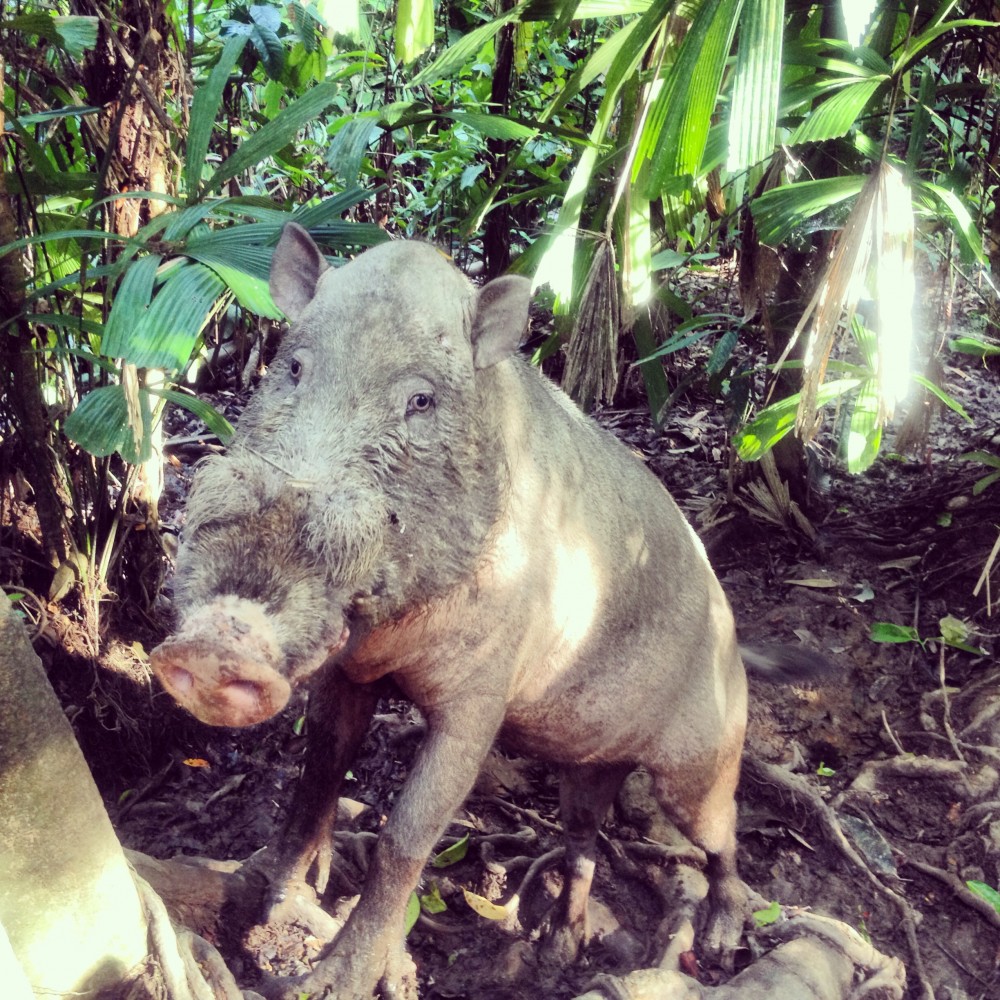
Junior the "wild" boar

Junior the “wild” boar

Breakfast in Abai was served in the forest, surrounded by greedy monkeys on the look out for a free meal, plus this “wild” boar named Junior. We took it in turn feeding him slices of bread, with the warning not to get our hands too close to his mouth. I was a bit slow for his liking and he was quick to nose-butt me with that gorgeous snout.
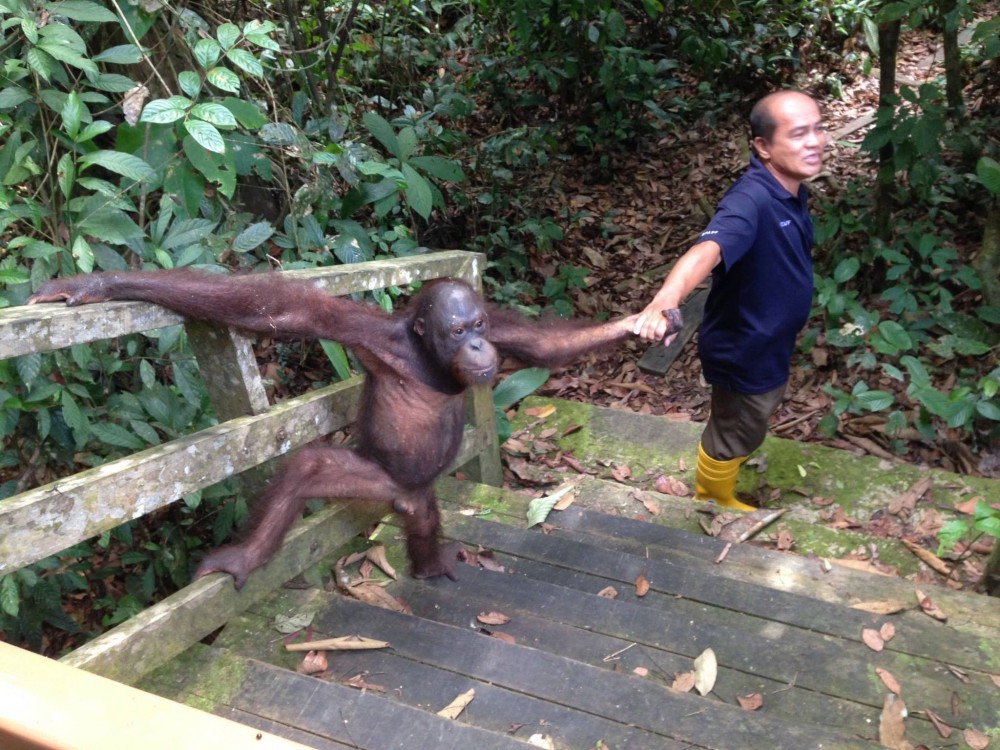
Orangutan

After Abai we took a boat to stay in the sprawling town of Sandakan. This young gentleman was at the Sepilok Orangutan Rehabilitation Centre, on the outskirts of Sandakan. We had been watching orang-utan feeding time, when the orang-utans are fed fruit. They are deliberately fed a monotonous diet of limited fruits to encourage them to find food for themselves in the surrounding 43 sq km of protected land, but some still choose to take the food. They had interesting eating techniques. Some swung from ropes with one arm whilst holding a piece of fruit in their free hand and two feet. They then ate from one foot at a time, peeling bananas like we do. Others used a method similar to bungee jumping, hanging from a rope with their feet and then bouncing up and down with arms stretched out until they managed to grab a leaf beneath them.

The young male above had not yet lost his attachment to people and caused a stir when he walked towards us visitors. We were told to back away quickly as an orang-utan is strong enough to cause serious injury such a nasty bite or a damaged limb if they chose to. In fact he only wanted a hug and managed to grab a startled man’s leg before a member of staff managed to drag him away.

proboscis monkey

Male proboscis monkey eating a long bean

This attractive specimen is a dominant male proboscis monkey. His big nose is attractive to females, creating an echoing honk. The big nostrils also release heat to cool him down. They are the heaviest monkeys (not apes) to live in trees. He lives at Labuk Bay proboscis monkey sanctuary, near Sandakan. We saw many of these monkeys along the river, but only from a distance high up in the trees, as they are shy and hide when boats come near. At feeding time in the sanctuary we were able to get much closer.

There are so many more photos I could show you, but this is a very long post already. The wildlife of Borneo is awesome 🙂

Posted in Uncategorized | Tagged , | 25 Comments