Tidying up my beekeeping bumbles

In my post a couple of weeks ago, ‘What the bees have been up to‘, I mentioned leaving Hope’s nucleus hive with some fondant and pollen in the eke, with the expectation that they would build a little comb up top in the extra space. This is what the hive looked like when I left:
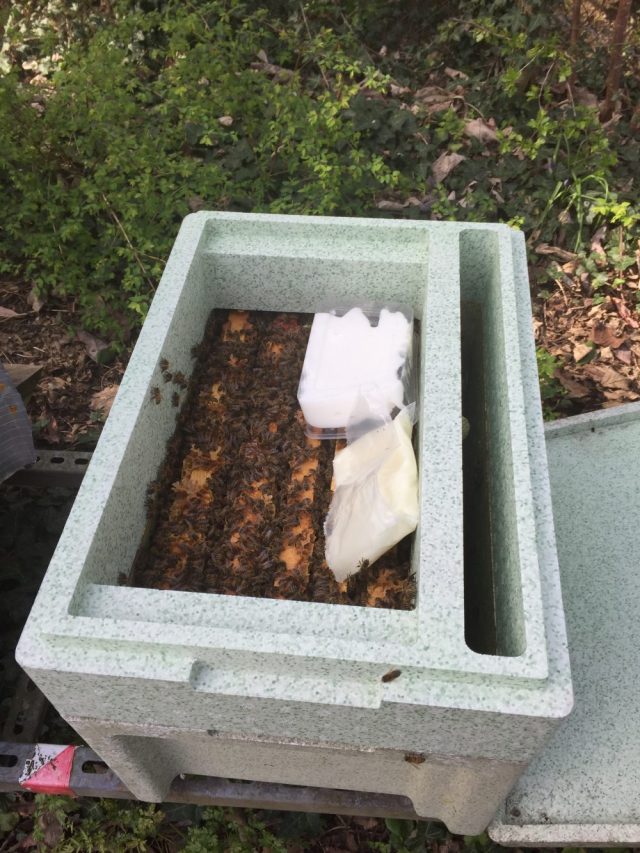
Pollen and fondant in nuc

This is what it looked like a week later:
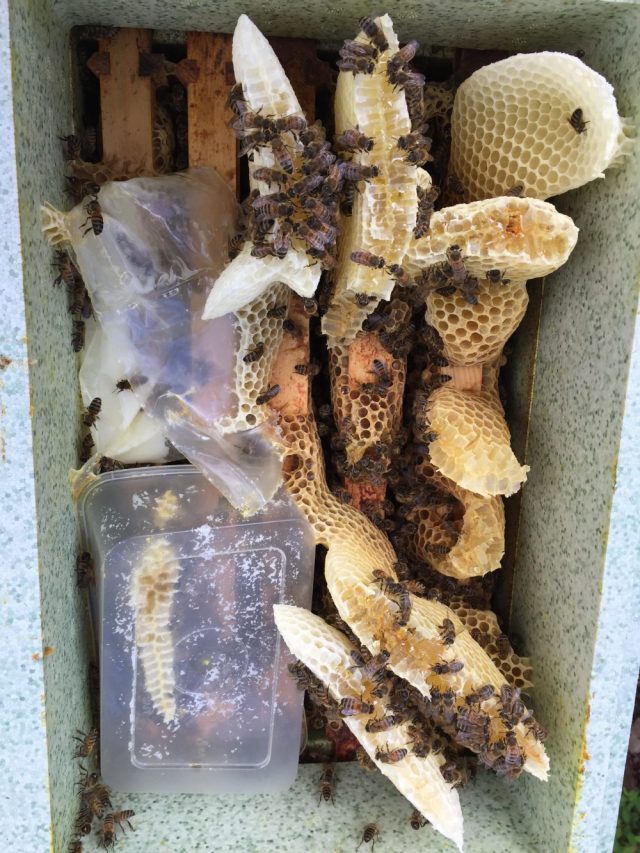
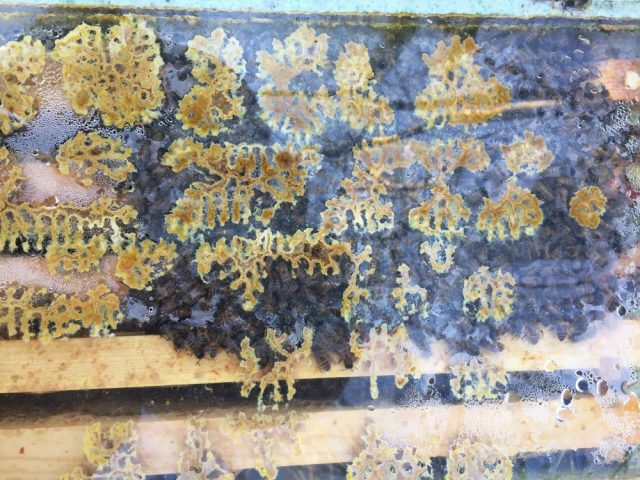
Bee city

Fondant all eaten and a new loft conversion/small city up top! So they built a little more than I expected. When I got home two weeks ago it occurred to me that I could have put some insulation in to fill the extra gap and stop the bees building. These bright ideas always come once I get home. Which would be fine if the bees were at the bottom of the garden,  but with them being around an hour away by public transport it’s not so easy to carry out these little fixes.

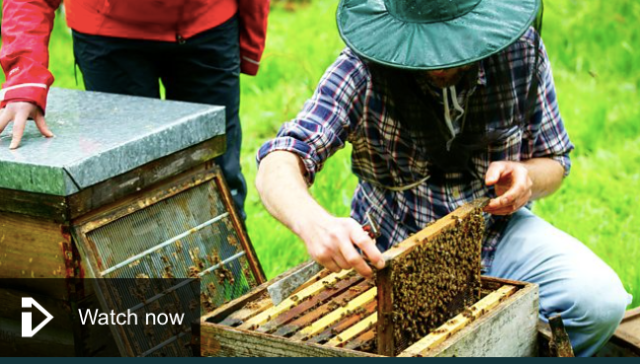
I spent some time carefully transferring Hope and her colony into a full-sized hive. It was quite a delicate job to remove the soft brace comb without squashing or angering any bees.   Once removed, I put the comb up above the crown board; by this weekend all the bees had left it so I was able to share a bit of hive-warm honey with some other beekeepers. We sucked its fragrant floral sweetness out of the chewy comb, cleaning our sticky hands afterwards with wipes.

Emma has an update this weekend on her blog on how Hope and Patience’s bees are getting on – Springing to life. We were able to do our first inspection of 2017 inside Patience’s large hive.

I will leave you with a few pictures of Thomas Bickerdike’s hives at the local allotment where I used to keep some bees too. We have had some beautiful sunny days recently which really show off the spring blossom.
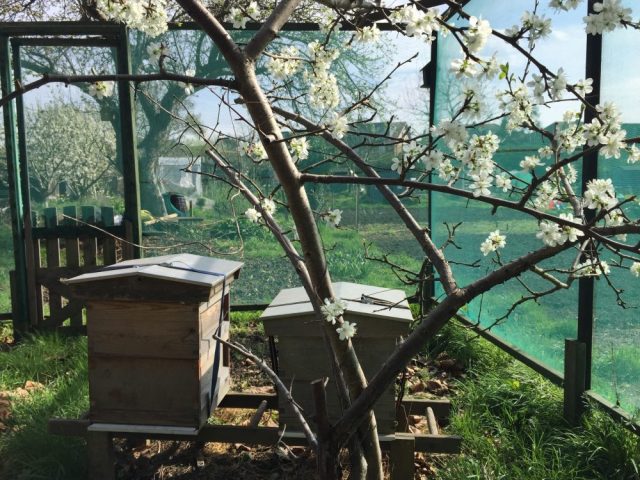
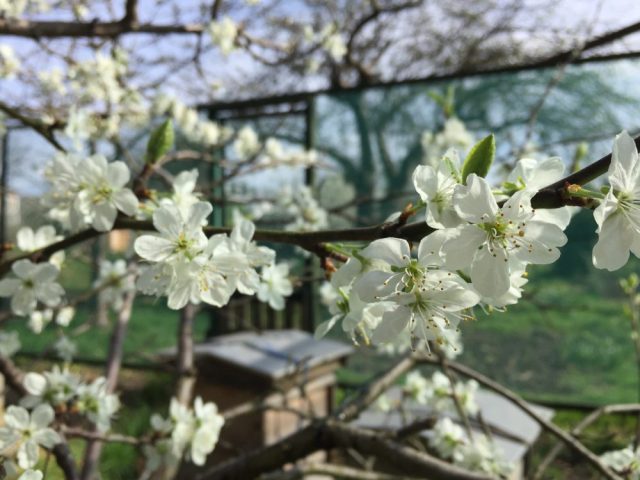
Allotment hives

Allotment hives and blossom

Tom has built this solitary bee palace on the allotment too, so it is really a bee haven. Surely some bees, wasps and other insects will be tempted by this magnificent home.
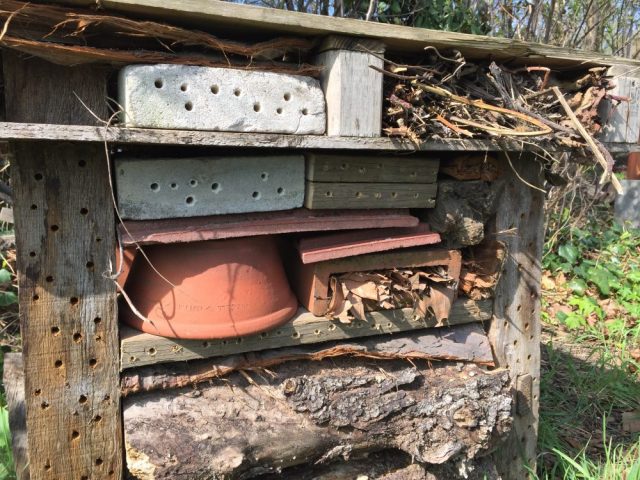
Tom's solitary bee palace

Seeing the spring blossom reminds me of baby Tommy’s first few weeks last April. As I pushed him around flat in his pram, his hands often thrown above his head in slumber, white and pink blossom petals swirled all around us. We have survived the past year together and once again I am pushing him around under blossom, only now he is bigger and sitting upright to face the world. Happy 1st birthday baby Tommy.
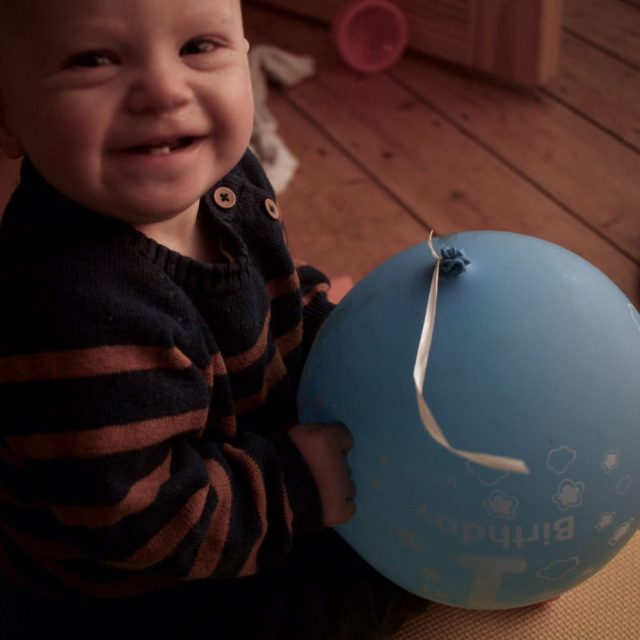
Tommy and balloon

Posted in Colony management | 30 Comments

What the bees have been up to – and an unexpected award

At last my years spent blogging have paid off. After the previous lovely gift of a mug from Waltons for being named one of their ‘10 Brilliant Beekeepers‘ (well, a brilliant beekeepers’ blog anyway, not just generally brilliant!), another surprise email came through from Mal at Waltons.

I have won an award! For ‘Best Beekeeping Blog’. And it even comes with a prize – an enormous bird feeder that I have to find a garden for. Maybe it can be fitted somewhere at the apiary. You can see a list of all the blog award winners on the Waltons website; there were various categories including best gardening, best ‘grow your own’, best flowers, best shed etc. Some of the blogs look really interesting. My Ealing beekeeper buddy Thomas Bickerdike won second prize for his fascinating and practical Beekeeping afloat blog – Ealing bloggers must be the best in the country!

Bird feeder

Waltons best beekeeping blog award

But enough talk of awards. How are our bees doing?

Well, last Saturday was sunny and the nuc bees were bursting out of their box. There was a proper pile-up at the entrance as we had forgotten to move the mouse-guard dial off. A lot of frustrated bee butts were trying to squeeze through at once. Another Ealing member, Sue, kindly helped me smoke the entrance so I could move the dial round and give them more space to zoom in.

Entrance pileup

Emma had ordered a eke for the poly nuc which I fitted on top to give room for extra fondant and pollen, as the nuc is feeling light and we were worried about a possible food shortage. Tomorrow I’ll come back with extra frames and move them into a full sized hive, as they are absolutely bursting and ready to expand. I’m expecting a lot of brace comb to have been built in the gap the eke has created above, but that’s ok as it means delicious warm honey to eat!

Pollen and fondant in nuc

This is the fondant and Neopoll pollen substitute.

Fondant and Neopoll

Ealing is looking beautiful at the moment as many of the trees lining our streets are in blossom. Below is a photo of a magnolia at Kew.
Magnolia at Kew

And here’s a few from my walks a few weeks ago when all the snowdrops and crocuses were still out. Time and flowers go so fast!

Posted in Uncategorized | 33 Comments

Bees on ‘Back to the land with Kate Humble’

Bees are everywhere nowadays. In the past few weeks I’ve seen them buzz up on Mary Berry Everyday and now Kate Humble’s new show Back to the Land.

I wasn’t even watching Back to the Land for the bees, I just found the idea of the show interesting – it focuses on rural food businesses making money in slightly unusual ways. For the first show in Pembrokeshire Kate visits a Wagu beef farmer, seaweed collector, a rapidly growing specialist chocolate business – and honey producers Nick and Annette Tonkin. The couple have 90 hives producing an average of around 3.5 tonnes of honey per year, though some of their income comes from selling queens and making marmalade.

Kate Humble on Back to the Land

“Can beekeeping really be a viable business?” asks Kate. Over the course of the show we hear about the precariousness of beekeeping in Wales’s ‘Wild West’ coastal weather. The family typically take the bulk of the honey off at the end of July, but a good crop is reliant on good weather. During a bumper year the bees can produce 8 tonnes of honey, but during filming Nick predicts they’ll only have under a tonne from the 2016 season. Under a tonne only brings in £16,000 – in years like that, just to break even the family must rely on selling queens and marmalade.

In the winter months Annette and their daughters stir up over 4,000 jars of citrus marmalade to supplement the honey income. Additionally Nick breeds and sells 400 queens each season, making around £6,000 annually from selling queens to beekeepers. He sells the queens in two stages. Once larvae are successfully grafted and have been fed in the hive for ten days, they can fetch £10 each.  Left to grow into a fully fledged and mated queen, they can fetch £55. They’re sent all over the country by Royal Mail – “How very appropriate” comments Kate.

The grafting is incredibly delicate work. Nick mastered his beekeeping skills by watching his father tend to his hives. He looks to graft larvae at 24 hours old and 2mm long – “It’s almost when it’s too small to see, it’s the right size to graft”. Kate has a go but ends up squishing a young larvae.

Those of you in the UK can catch the show on iPlayer for the next 26 days: Back to the Land. I found all the businesses interesting. Some of the owners are making huge amounts of money and rapidly expanding, while others are barely getting by but are happy being able to live in the stunning Welsh countryside.
 

Posted in Uncategorized | Tagged | 11 Comments

Middlesex Federation Day: Dr Martin Bencsik – “Monitoring honeybee colony activity with accelerometer sensors”

On Saturday I went to the Federation of Middlesex Beekeepers’ Associations annual ‘Federation Day‘. Each year the Middlesex associations (Ealing, Enfield, Harrow, North London, Pinner & Ruislip) take it in turn to host a day of beekeeping talks; this year it was Ealing’s turn, which was nice as last year it took me nearly three hours to reach Enfield!

martin-bencsik-sst-5154

Dr Martin Bencsik

Unfortunately I could only stay for the first speaker, Dr Martin Bencsik. Martin is a Reader in Physics at Nottingham Trent University – we were lucky as he had travelled down from Nottingham to speak for us. His research focuses on novel applications of Magnetic Resonance Imaging (MRI) and more recently on bioacoustics, including honey bee colony condition monitoring. His use of accelerometers to measure vibrations in honey bee hives led him to become involved in The Hive artwork at Kew, supplying the measurement technology and software which animates the work.

Martin began by explaining that accelerometers are used to sense vibrations. People often confuse sounds and vibrations. For honey bees and most insects, sounds are actually probably irrelevant. Perhaps 70% of insects prefer vibrations to sounds for communicating (crickets are an exception). Like a mobile phone, small insects find it easier to produce efficient vibrations than sounds.

For his research he set up an apiary in France with an accelerometer in each hive. It takes a few seconds to implant each accelerometer in the comb, but it’s expensive – at £500 per accelerometer. He sent an accelerometer round the audience for us to look at, which he emphasised he definitely wanted back! The technology has revealed some fascinating insights, particularly around swarming. The accelerometer picks up the sound of the swarm preparing to leave as the bees become so excited their vibrations shake the comb. Martin played us an amazing recording of a primary swarm from 20 minutes beforehand up to the moment of departure (condensed into a shorter clip, not the full 20 minutes). The buzzing filled the room as if we were inside the hive – it was quite intense and everyone clapped after it finished.

Martin mentioned that he has recorded the old queen piping before she swarms. This has happened twice in thirty primary swarms he’s recorded, so is fairly rare but shows it’s not just virgin queens that pipe. The time of day of the primary swarm has always been between 11am-3pm, but usually nearer 11 than 3.

Some swarm definitions:

  • Primary swarm = the first swarm to leave the parent colony, usually with the old queen.
  • Secondary swarm = a smaller swarm after the primary swarm has left, containing one or more virgin queens. Also called an ‘afterswarm’ or ‘cast’ swarm.

As well as putting the accelerometers in the comb, Martin has tried putting them in the brood box walls. However, the wood has different resonances that affects measurement, whereas comb is very stable and soft, so measurements from accelerometers in comb are more reliable. External sounds like planes, wildlife, birds etc can also affect the accelerometers placed in the brood box walls and drown out the vibrations of the bees. It is commercially appealing to put accelerometers in brood boxes though, as they might sell well.

He went on to tell us a little about how Wolfgang Buttress produced The Hive installation – see my post ‘The Hive at Kew‘ for more about this. I was impressed to hear that every cell in its lattice is different and each layer has been cut slightly differently, to a budget of £8m. Kew are now hoping to keep the installation until 2020, as visitor numbers are up since they hired it.

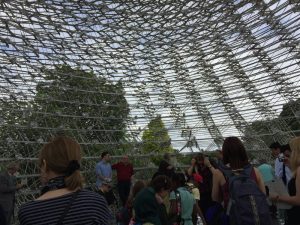
The Hive roof

The Hive at Kew

In response to a question on his future research, Martin revealed that he hopes to secure further funding for his work on honey bee monitoring. He feels passionate about directing his work towards helping bees and the environment, as he has become tired of the selfish actions of humans and the effect we have on the natural world. Ingenious and clever though humans are, so often we destroy all that is beautiful.

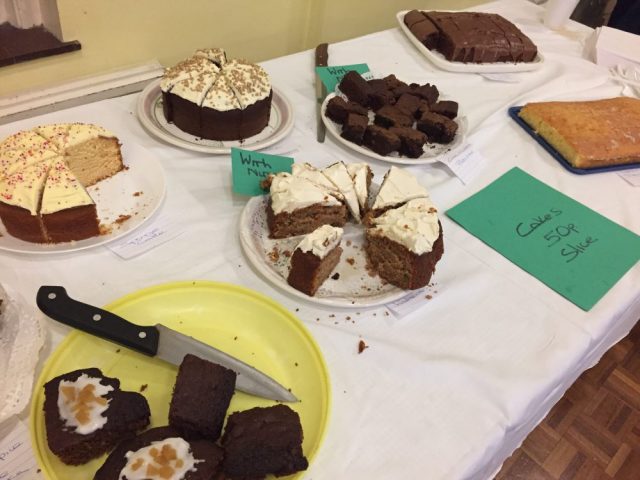
I hope everyone enjoyed the Federation day. I know a lot of hard work went into it by people such as Clare, Elsa, Sue, Jonesy, Andy, Tom and many others. Below is the cake table, which was very popular!

Federation cake table


Posted in Uncategorized | 15 Comments

10 brilliant beekeepers – and where to buy a shed if you’re a beekeeper

A shout-out to the lovely people at Waltons, a British shed and gardening supply company. Until recently I hadn’t heard of Waltons, but then they contacted me to ask if I was happy to be included in a list of ’10 brilliant beekeepers blogs’ on their website. As it was a list of ‘brilliant’ beekeepers rather than ‘bungling’, ‘clumsy’ or ‘absent minded’ (all of which might be more accurate in my case), of course I said yes.

Here’s the list: 10 brilliant beekeepers’ blogs.

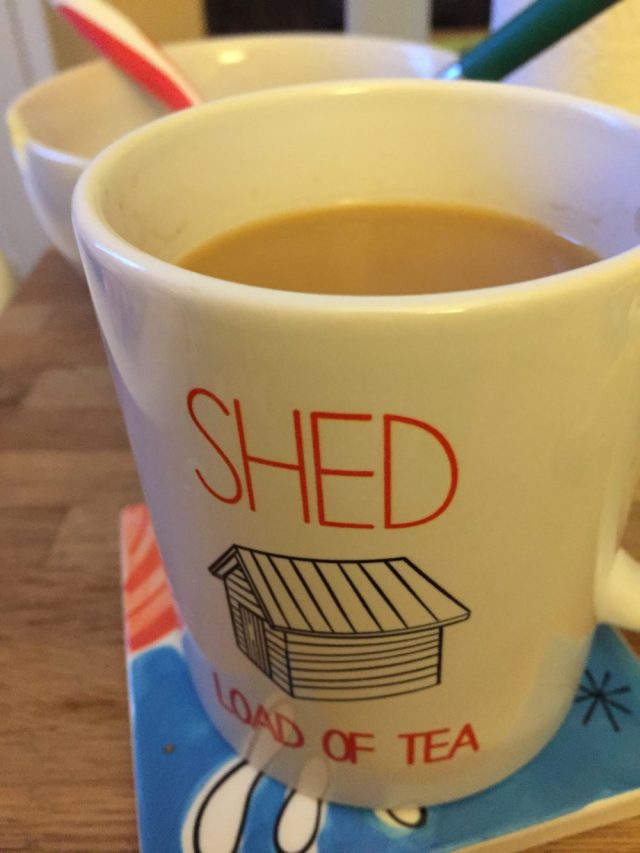
But that wasn’t the end of Waltons’ kindness. They then offered to send me a mug – twice. At first I accidentally deleted their emails, thinking the offer sounded too good to be true and must be spam. But then I saw a photo by Tanya Weaver (Girl Meets Bee) on Instagram of the lovely mug and realised the offer was real! A hasty email later and this beauty of a mug arrived in the post.

Waltons shed mug

I have drunk tea from it already whilst feeding Tommy his breakfast this morning, and a very nice cuppa it was too.

Waltons shed mug

The ‘About Waltons‘ section of their website sheds (ha!) some light on their fondness for beekeepers:

In 1878, a man named E.C Walton began a small beekeeping venture, and from there, the first shoots of the company we know today began to grow. Over time Waltons has changed, making summer houses in the Victorian era; after WWII switching to making bungalows; to creating some of the UK’s best quality garden sheds.

That’s why we have the latest machinery, and only use ethically sourced wood and hardwearing materials. Whether it’s something as grand an insulated garden room, or as small as a garden planter to grow your own, you can be sure of the same attention to detail that Mr E.C Walton used to put into his beehives.”

So if you’re a beekeeper into sheds and garden equipment, think of Waltons!

Posted in Uncategorized | 15 Comments

Beekeeping amongst the snowdrops

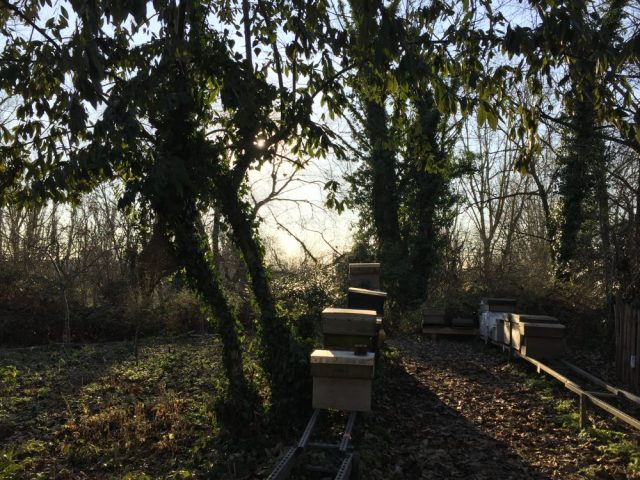
There was a properly bitter chill in the air last weekend, but I knew there would be a few tough beekeepers down at the apiary. Alan was packing up nails neatly into boxes and quickly had the kettle on. In the end four of us turned up around a small feast of cookies, biscuits and banana chocolate flapjacks.

Biscuits and flapjacks

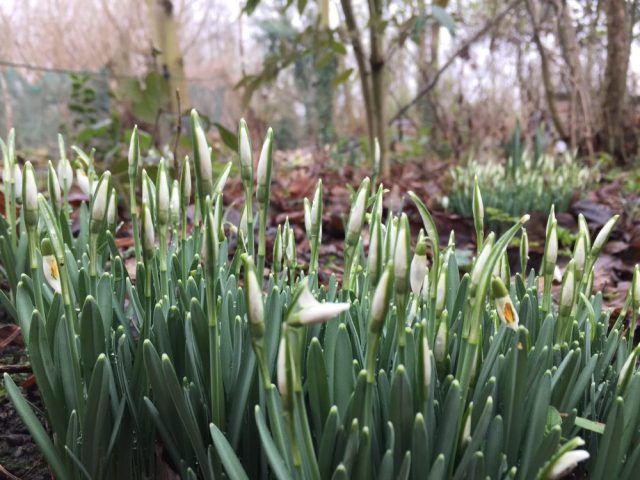
There had been snow swirling around in the morning, but it didn’t settle. No bees were flying, not even our usually eager nucleus bees. Still, the snowdrops had come on.

Snowdrops

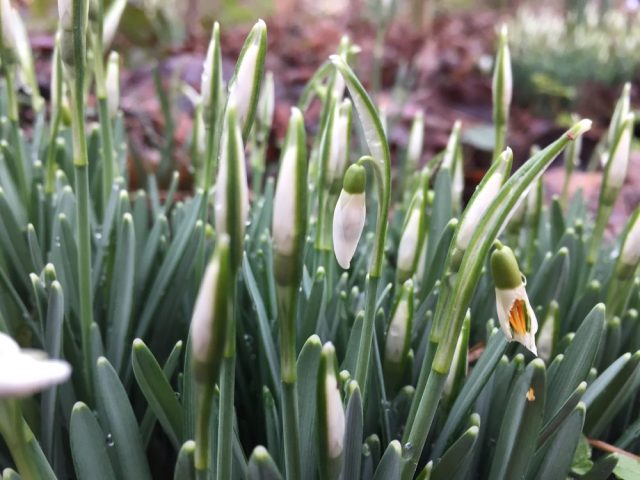
One of the snowdrops looked like it had been nibbled at to reveal its pollen.

Snowdrops closeup

Inside the nuc the bees were still active over about four frames. They have fondant on the side; I just hope it doesn’t get too cold for them to reach it. I smeared some extra blobs nearer the cluster.

Poly nuc cluster

Soon it’ll be shook-swarming time! Alan has all his frames ready. I, of course, don’t!

Posted in Uncategorized | Tagged | 10 Comments

‘Just Bee’ honey drinks on Dragons Den

It was good to see a bee-themed company on this week’s Dragon Den. I’ve been following the progress of Joe and Andy from Just Bee Drinks since I helped them out with some market research feedback a couple of years ago. Joe’s dad and grandad were beekeepers and he grew up adding honey to his tea. This gave him the idea for a honey sweetened rather than the usual sugary or artificially sweetened drink. Just Bee Drinks are now for sale in national retailers like Boots, Waitrose and Holland & Barrett.

Just Bee Honey Water

It was interesting to hear the dragons’ feedback. Deborah Meaden said “It’s very personal but I don’t actually like the taste. It’s slightly antiseptic” and a couple of the other dragons agreed with her. I’m now curious to try one to see for myself!

Colony collapse was also brought up by Deborah, who wanted to make sure the honey wasn’t coming from intensively farmed bees. The duo reassured her that all of the beekeepers who supply the honey are completely ethical and leave the colonies enough honey for winter.


You can catch up with the show on the BBC website and find out whether the pair got the investment they were after. Joe and Andy have also blogged about their experience on the show: Dragons Den: our story. Let’s hope more bee-themed business ideas are featured in the future!

Posted in Uncategorized | Tagged | 8 Comments

Oxalic acid sublimation demo

It was a beautifully sunny but chilly day yesterday for a demonstration by Tom of oxalic acid sublimation. Amazingly some of our bees were still flying even at temperatures of under 10°C (50°F). The snowdrop shoots haven’t come on much further.

Winter apiary

Inside our nuc the bees were still active but clustered more tightly than before. I smeared some extra fondant on top of a few of the frames. They have fondant left in the side feeder still, but I thought it would be nice for them to have some nearer the cluster.

Nuc

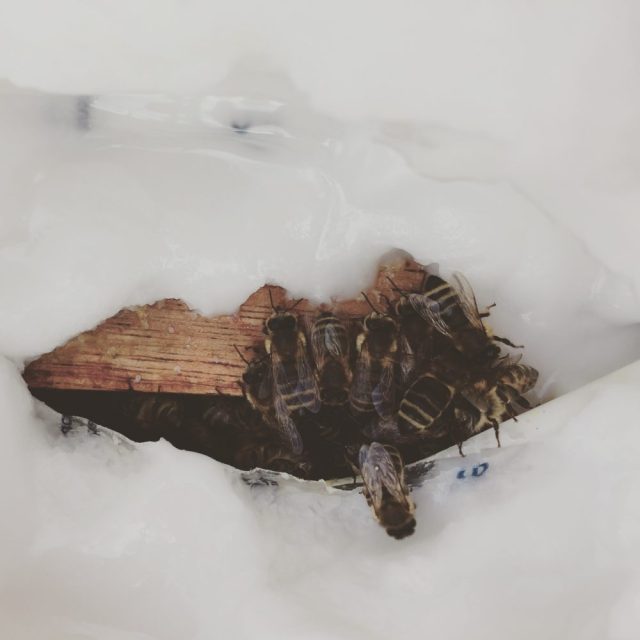
In our bigger hive the ladies remain up in their fondant and pollen bags, but they have plenty of the sweet stuff left still. Nibble nibble.

Bees on fondant

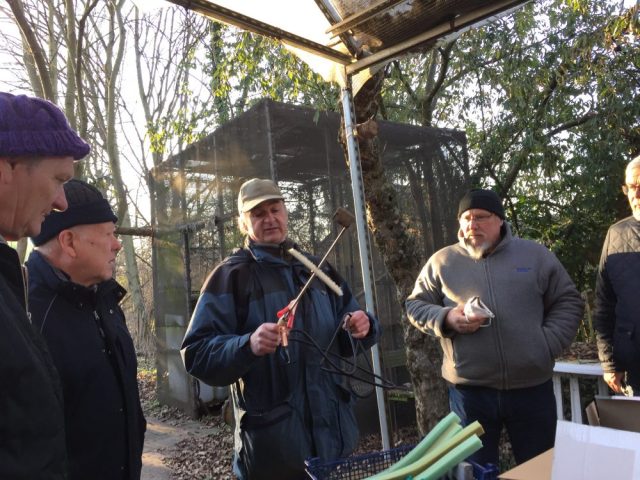
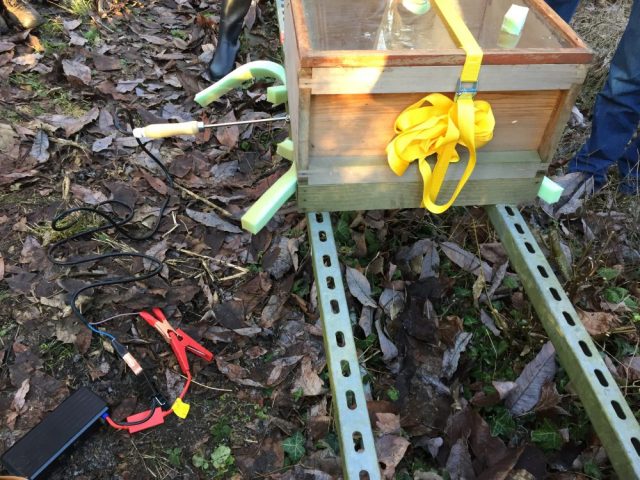
A good number of us had gathered to see Tom demonstrate how oxalic acid sublimation (vaporisation) works. His subliminator cost around £35 (see Thorne’s Vapmite one) and the car battery charge around £35 too, so initial equipment costs are about £70. He did say this was a cheap subliminator and it’s starting to fall apart, there is a more expensive version available for around £100 which would probably last longer. You will also need oxalic acid in the approved form of Api-Bioxal, which conveniently contains extra sugar that identifies it as Api-Bioxal and makes the subliminator tray extra-sticky.

Tom demonstrating oxalic acid

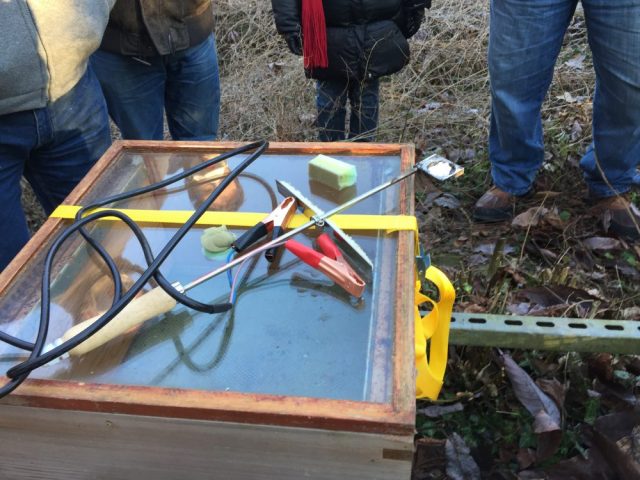
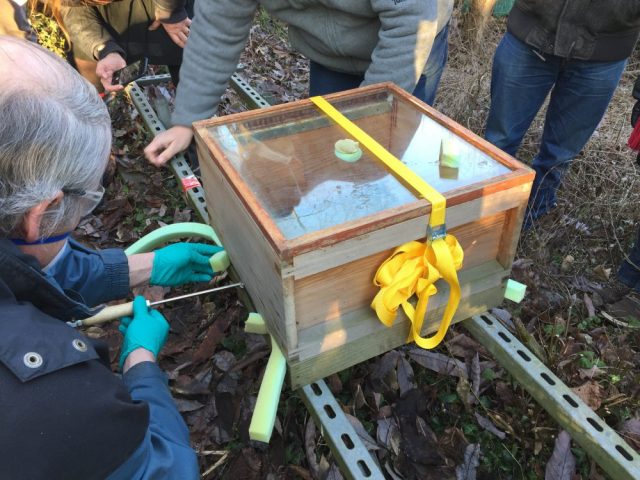
As the apiary bees were already treated by the drizzle method before Christmas, this was only a demonstration on an empty hive. The hive had a glass crown board so we could see the effects of the gas in a confined space. We were all wearing masks, this is very important as the oxalic fumes are dangerous to humans.

Oxalic equipment

The equipment

Oxalic acid sublimation

Tom began by putting foam in at the entrance, this helps keep the fumes inside the hive. He left the subliminator in for 3 mins 20 seconds attached to the battery to heat up the oxalic acid, then another 3 mins without the battery to cool down. You can then remove the subliminator and leave the hive sealed up with foam for 5-10 mins after that, before removing the foam (please read the official instructions before doing it yourself rather than relying on these timings, in case I am mis-remembering anything!).

As the oxalic acid vaporises, the vapour fills the hive, coating the bees and hive surfaces with a very thin layer of oxalic acid crystals. The bees cope well with these crystals, but they have a deadly effect on varroa mites.

Oxalic acid sublimation

The advantages of sublimation are:

  • You don’t need to open up the hive, which breaks propolis seals and can potentially disturb the bees.
  • You can carry out repeated treatments, whereas the drizzle should only be carried out once annually.
  • Research carried out by the University of Sussex Laboratory of Apiculture and Social Insects suggests that, compared to spraying or dribbling, sublimation has a higher varroa kill rate (see Integrated control of Varroa mites on the LASI website).

The disadvantages of sublimation are:

  • The extra costs of the subliminator and battery equipment.
  • Oxalic acid is toxic to humans, so you have to be very careful when handling it; including wearing gloves and a mask to avoid breathing in the fumes.

The instructions on Thorne’s website have some interesting details – they say the air temperature should not be below +4°C and the last cleansing flight should not date back more than four weeks. This is probably not something we need to worry about in London, but further north daytime temperatures might drop lower than 4°C. The LASI guidelines recommend applying oxalic at outside temperatures of 4-16°C.

Useful links:

Posted in Disease prevention | Tagged | 10 Comments

Of bee butts and wiggles

It’s fun to investigate what people search for to find my blog. I’ve noticed a wiggling, shaking and bum-raising theme:

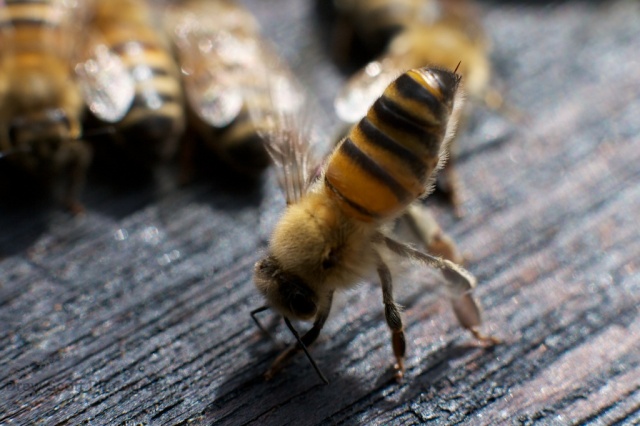
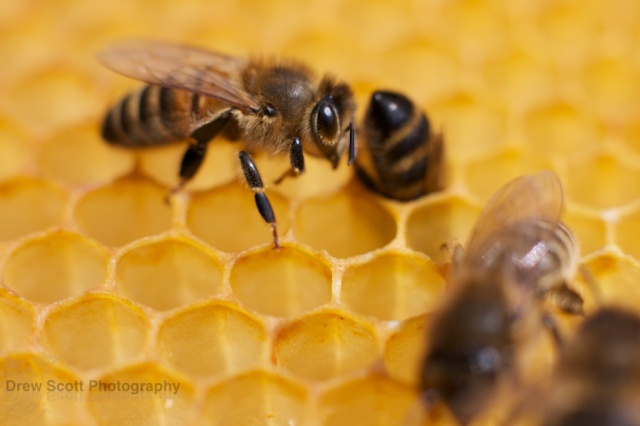
A bee bum.

‘Why do bees wiggle their bums’
&
‘Why do bees shake their bum’
&
‘Why do bee butts pulse’
&
‘Why do bees put their bums in the air’

Well, here’s some potential answers…

1. Why do bees shake their bum?

One reason is to dance! The well-known waggle dance tells honey bees where food sources over 100m away are located. It’s a figure of eight shape with the bum waggle in the middle. The dancer will stop to exchange the nectar she’s collected with ‘watching’ workers so that they know what they’re looking for (I say watching but they’re really feeling her vibrations, as the dances are done in the dark of the hive).

The direction of the dance on the vertical face of the comb indicates the direction of the flowers in relation to the sun. As honey bees can see polarized light, the sun does not have to be shining for the dance to be successful. The nearer and more high quality the forage, the faster the dance and the more waggles in the middle.

There are also other types of honey bee dances that involve abdomen waggles/vibrations:

  • round (tells other foragers there is food somewhere within 15m of the hive)
  • transition (halfway between a round and waggle dance, if food is between 15 and 100m away)
  • buzzing runs (an excited dance. The worker runs through the colony buzzing her wings. Other workers she runs into will pick up her movement and start running around buzzing too. It’s used as a signal for a swarm to exit the hive or take off once a new home has been found.)
  • DVAV (dorsoventral abdominal vibrating dance) (get a move on – a worker will mount or grab another bee and vibrate their abdomen on top of her. Used to recruit more foragers during a nectar flow.)

In my previous post on Bee communication I went into more detail about the various meanings of honey bee vibrations and movements.

2. What does it mean when a honey bee butt moves in and out or pulses?

This search suggests the observer was not seeing a communication dance but something else – breathing!

Bees have no lungs but move oxygen into their bodies through breathing tubes (tracheae), which are connected to surrounding air through multiple holes in their body called spiracles.

In his book ‘The Biology of the Honey Bee’ (1987), Mark L.Winston explains that “When the bee is inactive gas exchange can operate simply by diffusion, but during periods of increased activity bees pump their abdomens to increase gas exchange” (p.34).

This pumping movement makes the abdomen move rhythmically as oxygen goes in – which could be the ‘in and out’ movement the searcher was thinking of. A bit like us breathing more heavily and panting after we’ve been running fast.

3. Why do bees put their bums in the air?

Honey bee workers will raise their abdomens in the air to expose a gland called their Nasonov gland. An scent attractive to other bees is released by this gland. The bees will fan their wings while raising their bottoms, to disperse and spread the Nasonov scent.

Nasonov is used by the bees to mark previously scentless locations such as water or a new colony location. I have seen my bees do it when their hive was moved a couple of feet, presumably to help returning foragers find their way home. Similarly, when a virgin queen leaves the hive to mate, workers will mark the entrance with Nasonov pheromone to guide her back.

Nasonov gland scenting

Nasonov gland scenting

A bee bum.

A bee bum.

Posted in Uncategorized | 24 Comments

Endurance and hope

January is a stern month. The festivities of Christmas have passed and many of us are left feeling plumper and poorer. A time for austerity and cutting back, combined with chilling days that cut through to our fingers and whistle past our ears.

But the bees know that the days are getting longer. Becoming not darker but lighter. Whether bee or human, the winter solstice has passed and spring is coming, if we can just wait a little longer and keep nibbling away in the dark. It was warm for January yesterday, around 11°C (51.8°F), so the bees at the apiary were taking full advantage of this chance to clear their bowels.

Poly nuc

Inside the poly nuc, the bees are very active across all five frames. Lots of condensation, so it must be warm in there. I am not sure whether a warm January is a good thing as it will cause them to go through their stores more quickly. They have fondant so I’ll keep an eye out to make sure it doesn’t run out.

Poly nuc close up

In our full sized hive Emma has carried out John Chapple’s trick of putting two Ambrosia fondant bags on top of each other, with a hole punched between them so the bees can get in both. This much fondant should be enough to last the bees until the spring forage begins. Through this sugary double layer I was able to take a photo from above before the bees realised and started flying up.

Bees in fondant

And just poking out from the apiary ground I found these snowdrop shoots. Told you spring is coming.

Snowdrop shoots

Posted in Uncategorized | Tagged | 32 Comments