It’s fun to investigate what people search for to find my blog. I’ve noticed a wiggling, shaking and bum-raising theme:

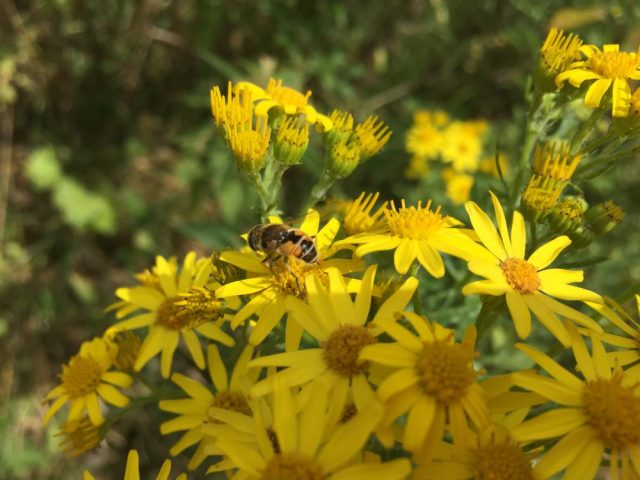
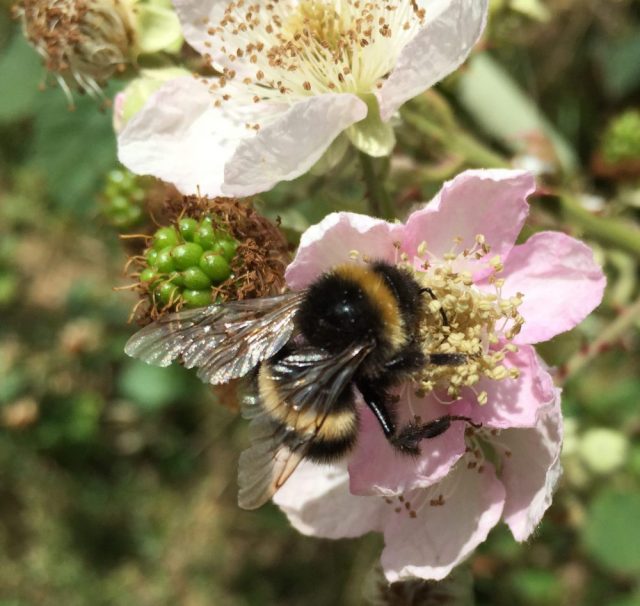
A bee bum.
‘Why do bees wiggle their bums’
&
‘Why do bees shake their bum’
&
‘Why do bee butts pulse’
&
‘Why do bees put their bums in the air’
Well, here’s some potential answers…
1. Why do bees shake their bum?
One reason is to dance! The well-known waggle dance tells honey bees where food sources over 100m away are located. It’s a figure of eight shape with the bum waggle in the middle. The dancer will stop to exchange the nectar she’s collected with ‘watching’ workers so that they know what they’re looking for (I say watching but they’re really feeling her vibrations, as the dances are done in the dark of the hive).
The direction of the dance on the vertical face of the comb indicates the direction of the flowers in relation to the sun. As honey bees can see polarized light, the sun does not have to be shining for the dance to be successful. The nearer and more high quality the forage, the faster the dance and the more waggles in the middle.
There are also other types of honey bee dances that involve abdomen waggles/vibrations:
- round (tells other foragers there is food somewhere within 15m of the hive)
- transition (halfway between a round and waggle dance, if food is between 15 and 100m away)
- buzzing runs (an excited dance. The worker runs through the colony buzzing her wings. Other workers she runs into will pick up her movement and start running around buzzing too. It’s used as a signal for a swarm to exit the hive or take off once a new home has been found.)
- DVAV (dorsoventral abdominal vibrating dance) (get a move on – a worker will mount or grab another bee and vibrate their abdomen on top of her. Used to recruit more foragers during a nectar flow.)
In my previous post on Bee communication I went into more detail about the various meanings of honey bee vibrations and movements.
2. What does it mean when a honey bee butt moves in and out or pulses?
This search suggests the observer was not seeing a communication dance but something else – breathing!
Bees have no lungs but move oxygen into their bodies through breathing tubes (tracheae), which are connected to surrounding air through multiple holes in their body called spiracles.
In his book ‘The Biology of the Honey Bee’ (1987), Mark L.Winston explains that “When the bee is inactive gas exchange can operate simply by diffusion, but during periods of increased activity bees pump their abdomens to increase gas exchange” (p.34).
This pumping movement makes the abdomen move rhythmically as oxygen goes in – which could be the ‘in and out’ movement the searcher was thinking of. A bit like us breathing more heavily and panting after we’ve been running fast.
3. Why do bees put their bums in the air?
Honey bee workers will raise their abdomens in the air to expose a gland called their Nasonov gland. An scent attractive to other bees is released by this gland. The bees will fan their wings while raising their bottoms, to disperse and spread the Nasonov scent.
Nasonov is used by the bees to mark previously scentless locations such as water or a new colony location. I have seen my bees do it when their hive was moved a couple of feet, presumably to help returning foragers find their way home. Similarly, when a virgin queen leaves the hive to mate, workers will mark the entrance with Nasonov pheromone to guide her back.
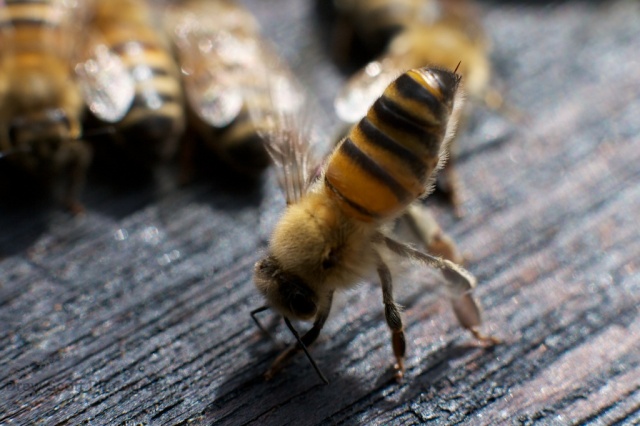
Nasonov gland scenting
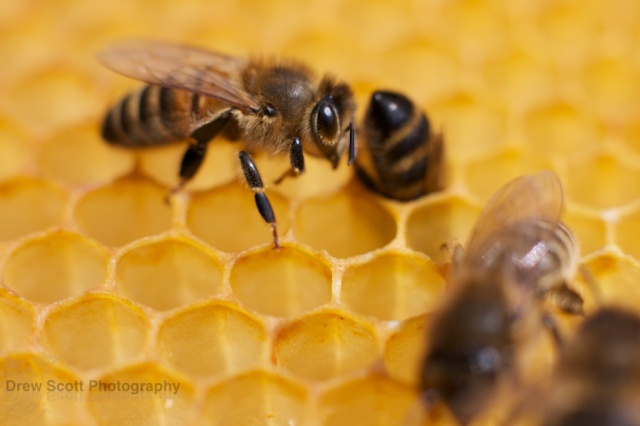
A bee bum.



















 Adventuresinbeeland's Blog