If you didn’t catch Springwatch in Japan: Cherry Blossom Time recently, you can still watch it on catch-up for the next 25 days (available in the UK only sorry). Lots of exquisite pink cherry blossom and also some roof-top honey bees living in Tokyo. For those of you unable to watch it, I took some notes.
Notes from the programme
In Japan cherry blossom is known as ‘Sakura’. The flowers open at between 17-20°C, with the Sakura bloom starting this year in southern Japan on 14th January and predicted to finish in northern Japan on 9th May. The dates change slightly every year according to the weather. There is a 14 day cycle from the buds opening to becoming petals on the ground.

The Springwatch team and their clashing jackets.
A festival of clones
Trees nearby to another will reliably flower simultaneously because Japan’s most popular cherry tree, bred for its beautiful blooms, is actually a hybrid clone made by grafting. The male and female flowers are not sexually compatible and so can’t reproduce by themselves. This sounds worryingly similar to the conditions under which the genetically identical potatoes of Ireland were hit by blight, but at least people are not dependent on the cherry tree for food.
The Japanese – and many other people too – are enchanted by the cherry tree’s pink blossom. Hanami time is poetically referred to in Japan as ‘The awakening of the creatures’.
“In Japan, cherry blossom symbolises clouds, and is a metaphor for the ephemeral nature of life. The country is known for its annual cherry blossom festival Hanami, which has its roots in the 5th Century.” – Anna-Louise Taylor and Ben Aviss, BBC Nature – What is Britain’s best blossom?
For a programme which is usually about nature, the show went surprisingly off-piste and looked at the human activities that accompany the cultural phenomenon of the Hanami festival. The lucky presenters got to eat all sorts of delicately presented and beautifully wrapped Sakura flavoured treats. We saw Kate Humble eating a white pizza in a cafe, which she drizzled with an unusual accompaniment – sakura honey.
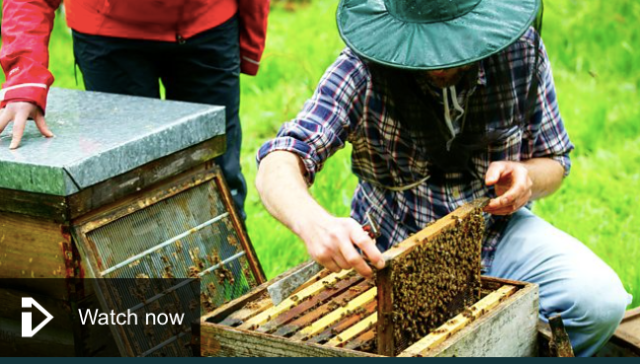
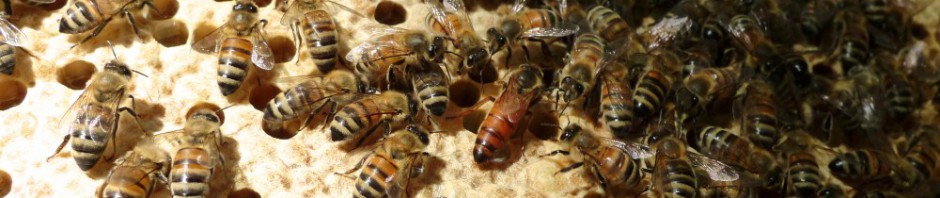
In the built-up glitzy shopping district of Ginza, beekeeper Mr Tanaka keeps his five rooftop hives 11 stories up. He keeps European honey bees as they produce more honey, including the precious sakura honey. “Happy birthday!” he gently says to a newly emerged fuzzy young bee. When asked how he knows it’s sakura nectar the bees are bringing back, he tells Kate he can smell its floral scent in the hive.
There’s a predator about unfortunately – the Japanese giant hornet can kill up to 40 honey bees a minute. Asian bees have learned to protect themselves by balling the hornets, simultaneously cooking and suffocating them. It is rare for European bees to protect themselves this way, so Mr Tanaka has a wire mesh cage round the hive to keep the hornets out.
“The bee connects humans to nature and, not only that, but people to people” – Mr Tanaka of ‘Ginpachi’
See also…
- BBC Nature – What is Britain’s best blossom? – article full of fascinating information on the blossom trees that brighten up the British spring.
- Tokyo bees make honey high over Ginza – more about the enigmatic Mr Tanaka and his sakura honey.
- Ginza Honey Bee Project – photos and cute drawings of the bees and their location

Harvest mouse in cherry blossom – Credit: Lesley Gooding
“Cherry blossom is a joyful sight in spring, which lifts the spirits,” says Lesley.