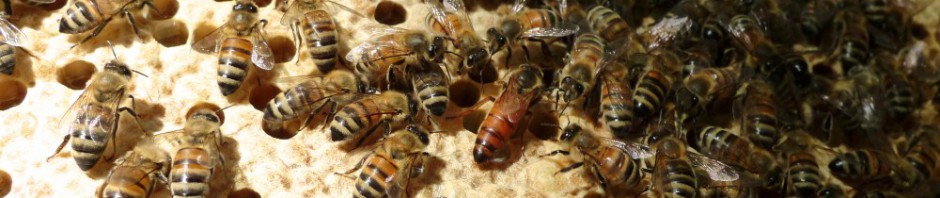
I didn’t post about the bees last weekend because I felt especially down about my beekeeping skills after an intense catalogue of failures on Saturday. First, I failed to find Queen Stella in my allotment bees, which would have been particularly useful given that they had produced some queen cells. Next, I improvised with swarm control by doing a split that afterwards didn’t make much sense to me. Lastly, for the second week running I failed to find our queens Pepper and Melissa so that we could finish off the Bailey comb change. A complete hat-trick of bee failures.
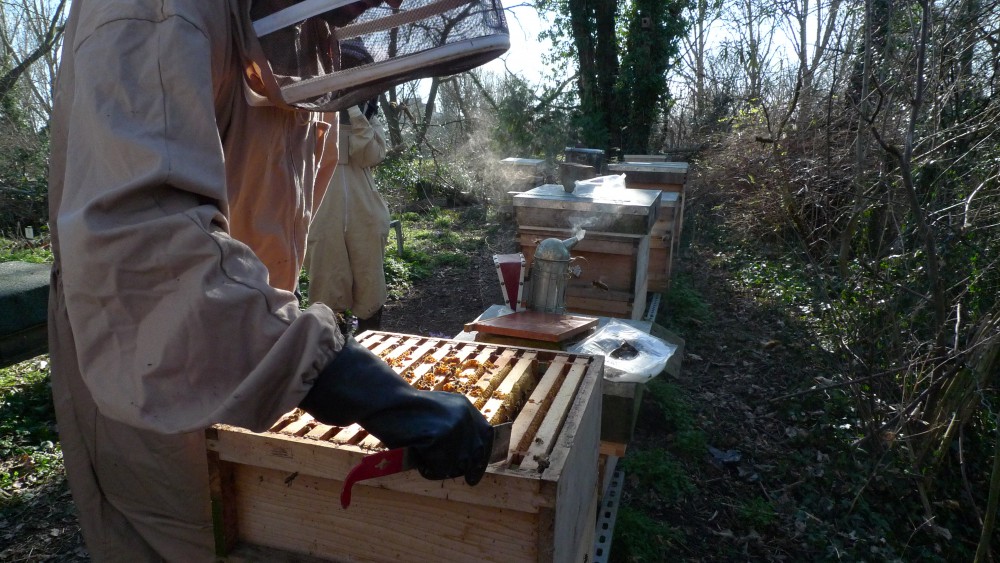
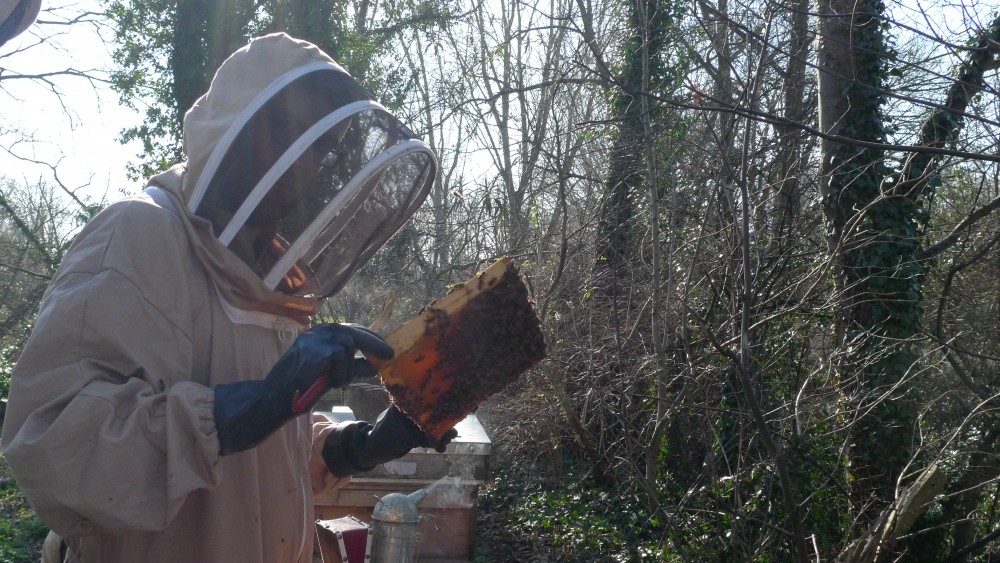
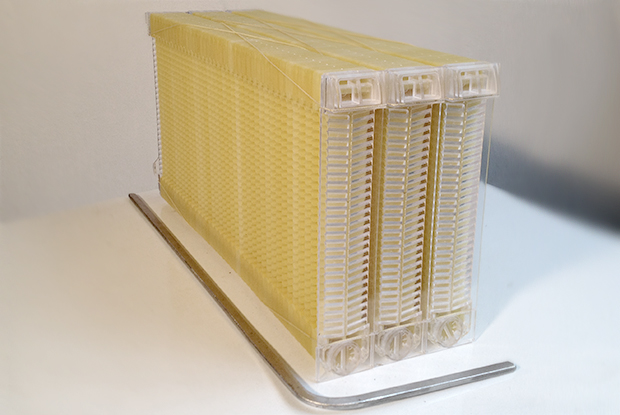
Luckily, yesterday was not so bad. With both Emma and I inspecting, we miraculously found both Pepper and Melissa! Last week I had put queen excluders between each colony’s three boxes to try and narrow down which box the queens were in. We then knew that frames with eggs in = the box containing the queen. Pepper and Melissa have now been moved up into their box of new frames drawn out by the bees. These look like the frame Emma’s holding below, all fresh and clean.

Now that these frames are drawn out in each hive, the queens can start laying in them. A queen excluder below stops the queens laying in the old combs. The brood hatches out in the old combs and then we can throw them away, or give them to anyone who might want to boil and reuse the frames. Alternatively we could destroy the brood before it hatches, as a varroa control technique – bees with deformed wings have been spotted. Emma put monitoring boards below the hives, so we can see how bad the mite drop is next week.
Here’s Jonesie finishing off his Bailey comb change with Jochen helping – the bees were not too happy at their boxes being pulled apart.


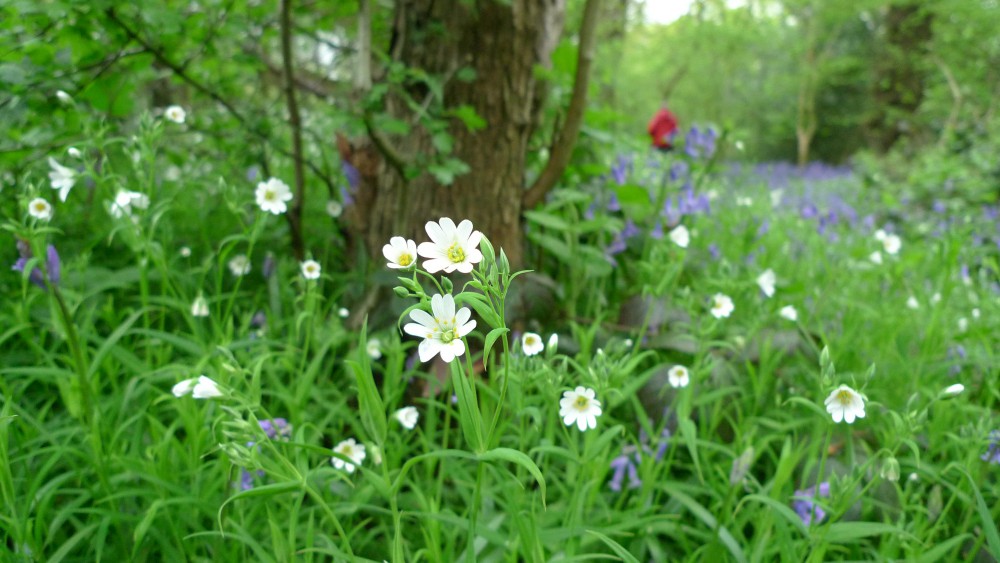
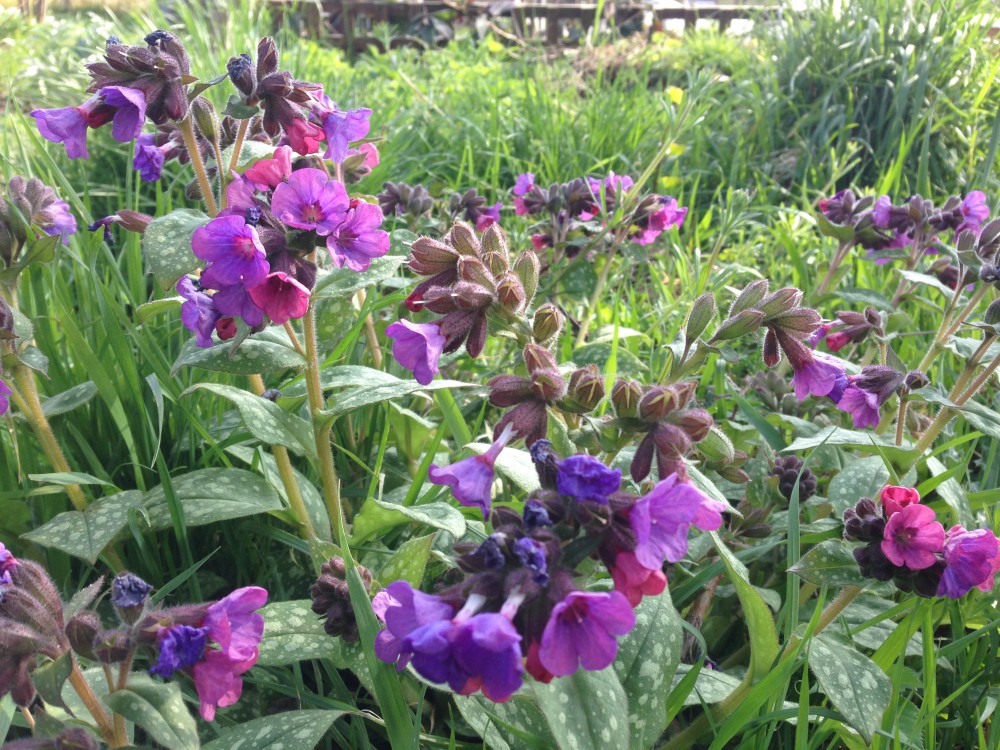
Lots of pretty flowers are out now. Forget-me-nots are smart – once the flower is pollinated, the yellow centre fades to white to indicate to pollinators that no more nectar is available.
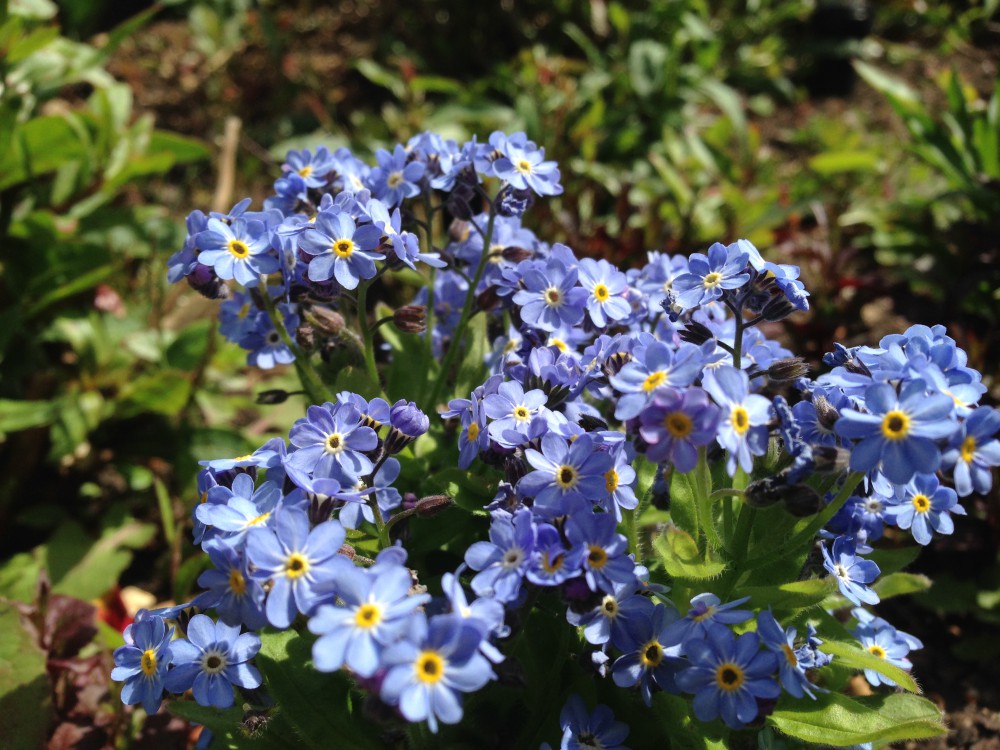
Forget-me-nots
Today Tom helped me out with the allotment bees. You may have heard the news that a new royal princess has arrived in the world – well, my bees had been busy making new royal princesses of their own. And not just one but so many I lost count… possibly as many as 15 queen cells were scattered across the frames, some on the sides, some on the bottom. Luckily I found Queen Stella and Tom helped by taking her away with some of her bees in a nuc. Reduced down the queen cells to just two, one sealed, one unsealed as insurance. Destroying queen cells is not something I enjoy, but if the hive produced several cast swarms most of them would probably not survive and could create a nuisance if they start building in people’s homes.
I finally found bees on a dandelion… right outside Tom’s hive, they were going mad for it. I had been wondering why everyone says dandelions are so good for bees as I’d never seen any on one, but now I have! Mark Patterson from the London Beekeepers Association told me on Facebook that “Lots of bees frequently visit dandelions. The problem with them is they need 3 hours of un-interrupted direct sun exposure before they start to secrete nectar. If you get a very warm sunny morning the bees go mad for them. They collect both nectar and pollen.”

This is what Tom’s entrance looked like, after a rainy morning the bees were loving the sunshine.

Occasionally I do things that don’t involve bees. Sometimes I do things involving cats instead:


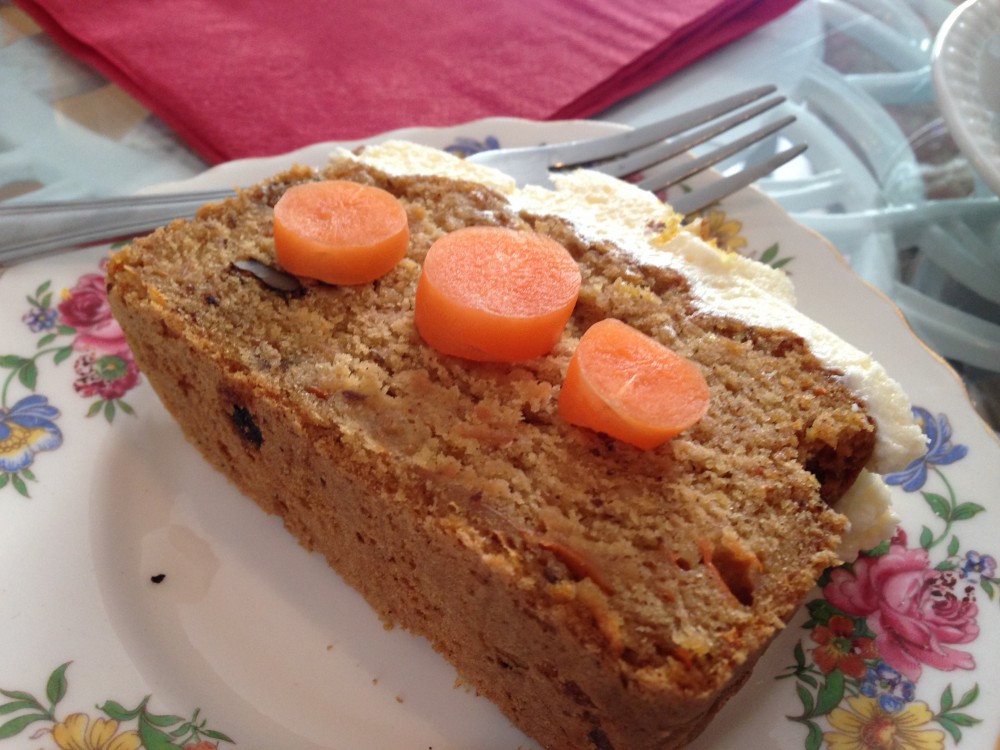
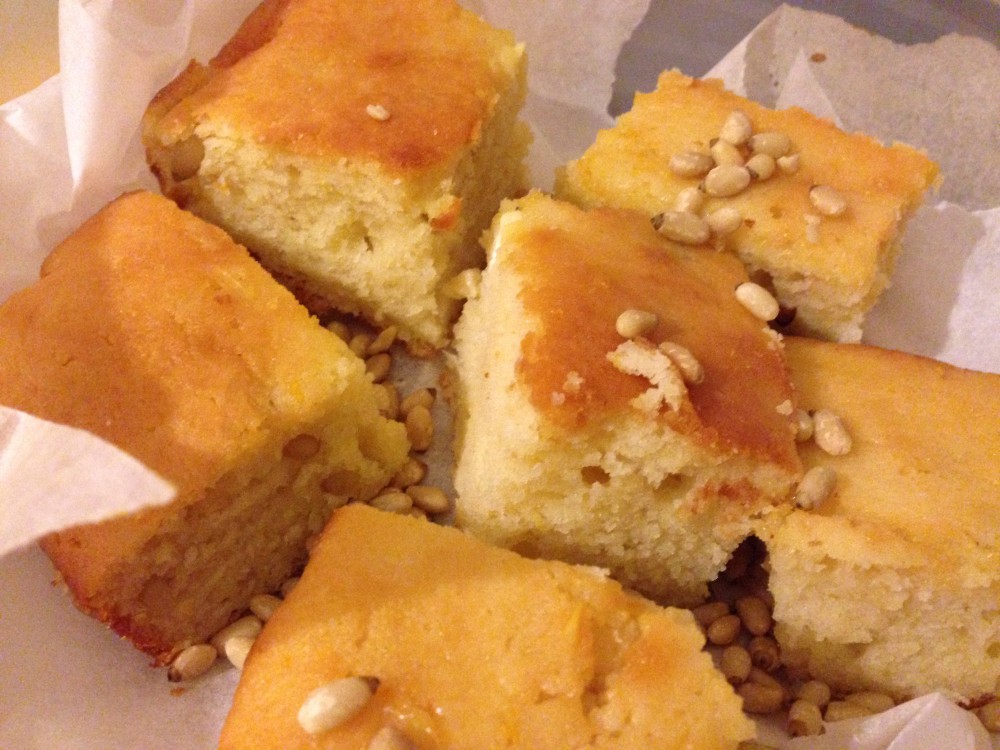
And anything that involves eating is a big hit with me, like this carrot cake at Lady Dinah’s cat emporium.
And a veggie dim-sum platter at Shikumen, Ealing. Yum.


















 Adventuresinbeeland's Blog