Into the dark of winter

The winter preparations for our hives continue. Mouseguards are on and sugar syrup feeding has finished. Tom Bickerdike has been helping Emma and me out by adding insulation to our hive roofs, sealing it in with an extra wooden layer.  Below you can see him posing with insulation with a hole cut in for fondant.
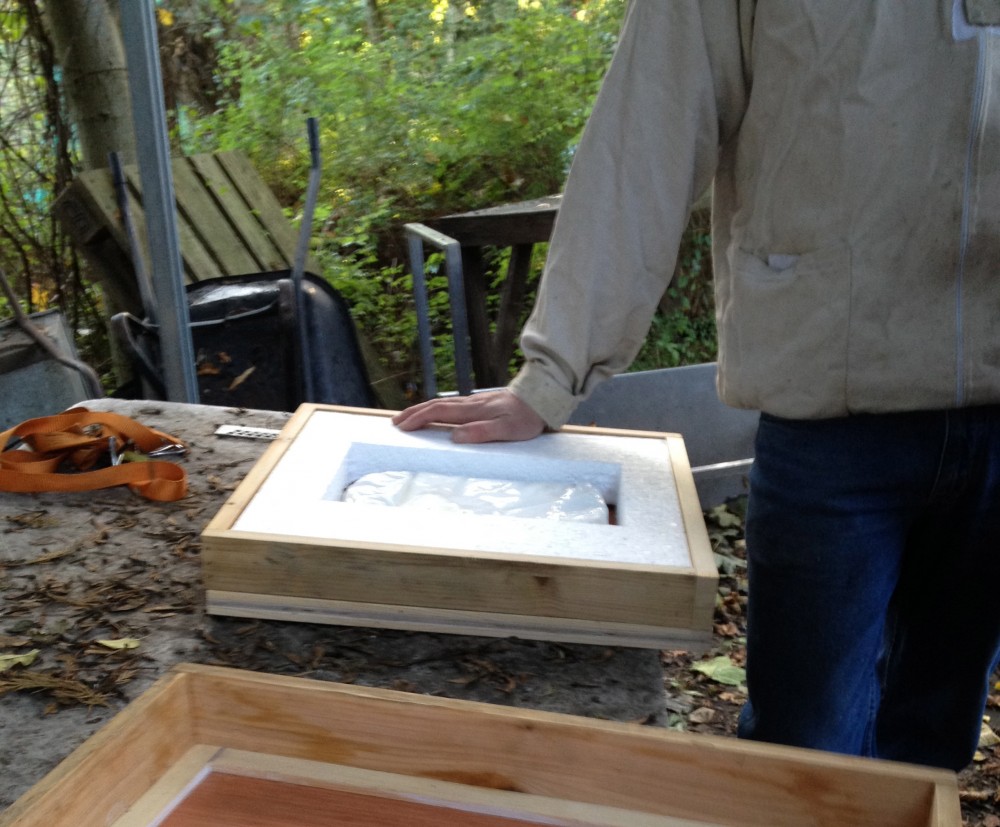
Tom with insulated roof

Last week Tom visited the National Honey Show with John Chapple. He and John were both impressed with this bee gym equipment. The name conjures up images of the bees lifting weights and doing gymnastics on mini trampolines, doesn’t it? Also the design reminds me of a boxing ring!

IMG_2495

The idea is actually that the bee gym is placed on the hive floor, where the bees give themselves a good scratch up against the threads and those little plastic crescents or “flippers” you can see below. Like a cow trying to relieve an itch by rubbing their backs on a beehive, the bees apparently love to rub their abdomen up and down these things.
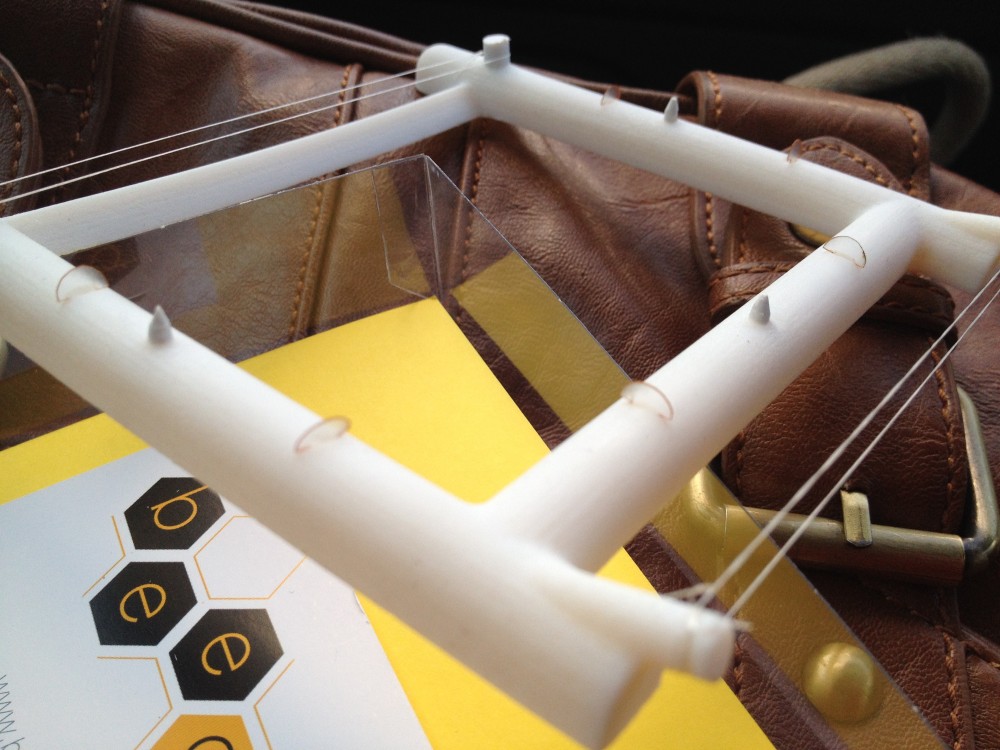
Bee gym 2

The bee gym may even be an effective way for the bees to shift varroa mites from their backs, as its creator Stuart Roweth has found numbers of mites dropped to be higher below the gyms. Stuart has given Tom and John Chapple a gym each so that they can test out whether they get the same results.

You can find out more about the bee gym at www.beegym.co.uk. The Contacts page says “Bee Gyms are available to beekeepers who would like to try this approach to Varroa control as part of our current trials.”

Guinness and chocolate cake

Last week I made this chocolate and Guinness cake, a Hummingbird Bakery recipe. I was pleased with its complex, rich and boozy flavour. Whilst still warm it reminded me of Christmas pudding; Drew said molten chocolate fudge cake. A little goes a long way!

Fairground ride

I also tried out some long exposure photography and took this photo of a Fairground ride at the Southbank.

The days are drawing in now. It is dark when I leave for work in the morning and dark when I leave work at night. I go outside on my lunch break to try and get some daylight. Do the bees miss the sun as they huddle together in the winter, I wonder?

Posted in Uncategorized | Tagged , | 29 Comments

London Honey Show 2013: part 2

A second blog post on Monday night’s third ever London Honey Show, run by the London Lancaster hotel.

The headline speaker was Dale Gibson, on ‘A year in the life of the Bermondsey Street Bees. Mostly.’ He positively bounced onto the stage, full of energy, humour and a flamboyant way with words. He has been beekeeping for six years.

Rather than giving us a straight account of a year’s beekeeping activities, he told us he wanted to look at beekeeping through the ages at Bermondsey.

In 1082, Bermondsey Abbey was founded. For the monks there, Dale imagined that the bees would have been a source of seeming miracles – for instance clean-burning beeswax candles brought a God-like light to the darkness of Southwark Cathedral. Wax kept parchment documents sealed and secret, and its reliable burning even made candles a time keeping device.

As well as all the benefits of wax, bees also provided sweet honey… but they had one final blessing to confer… alcohol! However Dale feels mead must have been used as chastisement, taken as a penance for unmentionable sins! He much prefers honey beer, such as the new London beer brand Hiver, which he has supplied honey to. There were some free samples of Hiver at the show, and it did taste very good.

So, from 1082-2013, what’s changed for the bees of Bermondsey Street? Dale summed up the bad:

  • Varroa
  • Neo-nics
  • Intensive agriculture

And the good:

  • Bee space discovered – we now have hives with removable frames
  • Improved lip balm!

He gave us a quick whip through his beekeeping year. He feeds a anti-nosema thymol emulsion in 2:1 sugar syrup during autumn, which I found interesting. Apparently a emulsion recipe can be found on beekeepingforum.co.uk. Anyone have any opinions or experience in doing this?

Finally Dale showed us a fun video he’d made of him receiving a queen bee and her attendants through the post. His dining table was set up very nicely to receive her.

Dale has a blog at apis.gb.com and Bermondsey Bees have a YouTube channel – BermondseyStreetBeesOnAir, where you can see the video he showed us, ‘The day the queen came to tea‘.

Will do a third blog and final post on the show soon I think, with more of the photos I took. My cold is a little better today, thank you everyone for your anti-cold tips!

To finish this post off, here is a great photo Dale showed us of one of his diligent beekeeping assistants. I managed to find it on the Londonist website.

Posted in Honey | 19 Comments

London Honey Show 2013: part 1

I’ve come down with a cold, so am writing this in a feverish sleepless state. So apologies if   any of it does make sense – or indeed doesn’t make sense! Feeling a bit sniffly, yesterday I headed down to the third ever London Honey Show, run by the London Lancaster hotel.

It had been moved to a bigger room this year (compared to 2011, I missed the 2012 show), down in the basement with no windows. It was good to have the space but I missed natural light, which tends to make honey glow more. Some free mead and beer samples were on offer, which helped my sore throat a little.

Some unusual hives were on display…

Nepalese Apis Cerana beehive

Nepalese Apis Cerana beehive

Apis Cerana Cerana prefer small hives.

Nepalese Apis Cerna Beehive description

The first speaker, the delightfully named Michael Badger MBE, was speaking on ‘Urban beekeeping in a bee house’. Given that his bee house (located in his garden outside Leeds) looked bigger than the average London garden, I doubt many of us will be able to replicate it, but it did look rather good.

Unfortunately his presentation was beset by technical difficulties and he seemed to have lost a lot of photos which should have been on his usb stick. This made it quite stop-and-start, as various members of the hotel’s IT team had to jump up and help him. He was unaware of how to rotate pictures, so we had to look at a few by tilting our heads 90 degrees until help arrived!

What is a bee house? Mr Badger has designed a large shed with several hives kept inside. Gaps at the top of the shed allow the bees to fly out; air being allowed to circulate in all the time prevents the problem of the bees thinking it’s warmer outside than it really is. It’s a more complex and clever design than that, but not being a practical person I’m afraid I can’t recall the finer details. He emphasised the importance of keeping the bee house clean, not dropping any wax or honey on the floor, and indeed it did look most spick and span.

I was encouraged that he mostly keeps his bees on a brood-and-a-half or double-brood system, as we are overwintering some of our hives on double brood boxes this year. For ease of lifting, some of his colonies are even kept completely in supers! I have not seen anyone do this before.

“Beekeepers never seem to know anything about bees” he told us, and recommended we read up about bees (not just beekeeping). As farmers know their livestock, so we should know our bees – their communication systems and biology. The books he finds most useful are Dr Colin Butler’s ‘World of the honeybee‘ – out of print, but available through public libraries – and the more recent Ted Hooper, ‘Guide to Bees and Honey‘ and Mark L. Winston’s ‘The Biology of the Honeybee‘.

In April 2014 Mr Badger has a book coming out, ‘Heather Honey – its production and uses’. It has chapters on heather honey ecology, production and its uses – mead, wax, honey cakes, medicinal – and will be published by Bee Craft Ltd.

In my next post I’ll write up my notes from Dale Gibson’s presentation, ‘A year in the life of the Bermondsey Street Bees’ and show you some more photos from the evening. I’ll leave you with some sweet bee cupcakes.

Bee cupcakes

Posted in Honey, Uncategorized | 16 Comments

Getting our hives in order

More winter preparations down at the apiary today. I hadn’t had time to make a cake, but luckily Cliff came to the rescue with a luscious mascarpone, lime and blackberry flavoured cheesecake (think that’s what he said). So creamy. We really do have a good cake club going on.

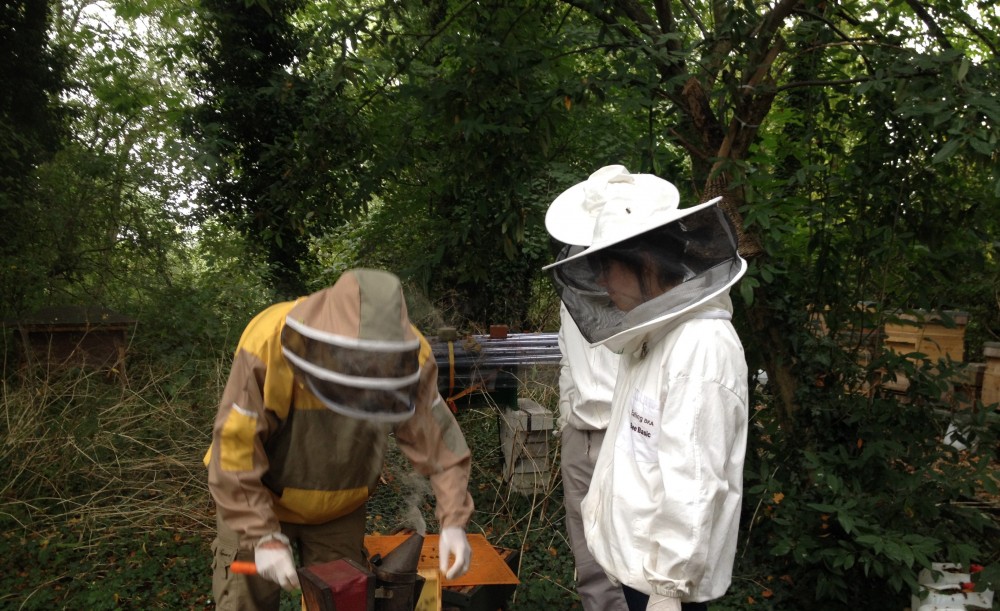
It’s been warm, so a surprising amount of beekeeping was going on for October. We had two new young and enthusiastic wannabe beeks turn up, Karen and Freddie. Karen is a music graduate who plays piano; she comes from Canada and is here in London for an internship. Freddie looks after some community land in Park Royal and is hoping he can put some bees there once he’s done the Ealing beginners course.

Andy Pedley teaching Karen and Freddie

Andy Pedley teaching Karen and Freddie

Above is a photo of Andy Pedley teaching Karen and Freddie. I love his teaching style and could listen to him all day. He has a big hearty laugh that can be heard right across the apiary. When you hear that laugh down the road, you know Andy’s coming!

He had some fun with them by asking how many bees they thought were in the hive. They came out with various guesses such as ‘500’ or ‘2000’, so were very shocked when Andy estimated around 30,000! I must remember to ask beginners that question, it could be very entertaining. Especially if they start trying to count them all.

John Chapple inspecting Albert's hive

John Chapple inspecting Albert’s hive

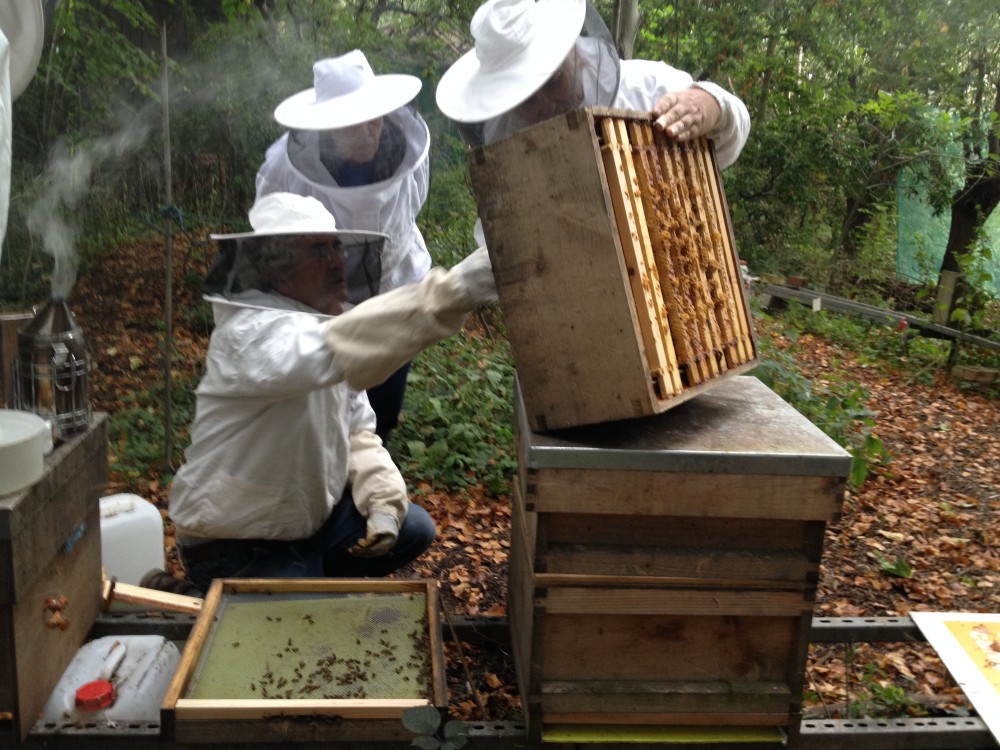
Nearby a separate inspection was going on, as Albert had noticed an unusual build up of wax and other droppings on the varroa inspection tray. He was worried that wax moth or some other creature could be living in there. Above you can see John Chapple taking a look. These bees were incredibly aggressive last week and really went for my legs. This week they were a little better, but understandably not that happy to have their combs tilted around.

John found nothing wrong, except that the hive had no brood at all – in October you would still expect a small brood nest. However pollen was being brought in, which is usually a sign that the bees are happy. He recommended that Albert put a frame with eggs in from his other hive to test whether the bees try and make a queen cell from it. If they do, that indicates the colony is queenless and he can then combine them with his other hive.

Tom's home-made feeder

Tom’s home-made feeder

We also had a look in Tom Bickerdike’s colony to see how much syrup they’d taken since last week. Tom is a fantastic carpenter and joiner and has made this feeder himself. The compartment at the side is where the bees feed. It contains sticks and other bits and pieces so that they don’t drown. Last week Tom put two gallons of syrup in and these hungry Italian bees ate it all up within the week.

Tom has very kindly made Emma and I a properly insulated roof, with a layer of insulation sealed in by wood. He says he is on a mission to get everyone to insulate their hives!

As Emma explained in her recent post ‘Turning over a new leaf‘, we now have Myrtle and Chamomile’s colonies in double brood boxes and Chilli’s colony on a single brood box, though they are only just big enough to be in a brood box rather than a nucleus, so need plenty of feeding up. This is different to how we usually overwinter our hives (filling up a single brood box), so fingers crossed all goes well. Come spring we will probably do a shook-swarm and put Myrtle and Chamomile’s colonies into a single brood box again, as that is easier to inspect.

The ivy is out now, so plenty of pollen is coming in. Think we’ll wait till it’s over to put our mouseguards on, so that it doesn’t get knocked off their legs. Tom thought he could detect some sweet whiffs of ivy nectar in the air.

Here are some pretty pink flowers that I found growing in a circle in Cornwall. (EDIT – Jonathan Harding has kindly left me a comment below to say that they are Cyclamen).

Circle of pink flowers

Posted in Uncategorized | Tagged , | 22 Comments

Thoughts on ‘More than Honey’

Last week I went to see a showing of More than Honey by the Ealing Transitions/Friends of the Earth groups at St Mary’s Church, Ealing. I hadn’t been in the church before and was surprised at how beautifully decorated it is, with rafters painted gold and intricate red and gold patterns on the arches. The church was packed, so hopefully plenty of money was raised for bee causes.

It’s a very well shot film with some ground breaking footage of a honeybee queen mating high in the air, and also unusual viewpoints such as inside a hive being trucked about, the combs swinging back and forth. The director went around the world to film it, including California, the Swiss alps and China.

St Mary's Church, St Mary's Road, Ealing

We see commercial beekeeper John Miller standing by his hives in an almond tree plantation, the buzzing in the delicate white flowers filling the air. He turns to the camera and says “That’s the sound of money… fresh printed money”. As the film goes on he loses lots of hives, in response to which he treats with Fumagilin, saying “I am backed into a corner, and I fight back with what I have – chemicals.”

Some of the practices John Miller uses do not seem healthy for the bees to me, and he admits himself that his grandfather would be shocked to see how things are now done. Mechanical equipment is used to shunt the hives about, scraping and crushing bewildered bees willy nilly. When I inspect a hive I try my best not to kill a single bee, but in these large-scale operations human interaction with the colonies is lost. The pursuit of income for commercial beekeepers comes at a cost for the bees. The trucking, the spraying of pesticides that goes on in commercial plantations, forcing the bees to exist on monocrops… no wonder colonies are dying off.

In contrast I enjoyed the footage with Fred Jaggi in peaceful Switzerland. He does not own a veil and keeps black bees native to his area high up in the mountains. He claims they swarm less and are gentler, as well as better suited to the cold conditions. There is entertaining footage of both male and female beekeepers there puffing on a cigar instead of a smoker!

But even amongst the idyllic scenes of wild flowers in the alps, disease lurks and sadly Fred’s bees are diagnosed with American foulbrood (AFB). The inspector fumigates the bees with sulphur to kill them and the bees and frames are then burnt in a pit. It sounds harsh but is better than leaving the colony to infect other bees.

In China we meet Zhao Su Zhang, who sells pollen to farmers in northern China, in areas where heavy pesticide usage means bees can no longer survive. Years ago Mao decreed that sparrows should be killed as they stole grain from the people. This was done, but resulted in a plague of insects as their natural predators had been greatly diminished. The insects were fought with insecticides and the bees died. Messing with an ecosystem never produces positive results.

Each year Zhao drives south for two days, buys flowers there and hires a room for her team to harvest the pollen from the flowers, carefully packaging it into paper envelopes. She then drives back north to sell the pollen to the farmers. Up on ladders, labourers must painstakingly dab each flower with a little pollen so that the trees will fruit. Even the slowest, most lackadaisical bee in the world would surely beat a human at this job.

The film left me feeling sad and angry. We abuse the natural world in so many ways – can we really be surprised when things go wrong and bees start dying off? It’s lucky for bees that their work is so valuable to us, otherwise governments would probably do little to protect them and those of us who care would be left lamenting a missing hum.

Edit: Rusty at Honey Bee Suite has written a post pointing out some errors in More than Honey: Take the Pollinator challenge.

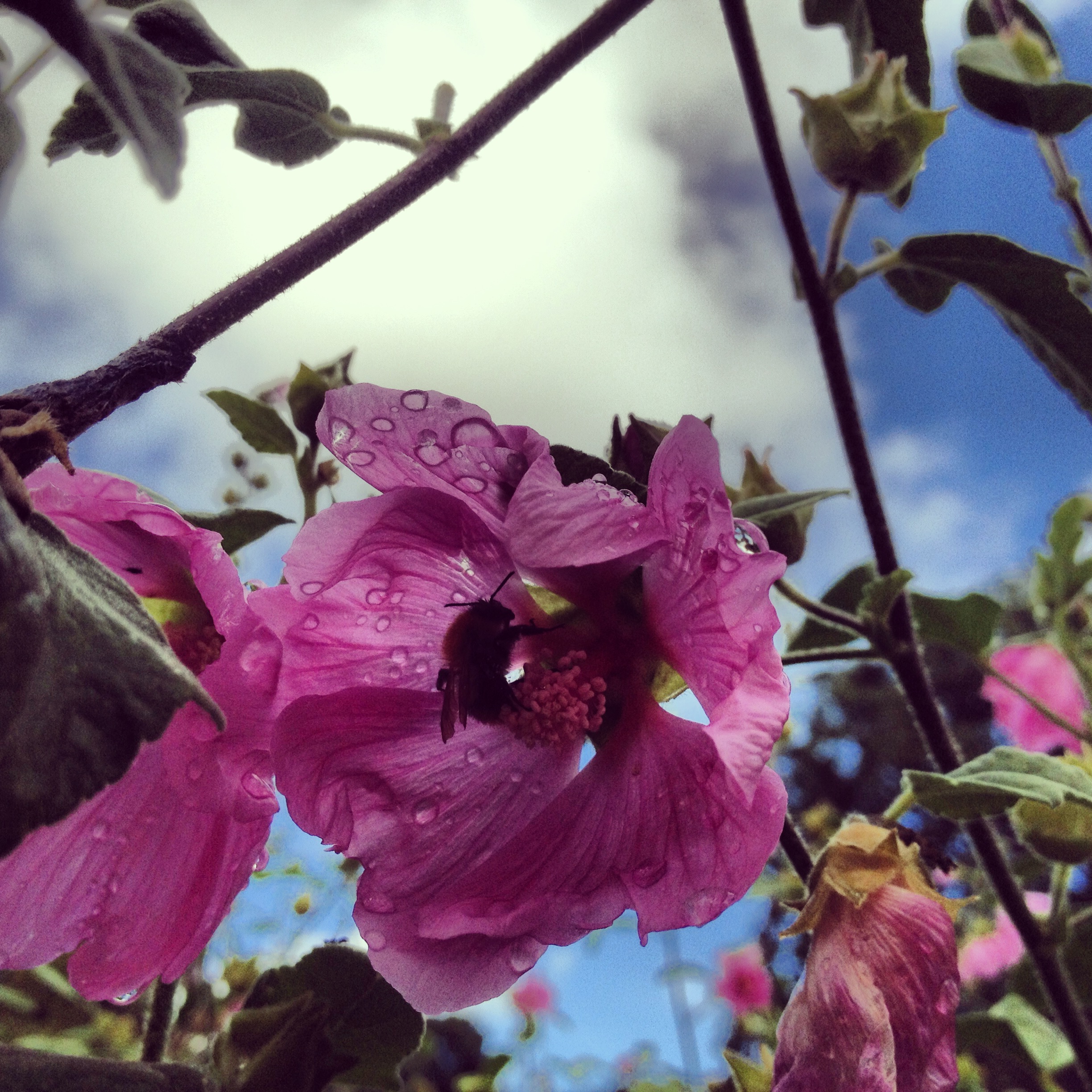
Carder bee on pink flower

Posted in Honey, Uncategorized | Tagged | 37 Comments

What’s wrong with our bees?

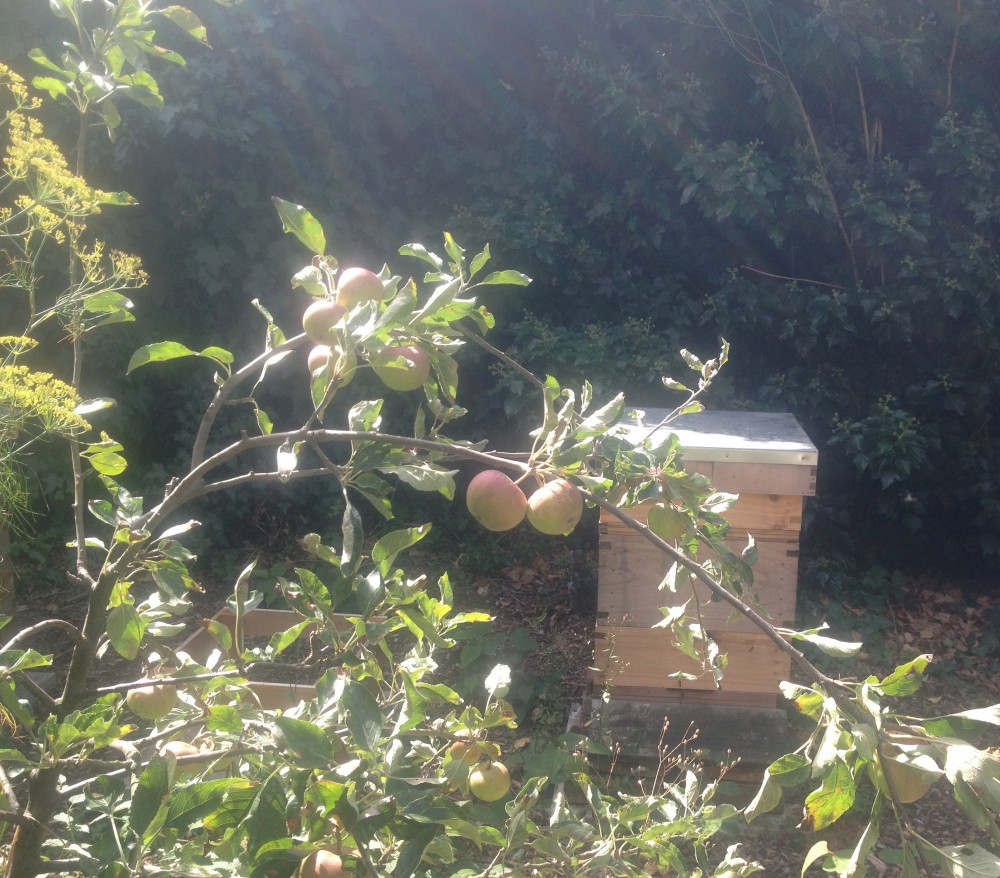
An idyllic scene of sunshine on the apple tree at the Hanwell apiary on Sunday.
Apples in front of bee hive

The bees came to say hello in the super.

Bees on super frames

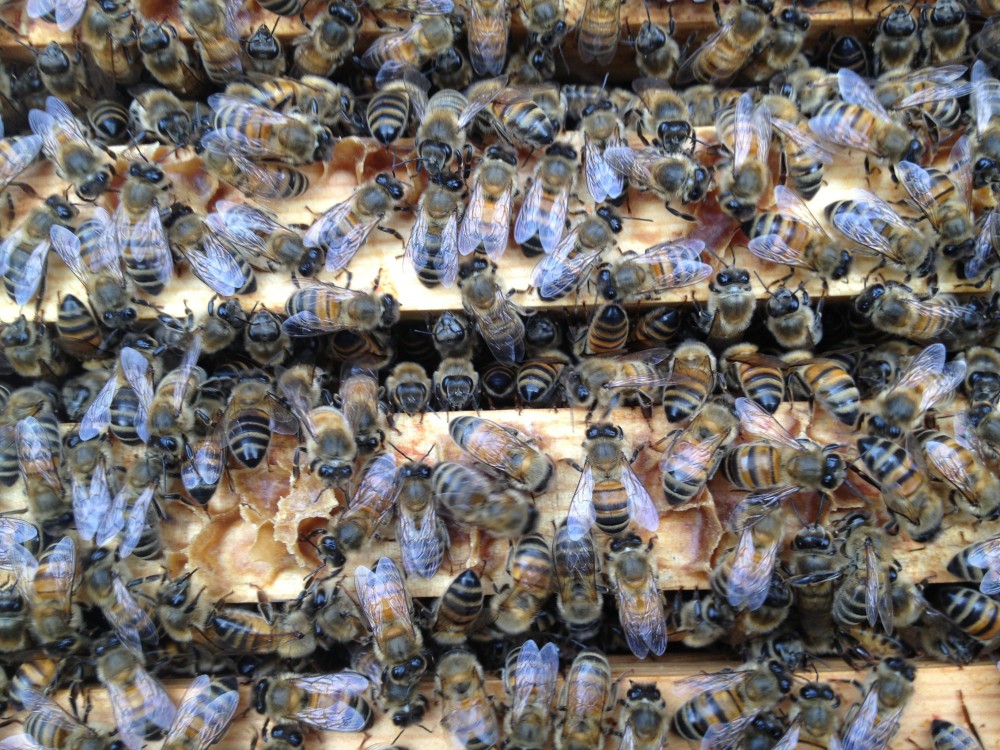
Further down, they bubbled out from the brood frames. So many thousands of interactions happening. They are experiencing multiple sensory levels we’re missing out on – the smells, the tastes of nectar being passed from one bee to another, immersed in the hum of purposeful fanning.

Bees on brood frames

At first glance, the colony looked healthy, with plenty of bees, brood (five frames) and stores. But I spotted a poor bee with a varroa mite on her back, the first time I’ve seen that on one of my bees.

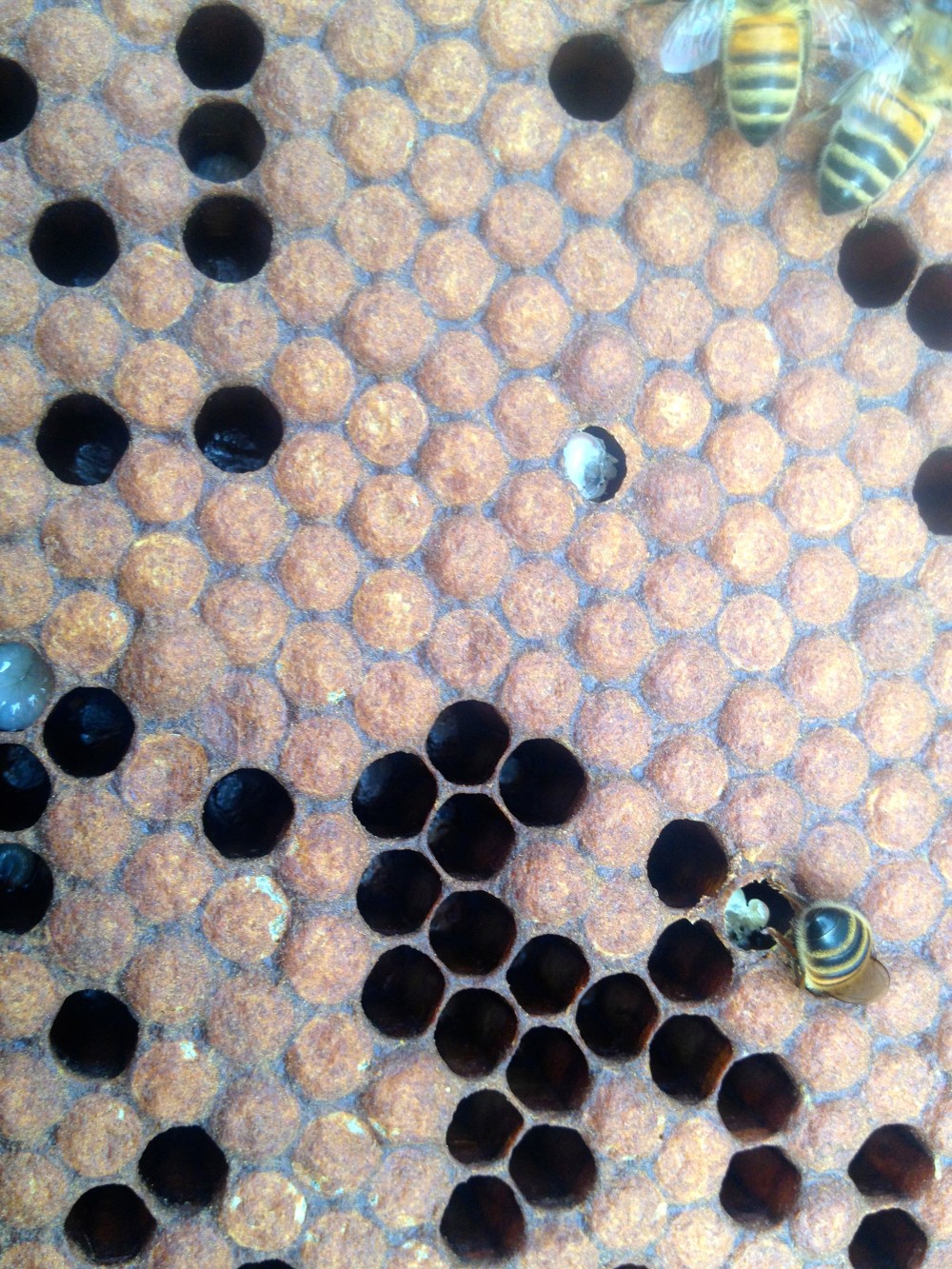
Plus, a few cells on different frames (about five cells that I spotted in total) had some dead larvae inside. Here’s what they looked like in the cells.

Brood disease

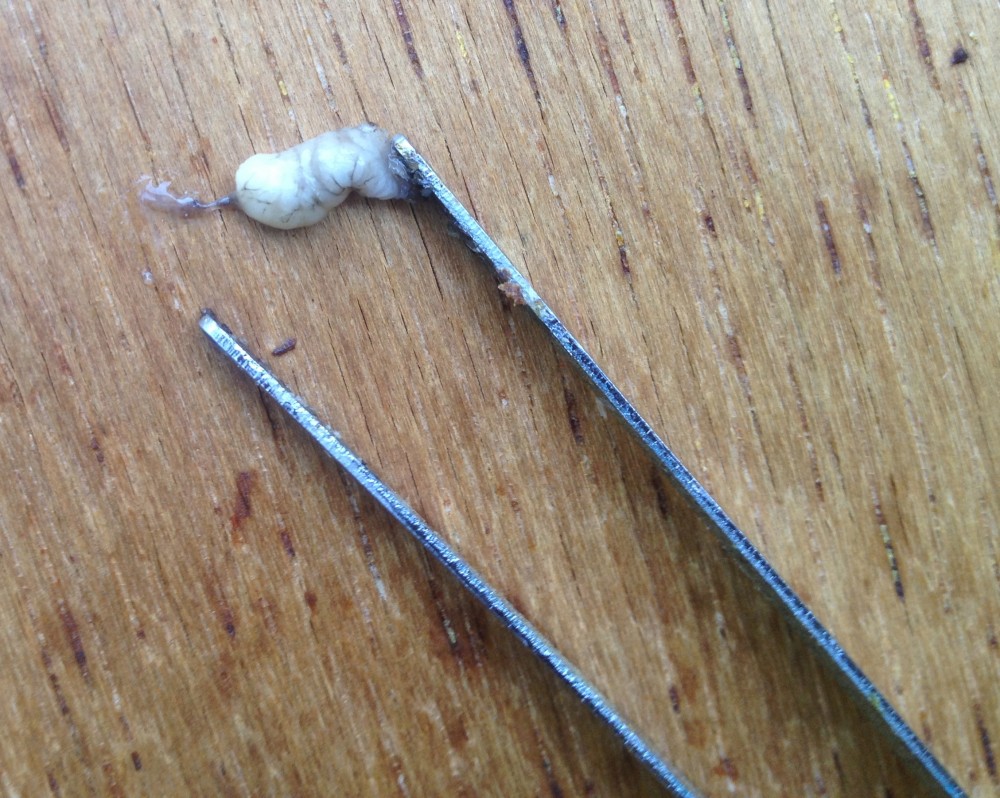
I plucked the dead bees out with tweezers to inspect. They looked like the larvae below, with a white slimy texture.

Dead larvae 2

I couldn’t spot any scales or melted-down appearance to the larvae, so don’t think it’s EFB.

Dead larvae

At first I thought it might be sacbrood. But looking at the photos on the Beebase Sacbrood page, these larvae don’t seem to have the characteristic ‘Chinese slipper’ or gondola  shape to me. But as I could only find a few dead larvae, perhaps it wasn’t a large enough sample size to tell.

Sacbrood is not a major disease and the only remedy is to re-queen, as some strains of bees are less susceptible to the disease. It’s too late in the season to do that now, but perhaps could be something to consider next year if the amount of dead larvae increases. It would be a shame though, as this tiger-coloured queen is a good layer and her daughters require virtually no smoking.

Any thoughts? Even though I’ve studied diseases, what I see in the hive never quite seems to match the books! For now I’m treating with Apiguard (an anti-varroa treatment) and planning to keep an eye on things.

Posted in Disease prevention | 21 Comments

Fate of a drone

Who’d want to be a drone at the end of summer?

Chucked out drone

This drone has been harassed out of the hive by his sisters, who bit and tugged at him, dragging him away from the sweet benefits of their labour. Collapsed on the hive landing board, he makes a sad sight.

Wasp eating drone

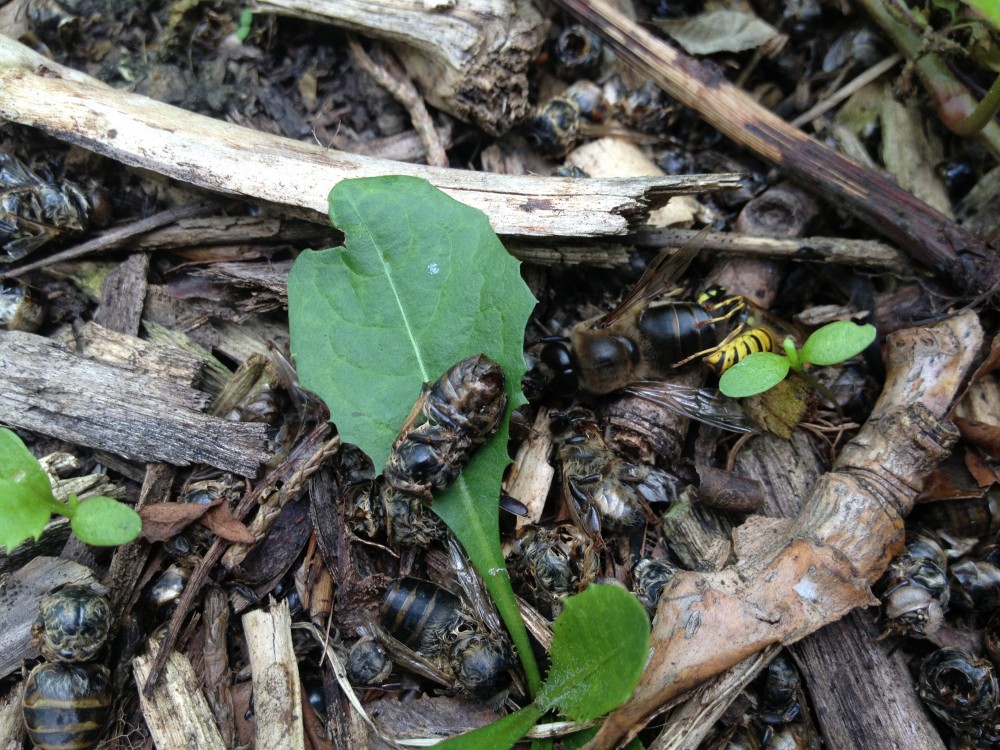
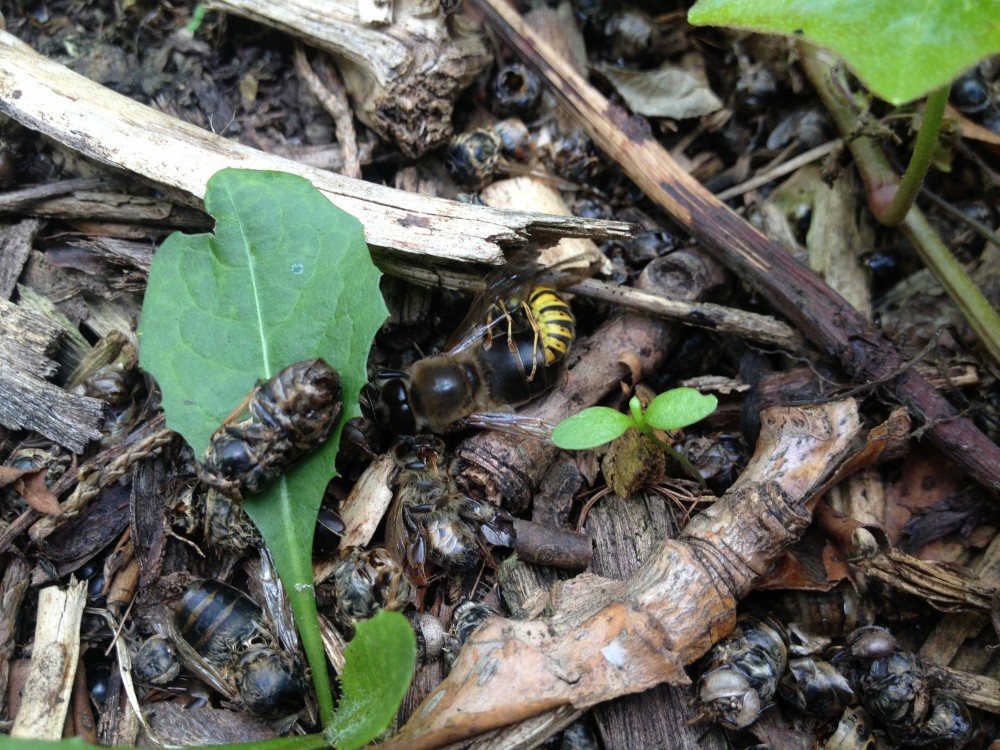
His brothers have already come to an end. Their dried out, desiccated bodies litter the floor. And he has attracted the attention of a wasp, who perhaps views his large abdomen as a moving honey pot of juicy reproductive organs.

Wasp eating drone 2

The wasp is smaller, but has the advantage of a sting. He tries to move away, but he has been weakened by his earlier struggles with his sisters, and his feeble motions are no match for the persistent wasp.

Wasps eating drone 3

A second wasp joins in. His future looks set for a grisly end. I’m afraid there is no happy ending.

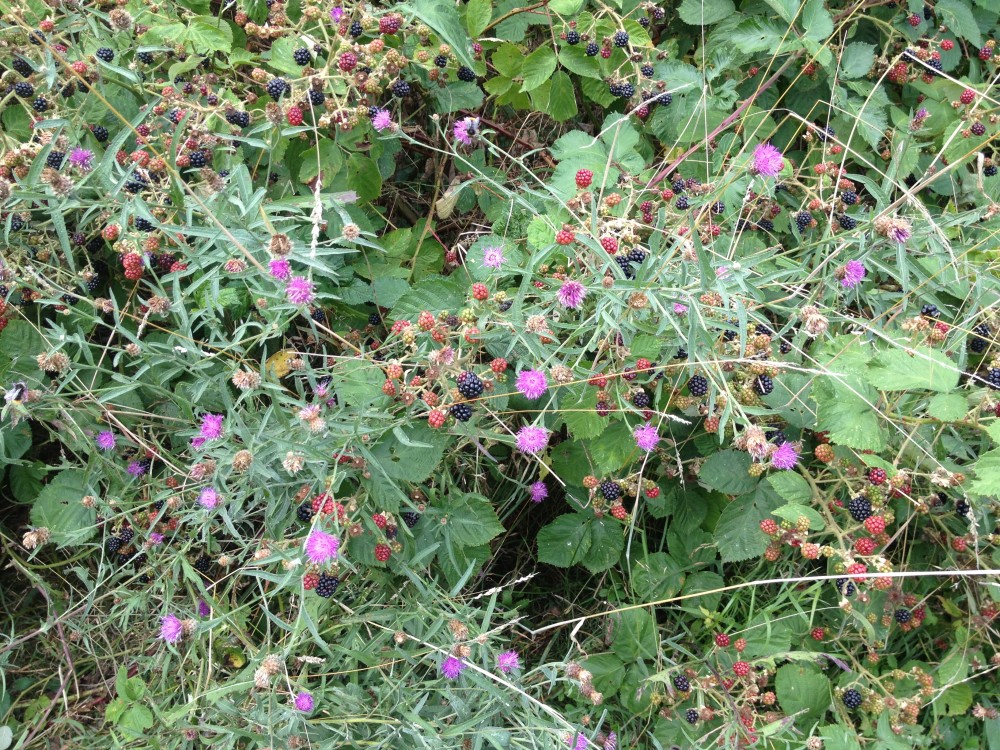
Here are some pretty flowers to make up for it. Everyone is out blackberry picking in the local fields.

Blackberries

Spiky though the thistles are, their flowers turn into soft downy seeds that drift on the breeze. Summer blowing away.

Thistle seeds

Posted in Uncategorized | Tagged | 46 Comments

Honey bee pests, diseases and poisoning exam feedback

In March this year I took the British Beekeeper Association’s Module 3 Honey bee Pests, Diseases and Poisoning exam. I was lucky enough to pass, but still asked for feedback as the examiners always give titbits of information I’ve never come across before.

Here it is in pdf format – Module 3 feedback – includes ideal answers on the lifecycle and damage caused by acarine and amoeba, seven integrated varroa management methods that could be used to combat varroosis and the characteristic signs of EFB and AFB.

Like last year, the examiner’s comments come from Margaret Thomas, an incredibly experienced beekeeper who has been keeping bees since 1973.

I feel a bit embarrassed about some of the answers I gave in the exam. I found remembering the latin names (and even all the common names!) of the multitude of bacterial infections, viruses, spore forming organisms, cyst forming organisms, pests and parasites that prey on honey bees very tricky. Looking back through my answers, I’m not sure I deserved to pass –  but I’m not going to ask for the pass to be taken away!

Posted in Exams | Tagged | 30 Comments

What’s flowering now: late July

For the last few weeks it feels like I have been living in a country that is not England. A dream world where I haven’t needed an umbrella for weeks at a time, where my 7am walk to the bus stop has felt warm enough not to wear a coat, and where sandals and shorts can be worn. Never have I known a summer so hot. I have genuinely enjoyed the heat, but I did want rain to come for the sake of the plants, and for the bees. Eventually the sky burst and the deluges came, bringing some relief to the parched grass.

Late July is a time of yellow, purple and pink, of ragwort, thistles and rose-bay willow herb. The hogweed has shrivelled up into dry seed pods and the bramble flowers are turning into blackberries already, so it’s lucky we have the thistle family.

Honeybee on thistle

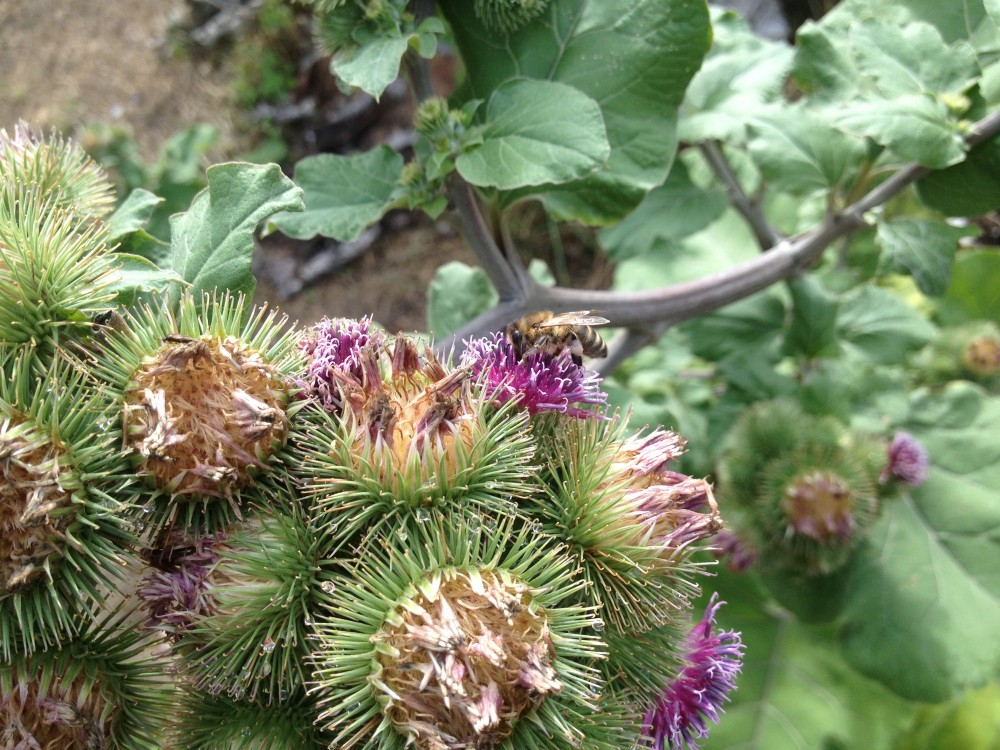
Honeybee on burdock

The internet tells me there are around 20 different species of thistle native to the UK. I certainly can’t identify them, but I can look around and see that the purple spiky flowers in the park come in different shapes and sizes. Theresa at Everyday Nature Trails has done a great post on some different types of thistles: Pretty prickly thistles.

I think this type of thistle may be the burdock, the root of which has traditionally been used to make the British drink Dandelion and burdock.

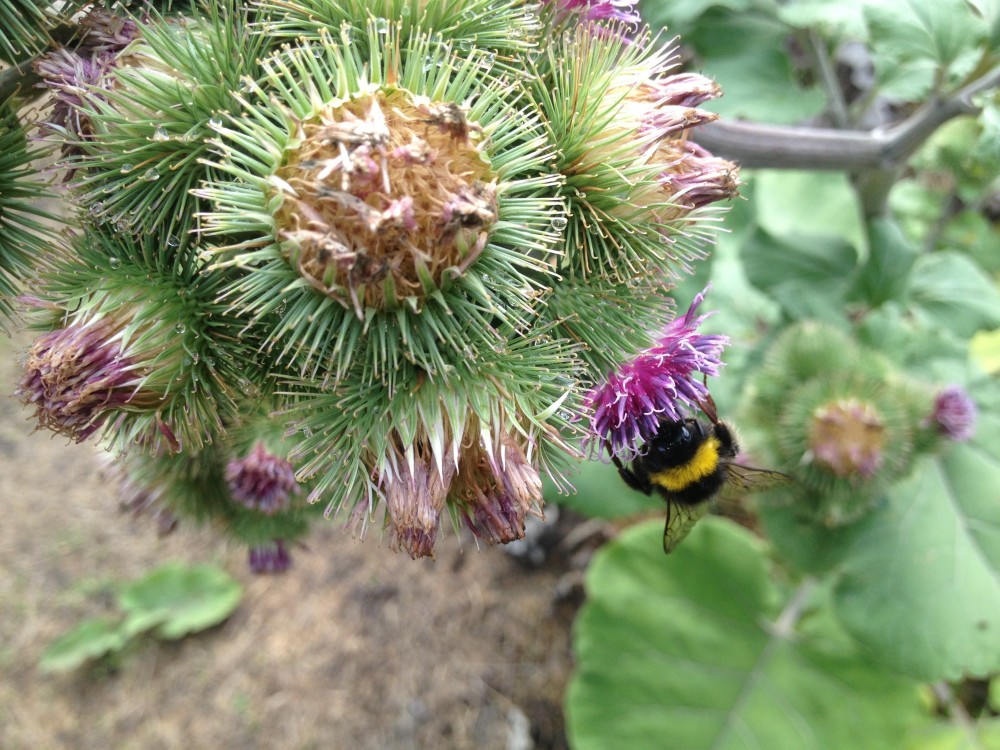
Buff tailed bumble

These are tough, sturdy flowers, capable of supporting the weight of the largest bumble bee foragers.

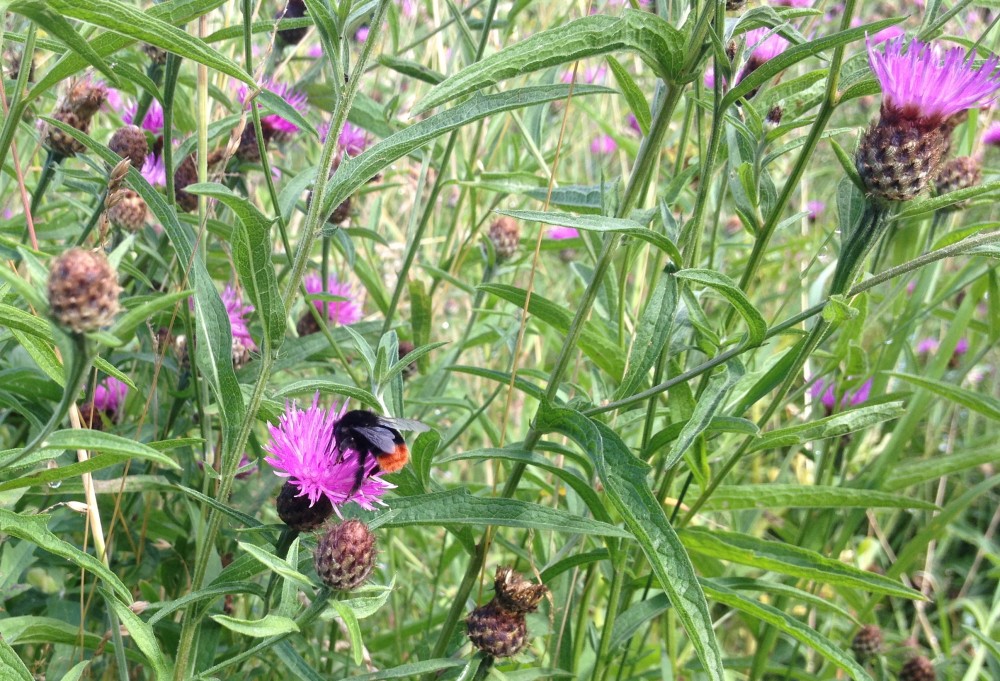
Red tailed bumblebee

These flowers are daintier and I believe may be creeping thistle, being visited here by a Red-tailed bumblebee, Bombus Lapidarius. Helpful commenters have revealed that these  little purple flowers are actually knapweed, part of the same family of plants. Mark says that “Thistles like rich fertile soil whilst knapweed thrives on nutrient poor soil”.

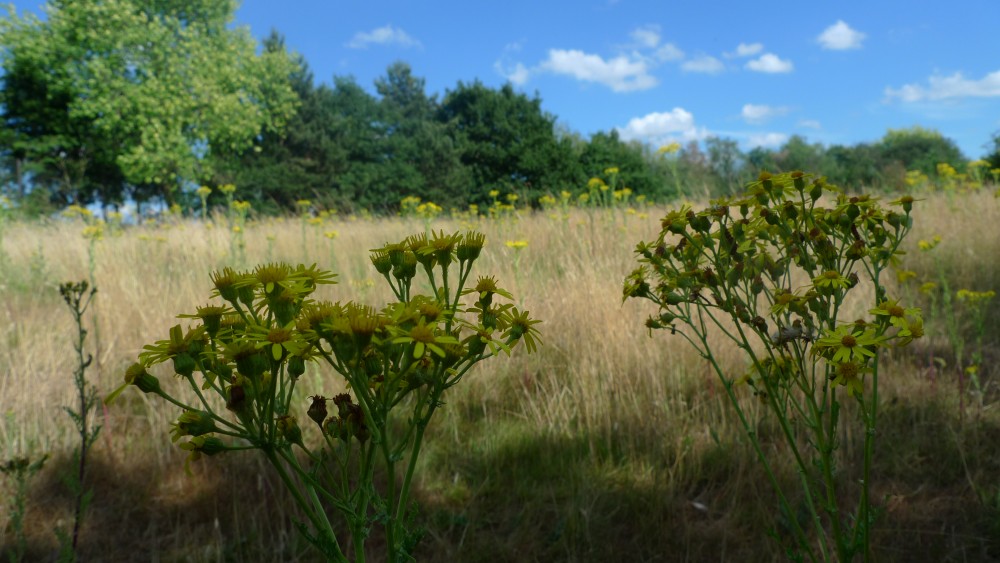
Ragwort and thistles

Ragwort and knapweed

I found a humming field of these knapweeds and ragwort. The yellow and purples together, with red-tailed bumblebees darting everywhere between them, was a marvellous sight.

Ragwort has other common names – ragweed, staggerwort, stinking billy, stinking weed or yellow weed. It can be fatal to some grazing animals, such as horses.

Red tailed bumblebee

Red tailed bumblebee

Red tailed bumblebee

Red tailed bumblebee

Field of ragwort

Field of ragwort

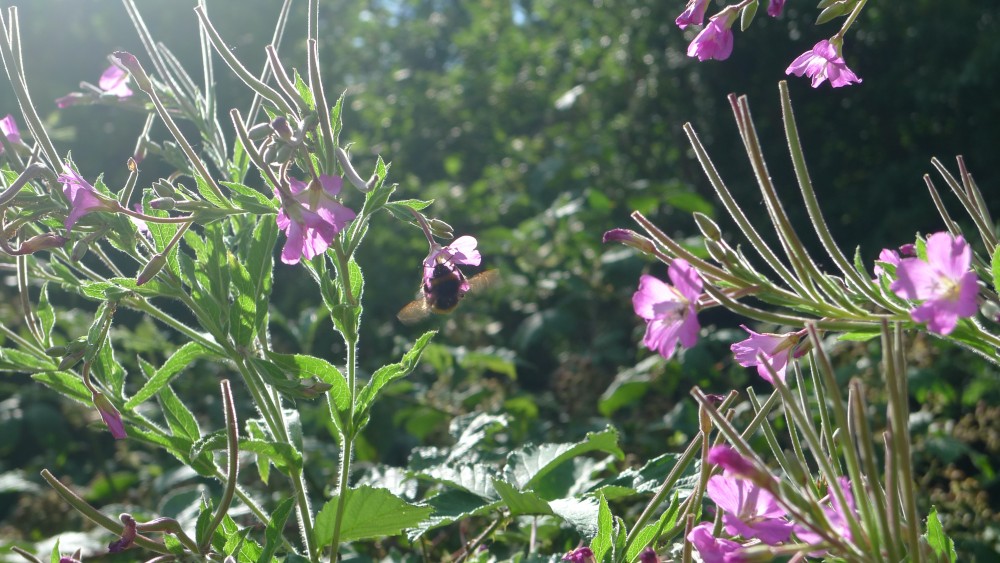
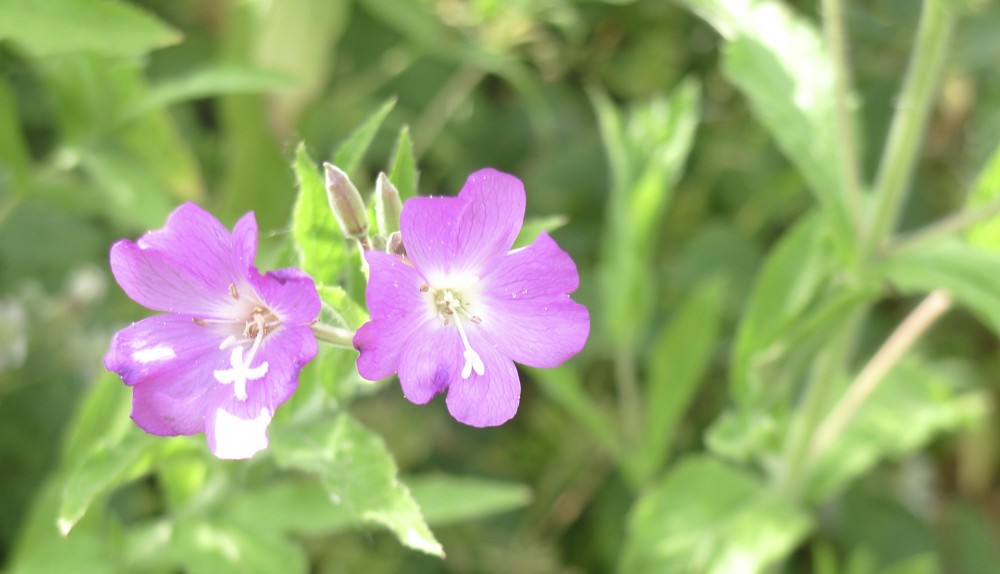
With so many thistles and knapweeds to visit, the rosebay willow herb (fireweed) seemed to be under appreciated this year, but I still observed a few bumbles hanging on to its pretty pink flowers. Mark has left me a comment to say “Your willow herb is actually hairy willow herb and not rosebay willow herb – differences in growing habit and flowers but noticeable hairy leaves and stem”.

Rosebay willow herb itself is a well known bee plant which provides both pollen and nectar, producing very pale, almost water-white honey (info from ‘Twelve months of forage: Plant list for talk’ by Andy Willis,  included in Reading Bee Keepers Association’s March 2013 newsletter – scroll right to the end of the newsletter for the forage chart).

Bumble bee on rosebay willow herb

Bumble bee on hairy willow herb

Rosebay willow herb

Hairy willow herb

Proof that flowers for bees are not tricky to grow. They grow just fine on waste ground and fields, without needing any fertiliser or nurturing. They are just the local wildflowers that spring up in your area, anywhere they can find that’s not concreted or mowed over.

Entranced by the flurrying of bees on thistles, I stayed longer than intended on my walk. I had a lemon and poppyseed cake in the oven, and it was due to come out.

Whilst hurrying back, I had an unexpected encounter. A large bee was crawling slowly across the concrete footpath in the more formal part of the park. I recognised her at once as a Queen buff-tailed bumblebee, her tail a darker buff colour than a worker’s would be.

Concerned for her health, I put my hands down in front of her and she immediately climbed on, as gentle and trusting as could be. I carried her about 100m to a buddleia bush; she eagerly dismounted onto the purple scented flowers and began drinking nectar enthusiastically. Hopefully this helped her regain enough energy to fly. A lovely meeting – and my cake was fine when I got home too.

Buff-tailed bumblebee queen on buddleia

Buff-tailed bumblebee queen on buddleia

Posted in Uncategorized | Tagged | 41 Comments

A bad day’s beekeeping

Feeling quite demoralised after yesterday’s beekeeping session. Things started off well. I spotted one of our new queens, Emma pinned her down in a queen cage and marked her perfectly with a neat blob on her thorax. Yellow as we didn’t have any other colour. She seemed laid back and relaxed, so we have named her Chamomile (all our bees are named after essential oils as Emma is a trained aromatherapist).

Then onto Queen Rose’s hive. We had spotted queen cells there the week before, but had taken them down as we had no equipment to do an artificial swarm. This week there were three capped queen cells in the centre of a frame. They were short and stubby cells, obviously emergency cells drawn out in haste from older uncapped larvae. Looking through the hive, we could see a few uncapped larvae but no eggs. Emma is holding up a frame below –  the brood which has hatched has not been replaced by new baby bees. Rose was found and captured in a cage while we thought about what to do.

Emma inspecting

The hive already made queen cells in May, at which point we split them. So they are not an especially large hive, and it’s late in the season for swarming, making the balance of probabilities more likely that they are trying to supersede (but of course you can never be sure with bees).

Deciding what to do was hard – should we leave the queen cells and let the bees get on with it? Or combine with Chamomile’s hive, as she is a young, prolific queen?
Another beekeeper, Brian, was there and he had been saying earlier that he needed queen cells as one of his hives was queen-less. I was minded to give him the queen cells and Rose and combine Rose’s hive with Chamomile’s. Our nucleus colony, headed up by Queen Chilli, is in urgent need of more space, so I thought we could move Chilli’s colony into Queen Rose’s old brood box to allow them to grow. However, some other beekeepers present thought we’d be better off leaving the colony to supersede themselves.

So it was a tricky decision. Beekeepers rarely agree! In the end we went for combining, but a few things went very wrong. We placed newspaper (from 2008!) on top of Chamomile’s hive and made a few slits in it – all good. The idea being that the newspaper acts as a barrier to give the two colonies time to acclimatise to each other’s smells and accept each other without fighting. They chew through it within a few days.

Uniting with newspaper

Uniting with newspaper – a photo taken last year

Then we left the queen cage containing Rose on top of her hive, picked it up and placed it on top of Chamomile’s hive. But in the process of doing that, Rose’s queen cage came open and released her. Which was very bad, as two queens in a colony will fight. We were saving Rose to give to Brian, we really didn’t want her in there with the bees. The process of moving the bees had made the bees testy and we’d ended up with a lot of squashed bees. We decided to abort the mission, put Rose’s hive back where it was and try again on Monday. We still gave the queen cells to Brian.

It’s sad hearing the crunch of squished bees and seeing them unable to get back up, knowing that it’s my fault. I hate it. Hopefully on Monday we’ll have more of an idea what we’re doing and can avoid making all the mistakes. You can read Emma’s version of events and see photos of the stubby queen cells on her post yesterday, ‘What is a swarm cell and what is a supersedure cell?

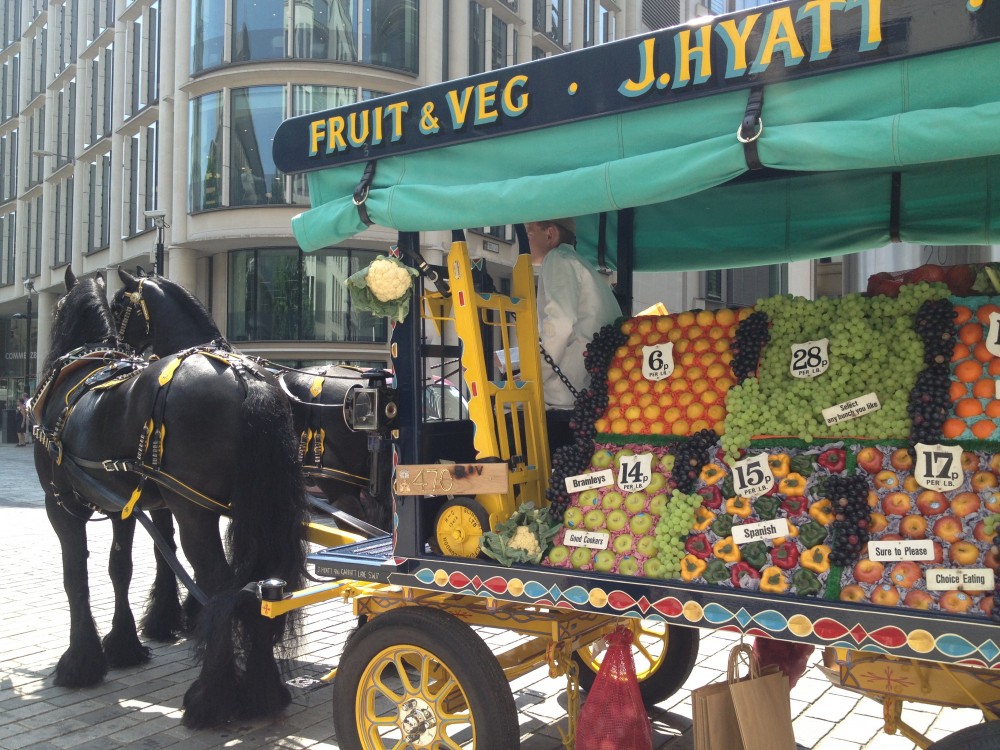
As a cheerier ending, here are some photos from my lunch break this week. The annual Cart Marking ceremony was going on in the Guildhall. Since the fourteenth century or earlier, only licensed and marked carts can be hired out in the City of London. The ceremony takes place in the Guildhall Yard, with the cart owners bringing their vintage trucks, vintage vans, waggons and carriages to be inspected by the Master of the Carmen’s Company and branded or marked.

Cod & Rock skate

Milkman's van

Fruit and veg stall

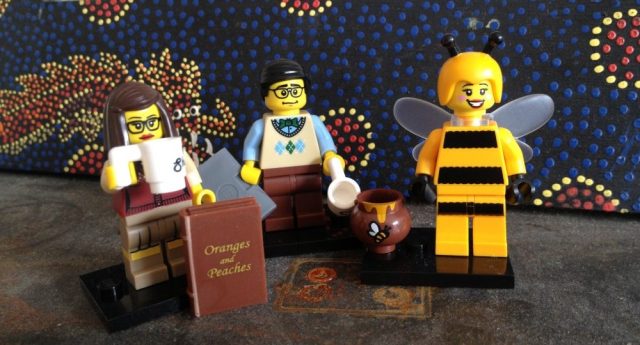
Lastly, check out my awesome Lego mini figures set, the IT geek and Beegirl were sent to me by the fab @LizzyAB and the Librarian by the awesome @andrewGouw (I am a librarian and my fiance Drew is an IT geek). It’s not possible to buy a particular figure from Lego, they operate a lucky dip system, so I really appreciate being sent them as otherwise I’d have to get them off eBay.

Lego characters: Librarian, IT geek and Beegirl.

Posted in Queens | Tagged | 32 Comments