What’s flowering now: early July

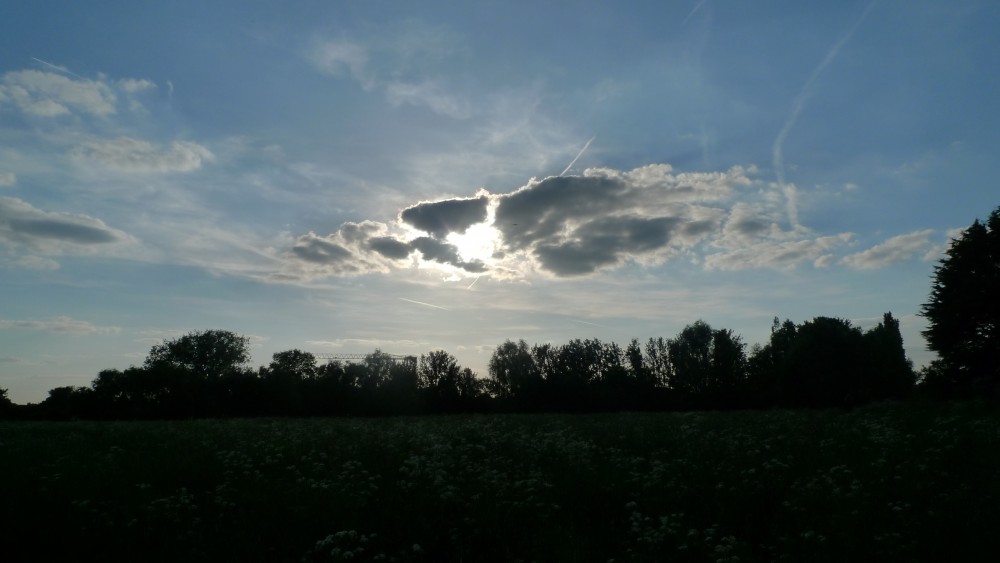
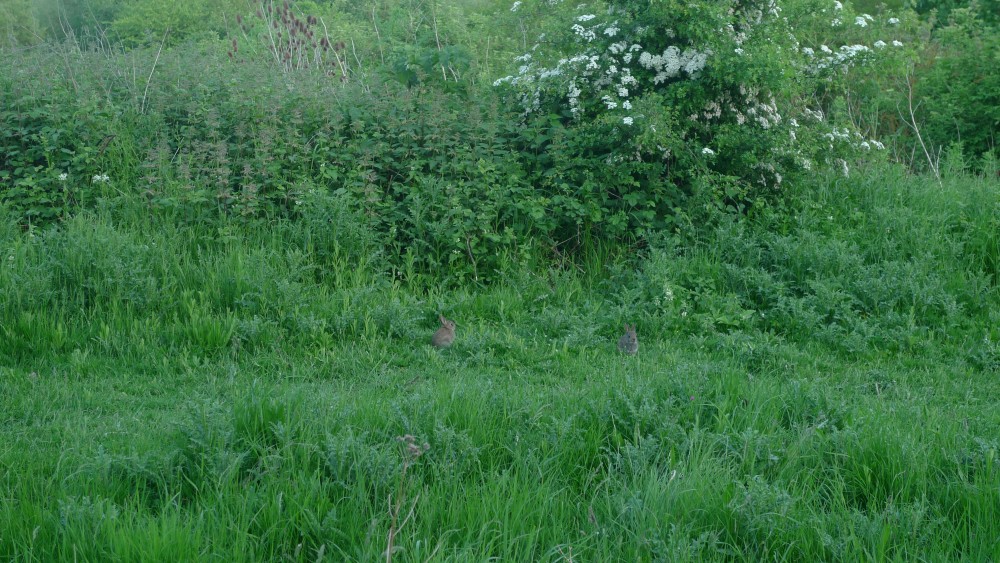
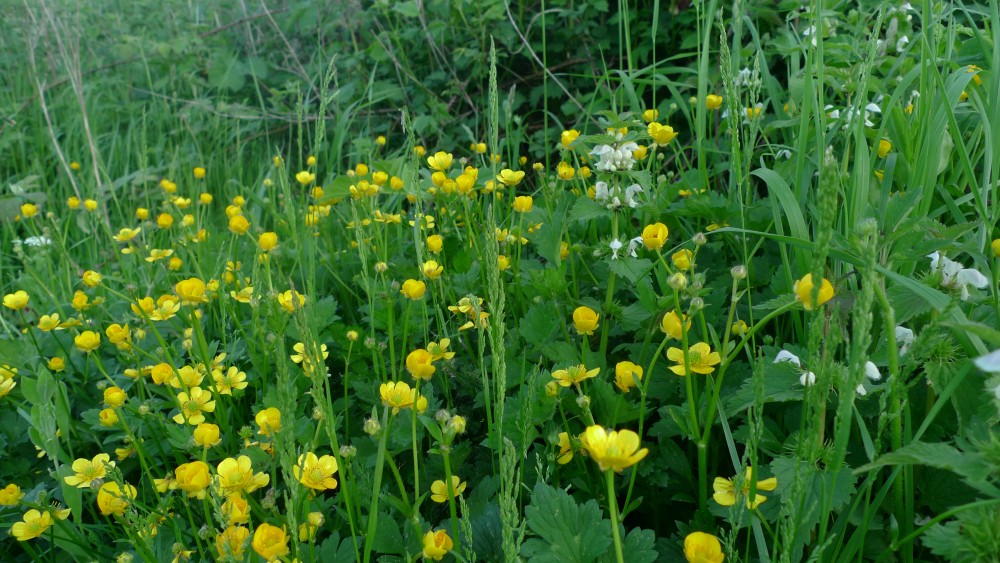
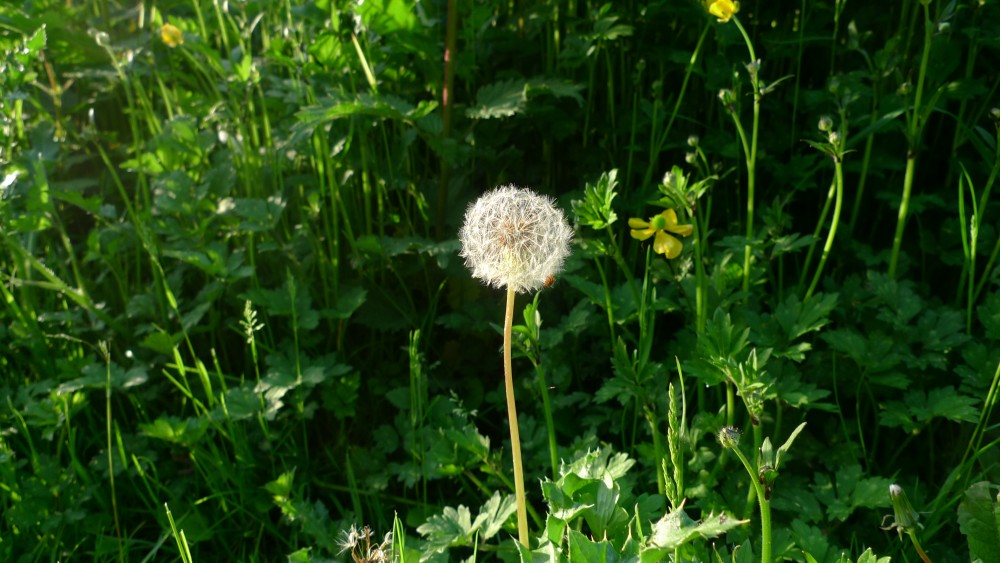
A walk on a summer’s evening.

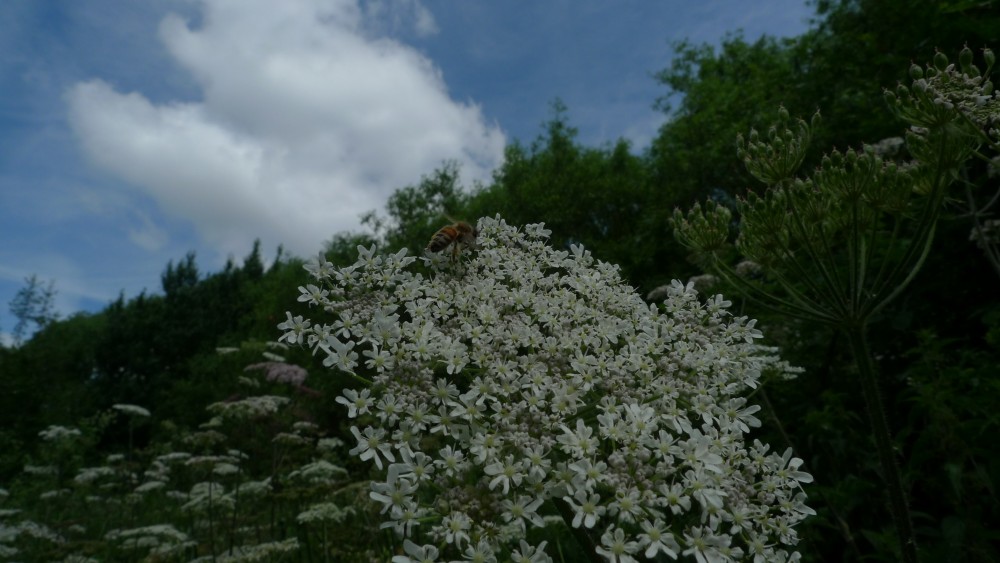
Bee on white flowers

Honey bee on hogweed. They appear to get very little pollen from these flowers, but instead swish their proboscis enthusiastically about in the nectar like a watercolour artist swirling their brush. I recommend Theresa Green’s post Hogweed days to find out more about this plant, including why its flowers mimic the smell of pigs!

Bee against sky

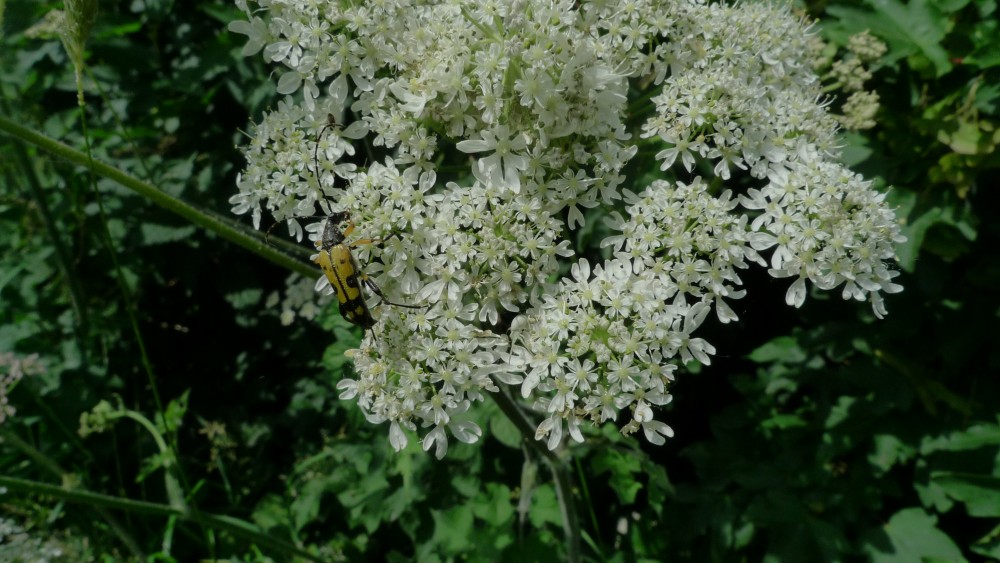
And this beetle likes them too. I was surprised when the beetle suddenly took off and flew away, I got the photo just in time. Doesn’t its bum look like it could be its face?

Beetle on flowers

A pretty pink version.

Pink and white flowers

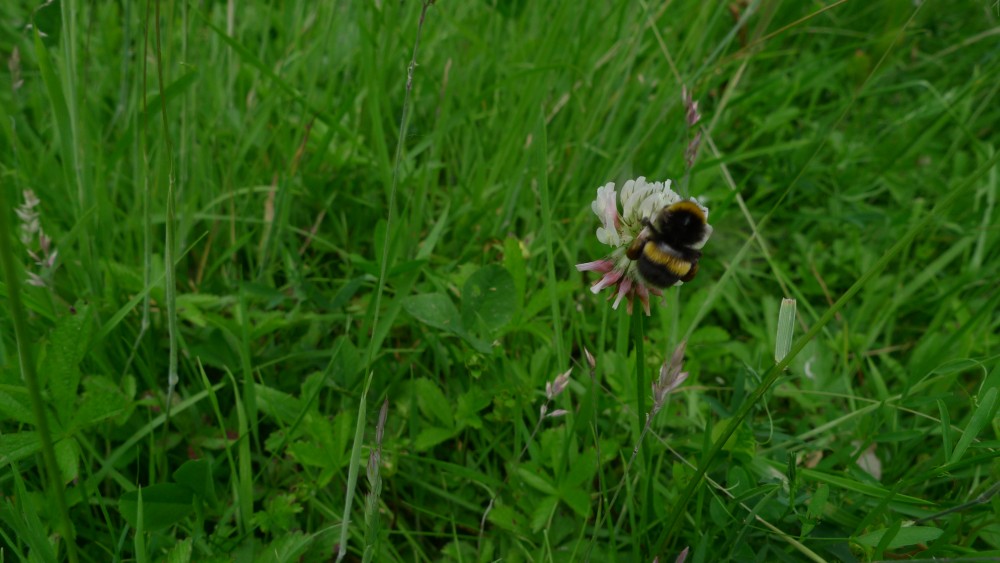
An important flower has come out. When you’re walking around on shortish grass, tread carefully. For there might be a delicate bee hidden in a clover flower. Can you see her beady eyes below?

Bee on clover

Bee on clover

This beauty you can’t miss.

Clover honey is one of my all-time favourite honeys. Elizabeth Gowing describes it in her Little Book of Honey as “sweet and light, with a citrus tang which changes to a sourish aftertaste that stops it being sickly to eat”.

Red clover is very popular with bumble bees but not honey bees, as their tongues are too short. Both bumbles and honey bees love white clover.

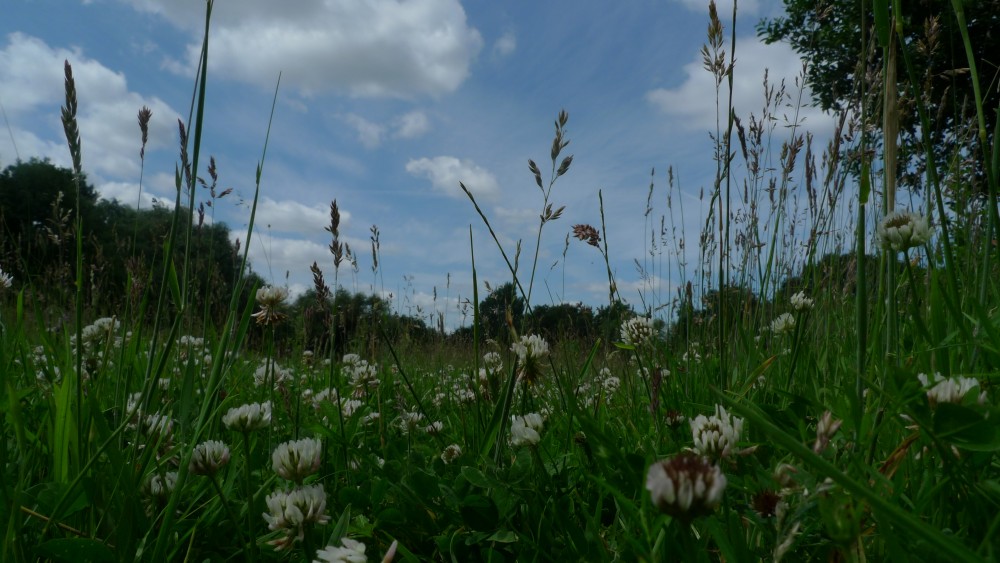
Lots of clover

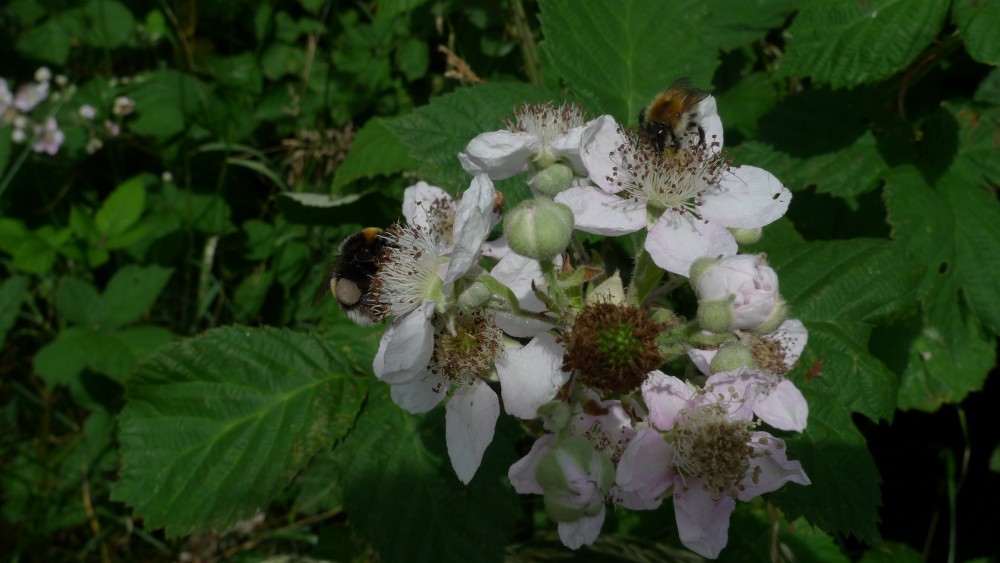
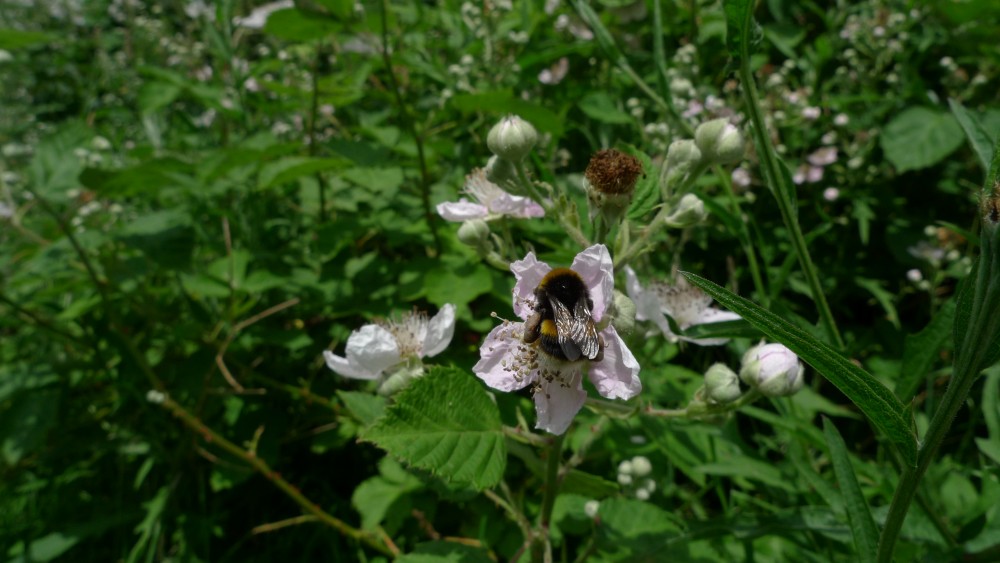
One of the beekeepers at the apiary today told me that the local bees were going absolutely crazy about the blackberry bramble bush at his allotment, so much so that passers by were getting afraid. It has been around 26C today – a real treat and about as hot as it ever gets here – and sun-loving plants will be excreting more nectar than usual.
A nectar flow is on! These photos were taken last Sunday, on a nice but less intensely hot day.

Bees on bramble

Bee on rose

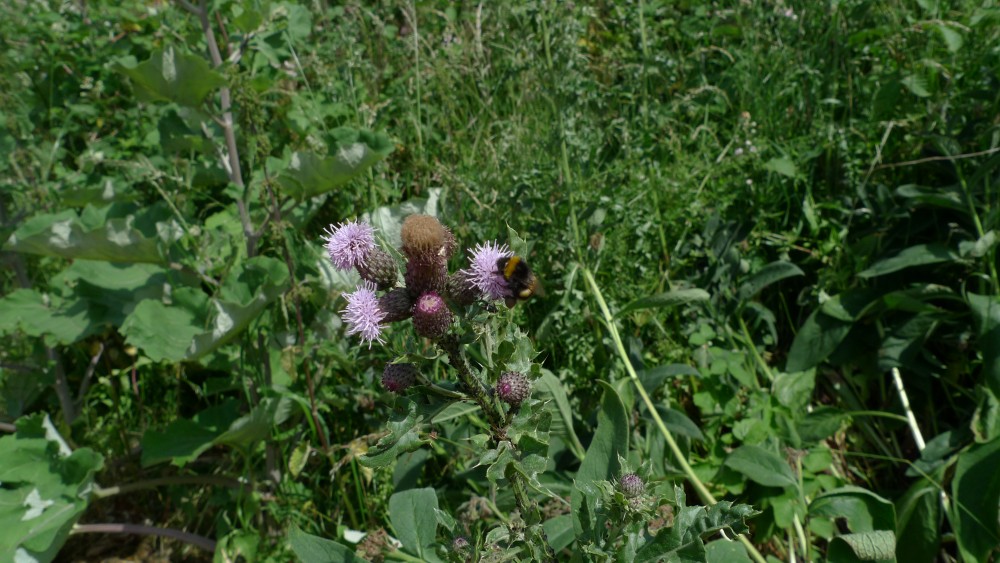
The thistles are favourites too. In The Little Book of Honey Elizabeth Gowing also tries thistle honey, which she says is “fragrant, spicy, reminiscent of… wait a minute – this honey really does taste like geraniums. My mind boggles; so what would geranium honey taste of?”

EDIT: identified by standingoutinmyfield in her comment below as a Canada thistle. 

Bumble bee on thistle

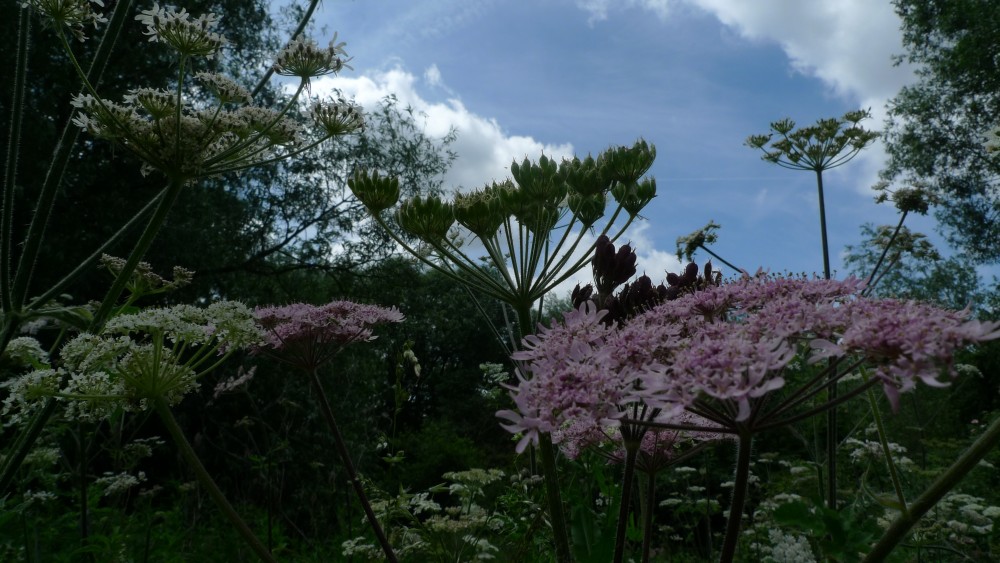
These flowers were much taller than me. They reminded me of fireworks going off against the sky.

EDIT: identified by standingoutinmyfield in her comment below as likely to be hemlock. 

Flowers against sky

Being out in the sunshine makes me happy. And the bees too.

L1050857

The next flowers to come along in the park during August will be rosebay willow-herb and ragwort. I’m gradually getting to know my local wild flowers, which I never knew much about before the bees came into my life.

Hope the weather’s good where you are, not too cold and not too hot, not too rainy but not too dry… if that’s possible.

Posted in Colony management | 19 Comments

BL Talk science 26th June 2013 – Pollinators and pesticides: is there a plan bee?

Last week I went to a British Library evening event on pollinators and pesticides, which took a look at whether pesticides are the real culprit for the decline in bee numbers. The event only cost £5 and it included free wine and chocolate honeycomb covered sweets. Score!

Oh, and it had some very good speakers too, which is why I was there of course. Our chair was BBC Presenter and hobby beekeeper Bill Turnbull, with speakers Dr David Aston (Chairman, The British Beekeepers Association), Dr. Peter Campbell (Senior Environmental Specialist, Syngenta) and Dr. Lynn Dicks (Postdoctoral Research Associate, University of Cambridge).

Talk Science events are held by the British Library for researchers from academia and industry, policy makers, research funders, publishers and all those with a stake in science. You can follow the Science team on Twitter @ScienceBL, event hash tag #TalkScience. The team has since done a British Library science blog post on the event, which has a photo of me and a link to my blog – thanks guys!

This particular talk was being filmed for a Horizon programme due to be broadcast on Friday 2nd August, so you may spot me in the audience if you watch it! Bill Turnbull began by saying that he wanted “an informative rather than combative debate” – a sign that feelings would be running high.

The panel chatting before the debate began

The panel chatting before the debate began

David

Each panellist began by saying a little bit about themselves and their work. David was speaking on behalf of honey bees and identified weather and forage availability (both quality and quantity) as two of the biggest problems facing them.

According to David, 30 kilos of pollen are required by an average honeybee colony during a year (the equivalent of 15 bags of sugar) and 120 kilograms of nectar – just to survive, before the beekeeper comes along and removes any surplus honey.

He reminded us that beekeeping now requires a high degree of technical competence. Bees are wild animals, not domesticated creatures like sheep and cattle. They have their own minds and won’t always do what beekeepers want them to!

David has seen no evidence of harm to honey bees in the UK from neonicotinoids. He is worried about what alternative products will be used after the ban comes in.

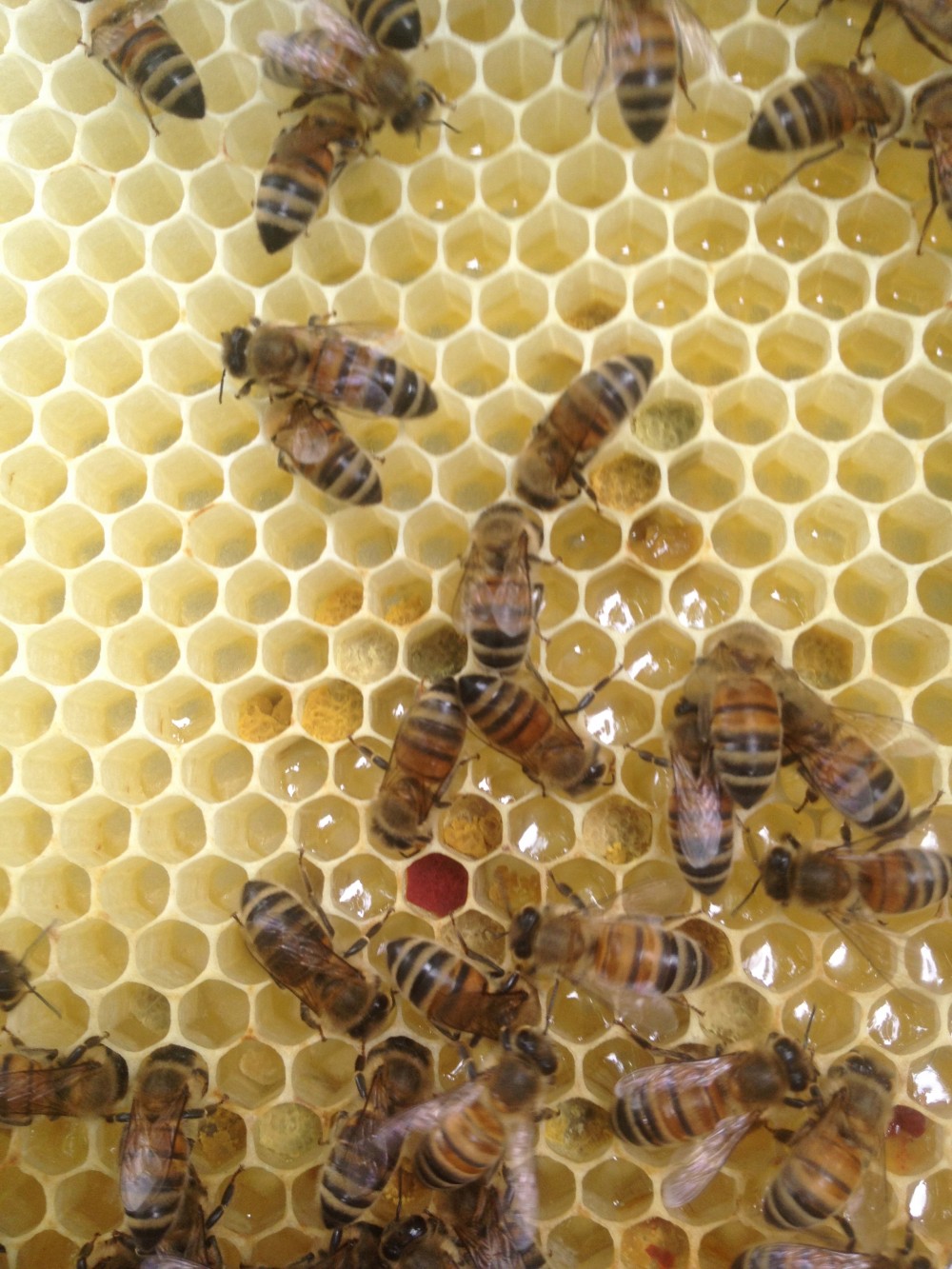
Red pollen

Pollen stored in honey bee comb

Lynn

Lynn has expertise in ecology and conservation. She put bees as pollinators in the food chain into context with a few facts:

  • Bees are important pollinators because they consume pollen both as developing larvae and as adults (unusual in the insect world)
  • There are around 256 species of wild bees living in the UK: just one species of honey bee, 24 species of bumble bees… and the rest are solitary bees.
  • Hoverflies are important pollinators too. In some parts of Scotland, hoverflies are the most frequent pollinator visitors to flowers. There are 250 odd species of hoverflies in the UK and they eat pollen as adults. Of course there are also the wasps, beetles, butterflies and moths busy doing their thing too.

We have a good idea that wild bees have declined in diversity in the UK, but we don’t know by how much. Research published in Science journal in 2006 provided the first data available on bee numbers. However, we still don’t know how many individuals there are. We do have numbers for butterflies and moths – they are suffering ongoing declines.

For Lynn, the main problems are loss of flowers, loss of habitat, possibly climate change and diseases – “multiple, interacting threats”. She has four suggestions to help bees:

  • Farmers should start treating pollination as an essential agricultural input to invest in and think about how to manage their landscape for pollinators
  • We should protect habitat, both in urban and country areas
  • Reduce use of pesticides overall (use is actually going up slightly right now)
  • Find out how many wild bees and hoverflies there are. Hard as that might sound, Lynn says there are good techniques available which don’t cost much.

EDIT: Philip Strange, a scientist and writer, kindly left me a comment below with a link to a post by Lynn where she expands further on these points: Action for pollinators: things we can all agree on.

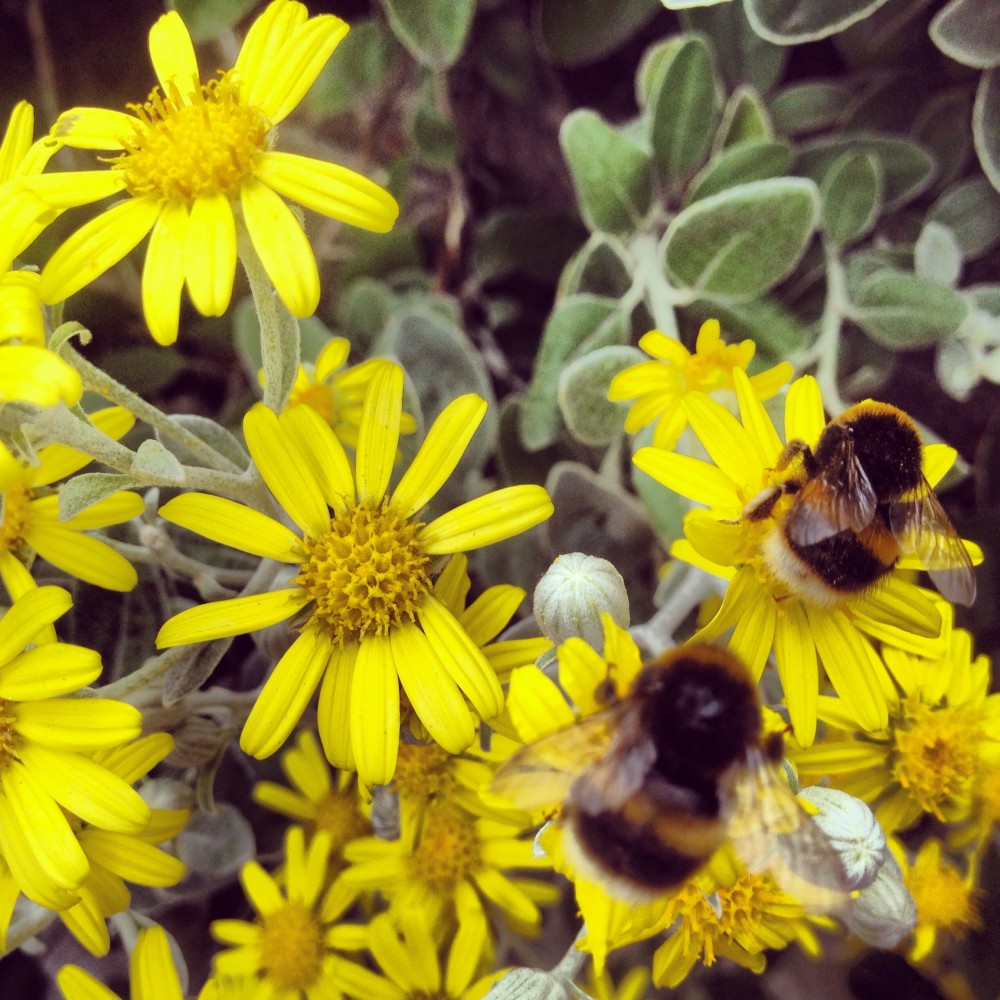
Bumble bees I photographed whilst on my lunch break near St Pauls Cathedral last week

Bumble bees I photographed whilst on my lunch break near St Pauls Cathedral last week

Peter Campbell

Peter was last to speak. No-one booed when he introduced himself as an environmental risk assessment scientist at Syngenta, a manufacturer and seller of pesticides, but I imagine some bristled a bit.

Obviously Peter has a particular angle to take on behalf of Syngenta, which is that neonicotinoid research studies in the past two years have mostly been carried out in labs rather than the field. Syngenta have been doing many field trials on honey bees themselves, which so far have found no risk to bees when the neonics are used properly.

They are currently doing a project on developing flowering margins, particularly on cereal farms, and have developed flowering mixes for field edges. The mixes have led to species which had disappeared previously returning. “Habitat is everything with wild bees… and varroa in the case of honeybees” Peter said.

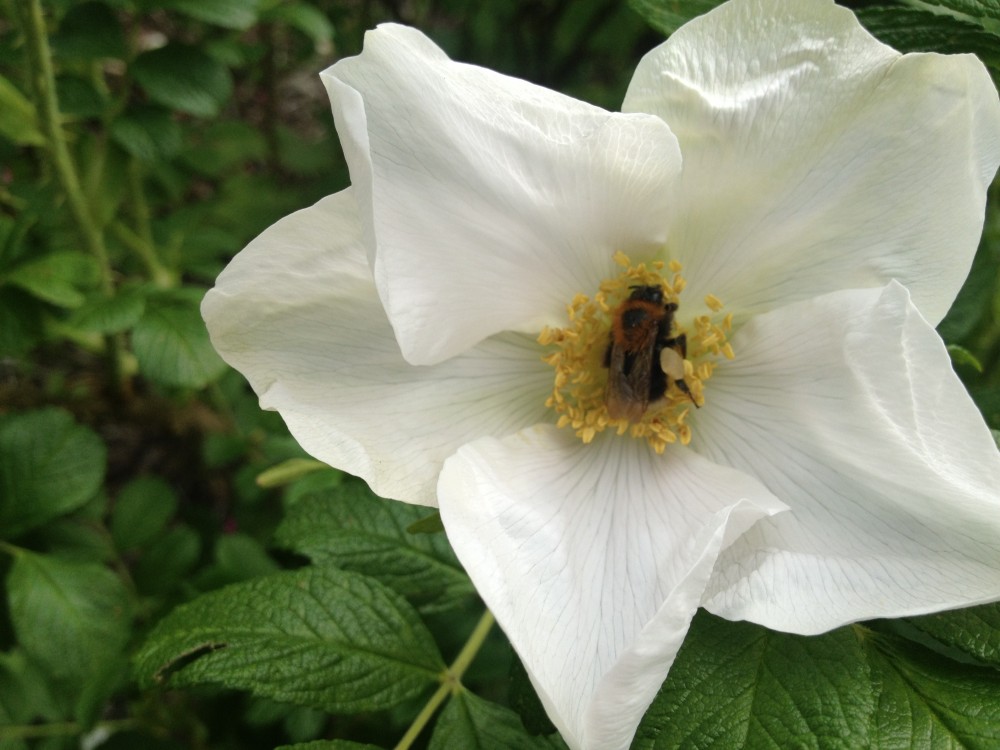
Bombus hypnorum on rose

Bombus hypnorum on rose

Neonicotinoids

Things got spiky between the panel, particularly Peter and Lynn, as Bill came onto the issue of neonicotinoids. He brought up a study which had found that neonicotinoids left the directional memory of honey bees unaffected, but did have an effect on the landscape memory of bees trying to find their way home.

Peter’s response to this was that the study gave an unnaturally high dosage to bees, much higher than they would come across in the field. An experienced beekeeper in the audience agreed with him, using the analogy that experiments done so far seem to be like locking dogs in a garage with a running car for 24 hours and then blaming the internal combustion engine for their deaths. However Syngenta are doing work this year with RFID tags to try and see if landscape memory is a real issue.

David’s worry is that the neonicotinoids ban could lead to greater risk of exposure to other pesticides which farmers will turn to instead. Neonics were originally seen to be an environmental improvement on previous treatments. Peter added that oil seed rape may not be such a profitable crop without neonics and farmers may switch to growing cereals instead – but Lynn disagreed with this theory.

Lynn would like to see farmers become more reliant on integrated pest management (which the National Bee Unit inspectors recommends beekeepers carry out too). This involves using a range of methods during the year to keep pests at bay, rather than relying on one particular method of treatment.

According to Lynn, using systemic neonics in crop seeds means that farmers are no longer treating if and when pest attack is seen, but in advance of it happening – sounds good in theory but is not so great for the environment. Peter’s counter argument to this was that seed treatment allows farmers to target pests very carefully, and leads to less dosing of the field environment as a whole.

Debating. L-r: Bill, David, Lynn, Peter.

Debating. L-r: Bill, David, Lynn, Peter.

“Is the European Commission ban worthwhile?” asked Bill. 

The background to this is of course the European Commission’s two-year moratorium on the use of three neonicotinoid insecticides on “bee attractive crops”, following risk assessment reports from the European Food Standards Agency.

Lynn – the ban is a good place to start but two years is not long enough to assess its impact. However, scientists can do more analysis within the next two years to gather data  on the possible effects of neonics. She pointed out that whilst the case for an effect on honeybees is uncertain so far, lab studies using realistic doses have found a dramatic reduction in bumble bee queen production.

She believes we don’t yet know how realistic lab studies are, but if there is a risk it’s best for the EC to take a precautionary approach until we know more. This does mean making a subjective judgement. Two years gives some time for scientists to gather baseline data on bee numbers. A fantastic study named ‘Status and Trends of European Pollinators‘ (STEP) is currently going on to document the nature and extent of European pollinator declines. Knowing how many pollinators there are is necessary to tell if numbers go up or down as a result of this ban or any future ones.

Bumblebee melee

Moving on to less controversial subjects, Bill went on to ask “Why is weather such a problem now?” 

David replied that our weather today is a reflection of carbon dioxide levels twenty years ago. We are having increasingly extreme weather swings, with 2012 bringing unusually long periods of both wet and dry weather in the UK. In early 2012 water companies were running campaigns to save water, only to be followed by one of the wettest springs on record, with flooding in many parts of the country. Long periods of wet, cold weather can cause problems with unmated virgin queens.

“Colony collapse disorder. Is it here in Britain?” – Bill. 

David told the audience that the general BBKA view is CCD doesn’t occur in this country. Colonies do collapse, but not in the same way as reported in the US.

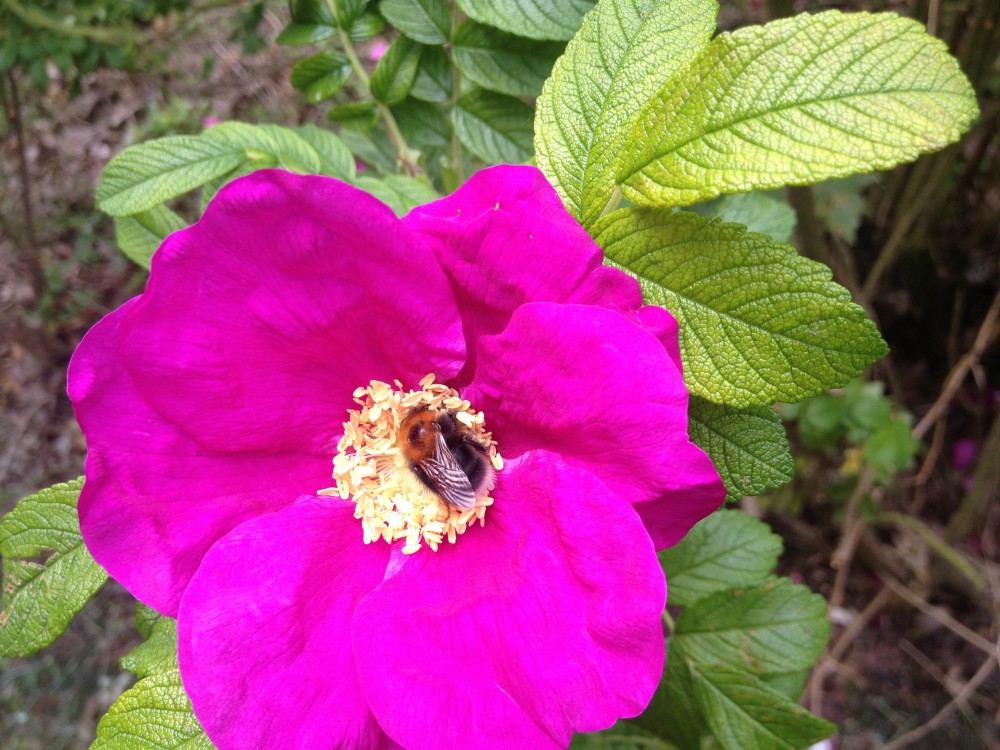
Bombus hypnorum on rose

Bombus hypnorum on rose

And finally, Bill’s last question was “What does the future hold for bees? Are you feeling optimistic?”

David – To be a beekeeper, you’ve got to be optimistic! We can all do things to improve forage and nectar sources. Weather and a lack of forage are critical factors for most insect species.

Lynn – optimistic about the huge amount of interest in pollinators and the number of young scientists being trained. More funding money is becoming available from governments. During the past 20-30 years insects have not been looked after well – this may be starting to change.

Peter – we need biodiversity. Helping pollinators is all about habitat. Environmental subsidies will really help pollinators going forward. We also need more research into practical solutions, such as fighting varroa – the biggest problem facing honey bees now.

Bombus hypnorum on rose

My conclusions

Not being a scientist or farmer myself, and without having read through much of the current research, it was hard for me to form an opinion as to whom was right – Lynn that neonics pose serious risks to bumble bees based on the research, or Peter that lab studies are too unrealistic and do not reflect field conditions.

Knowing that Peter must defend Syngenta’s interests as part of his job does make me skeptical. It’s easy for Syngenta to say that lab tests don’t relate to field doses, knowing full well that it’s very difficult to carry out tests in the field because bees forage over such large distances. On the other hand, I agree with Peter that providing good bee-friendly forage and researching solutions to varroa is very important – even though I suspect he may be bringing up these factors to distract from the neonics issues!

What do you think, was the EC right to put the ban in place?

Posted in Uncategorized | Tagged , | 30 Comments

Flat Stanley visits London

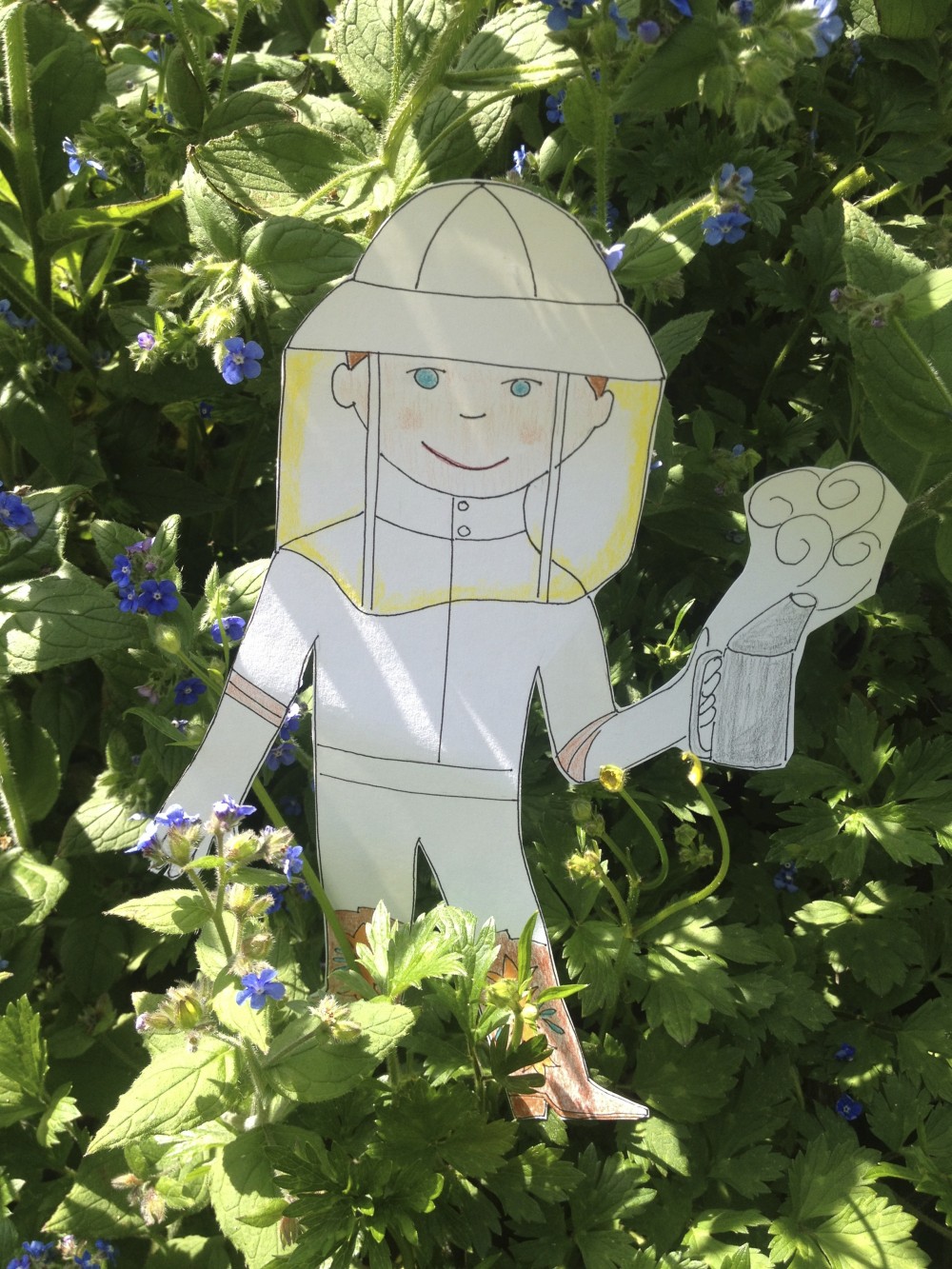
Over the past few weeks I have had a very special visitor. He goes by the name of Flat Stanley. As suggested by his name, he’s a slightly unusual visitor, in that he’s not just slim but 2D.

Flat Stanley in alkanet

See what I mean?

This might all seem somewhat eccentric so far, but there is a reason for this, honest. See his beautifully drawn cowboy boots? Flat Stanley is actually visiting from Texas! He’s been sent for a stay by beekeeper Karl Arcuri, whose niece Riya created him as part of the Flat Stanley literacy project. Flat Stanley is now doing a tour of the world, and I am lucky enough to be the first beekeeper to have him.

Stanley fell lightly through the door with a letter which said:

Dear English Beekeepers,

Thank you for hosting me in your lovely country. While I can’t wait to visit some English beehives, I particularly look forward to the tea and cake. Please note I prefer an Assam blend, but any strong black tea will do. Clotted cream is also a must since it is impossible to find in the United States. I hope the bees are in good health and good spirits.

Many thanks
Flat Stanley

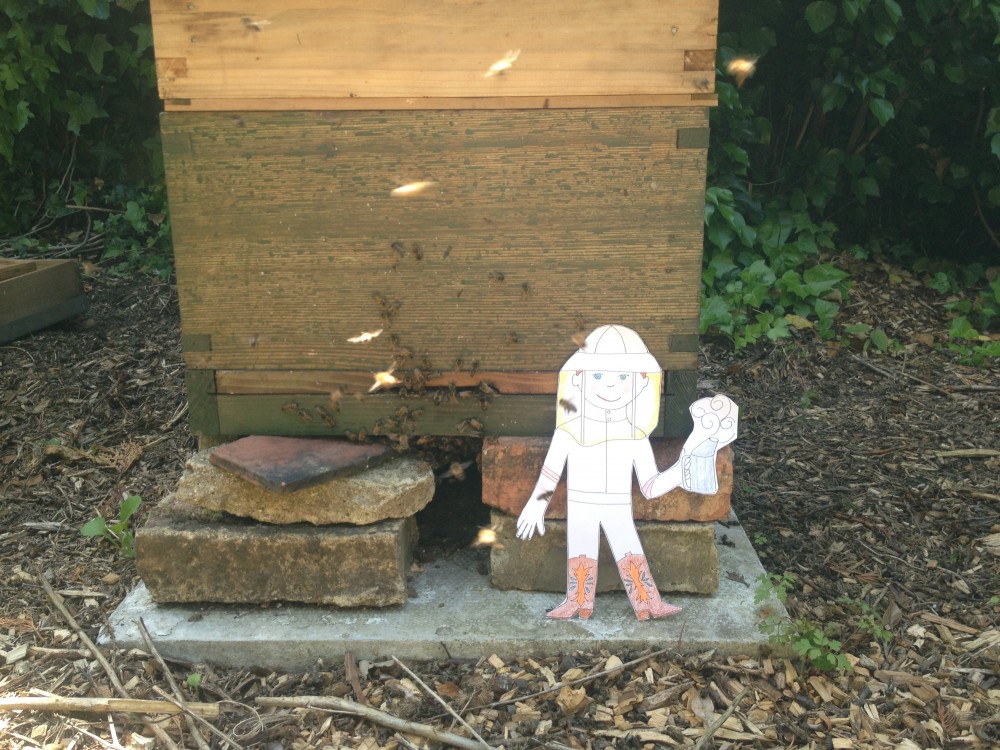
After a spot of tea, to celebrate Stanley’s arrival I took him to meet my bees…

Flat Stanley at my hive

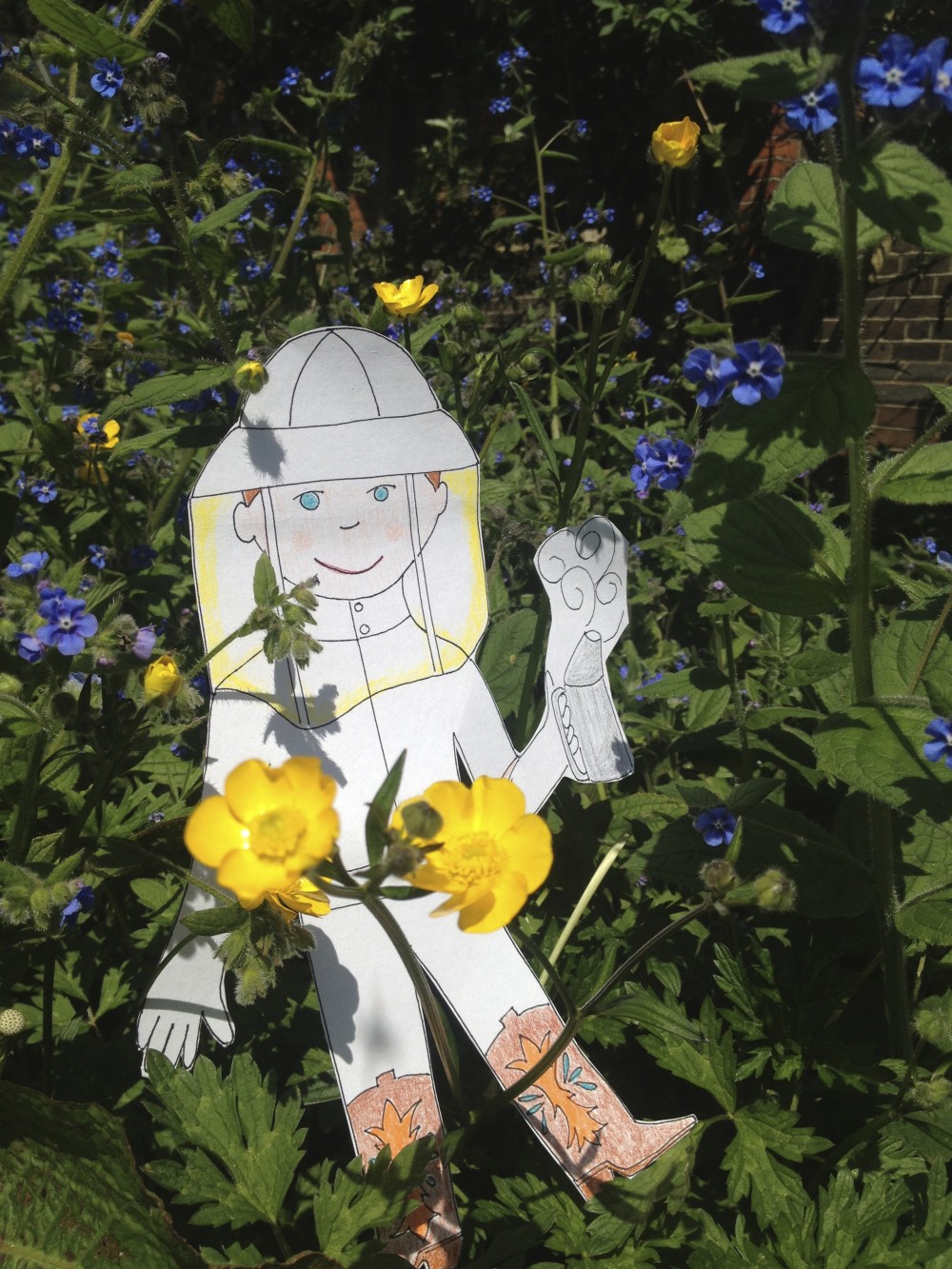
And to frolic in buttercups…

Flat Stanley in buttercups

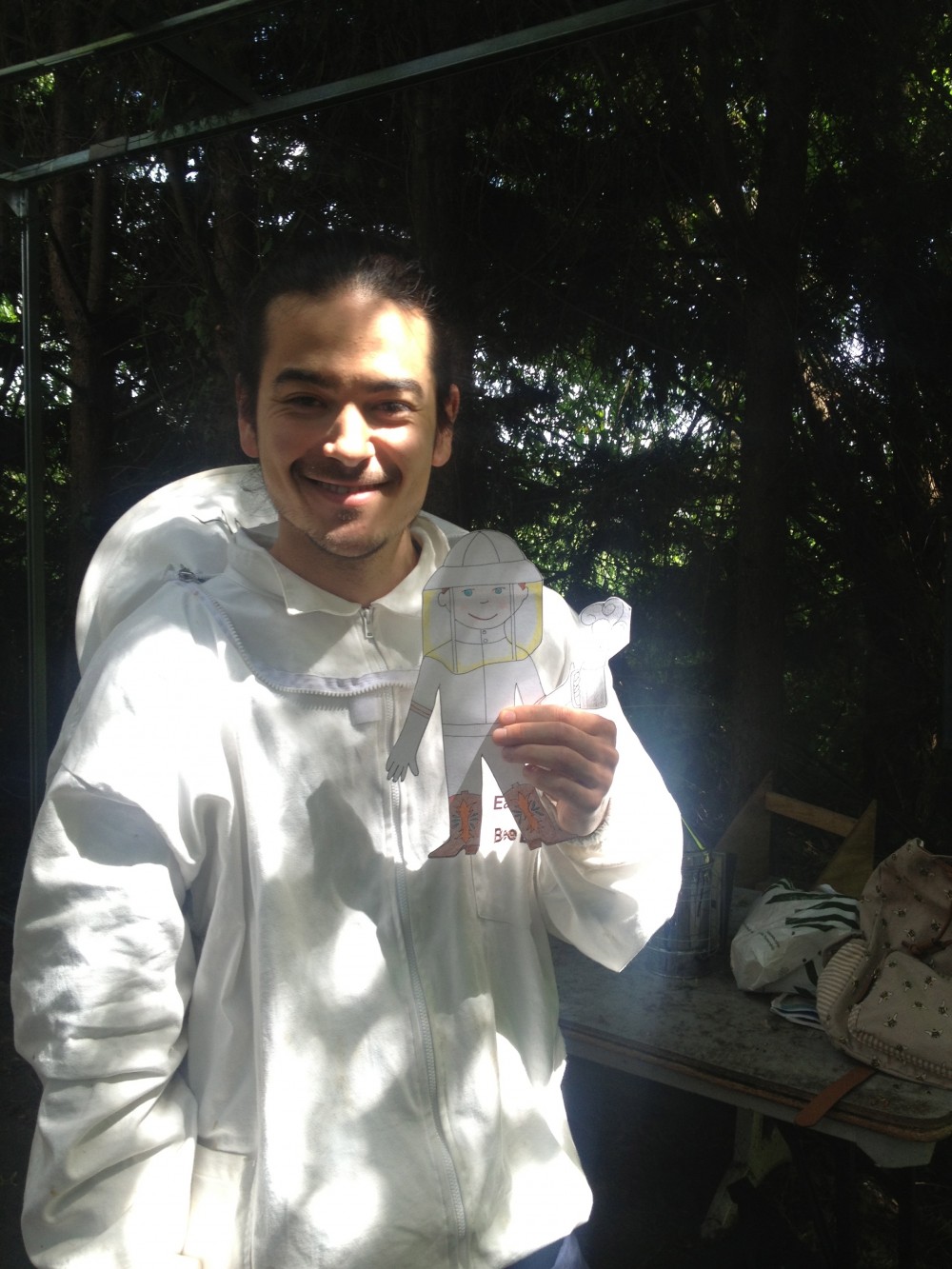
And to meet other beekeepers.

Mark and Flat Stanley

Karl asked if I could share some interesting facts about beekeeping in my country. Well, I would sum up beekeeping here as “tricky”. Since varroa arrived, gone are the days where a beekeeper could check on their hive once or twice a year and take away a few supers of honey each summer. A new pest is on the horizon too – the bee-eating Asian hornet, Vespa Velutina, has reached northern France after its accidental French arrival in boxes of pottery from China in 2004. A strong hornet queen could fly across the channel, or more likely be unwittingly transported here by humans. We must watch out for it.

For now, varroa combined with the constantly up-and-down weather are probably the biggest challenges here. Sometimes, as today, we get a beautiful day or a run of a few beautiful days of sunshine. But there is the constant knowledge that the rain and cold dull days may return at any moment, even in the middle of summer. Ah well, no-one lives here for the weather!

I believe Flat Stanley is off to sample the delights of the Isle of Wight next. To find out more about Flat Stanley and how he can visit you too, see Karl’s blog:

EDIT: Flat Stanley has since gone for a taste of French sophistication: Flat Stanley notches up more air miles.

Posted in Uncategorized | 34 Comments

Queen introduction – the easy way?

Earlier this year I attended a talk at Kew Gardens by Professor Ratnieks, Professor of Apiculture at the University of Surrey (blog post – Bee foraging on garden plants: Sussex University research). This got me interested in his work, and while reading about his research on the University of Sussex website I discovered this information:

“One of the common procedures carried out by beekeepers is queen introduction: a queen is taken from one colony and introduced into another. Queen introduction is needed when dividing hives, to replace a failing or poor quality queen, and sometimes in queen rearing when virgin queens are introduced into queen mating hives. The most common method used is the introduction cage. A queen is placed in a wire mesh cage that is then placed into a queenless colony. After a few days the queen is released. The success rate of this method is acceptable but is not 100 per cent.

LASI research has shown that there is a much better method for introducing queens that is both quicker and gives higher acceptance rates, even 100 per cent. A queen can be directly introduced, that is without a cage, into a hive that has been queenless for several days if the receiving hive is smoked heavily. Why is this better method not more used, especially as it is mentioned in some beekeeping books? The probable reason is that beekeepers accept the losses associated with the cage method. It also seems to make sense as the cage should protect the queen and allow her to acquire colony odour before release.”

Whilst reading Gretchen Bee Ranch, a great beekeeping blog I follow by Thiên and Mark, (a husband and wife team who do commercial beekeeping in Texas), I noticed that Mark was carrying out queen introductions, and left a comment linking to Professor Ratniek’s suggestion. I then forgot all about it.

Until a while later I received a lovely email, here’s an extract from it which I hope Mark doesn’t mind me sharing:

“I want to thank you for sending me the information about direct introduction of queens. I have tried it about 8 or 10 times and it was successful all but once. The one instance of failure was because I missed a second queen that was in the hive. I emailed Dr. Francis Ratnieks, the professor who participated in this research on this at the University of Sussex (Laboratory of Apiculture and Insects) to ask for more details and for a citation to any published research on this method of queen introduction. He kindly provided both. I was leaving the hive queenless for two days, but he recommended a longer period – 3 to 7 days. He also clarified some other points that I will implement.

I am excited to learn about this new, time-saving method for queen introduction. It will definitely save time and resources compared to the traditional method, which I have used for many years. I plan to keep a journal of my next 20 or so queen introductions using this new method and we will post the results. I will also share this with my colleagues and with my students in beekeeping class.”

It makes me very happy that the method works. Especially as one of our hives may be queenless at the moment and it would be very convenient to transport a queen over to it and add her in without having to go back a couple of days later to release her.

An abstract for Professor Ratniek’s research can be found here (the full paper costs £5 to purchase): Direct introduction of mated and virgin queens using smoke: a method that gives almost 100% acceptance when hives have been queenless for 2 days or more.

Here are photos on Mark and Thiên’s blog of Mark carrying out the cageless queen introduction method: Cageless Queen Introduction – A new approach. I recommend following their blog for photos of the beautiful wild flowers of Texas and an insight into the world of commercial beekeeping. They make lots of pretty candles and other beeswax products which they sell at local markets and also via their website store.

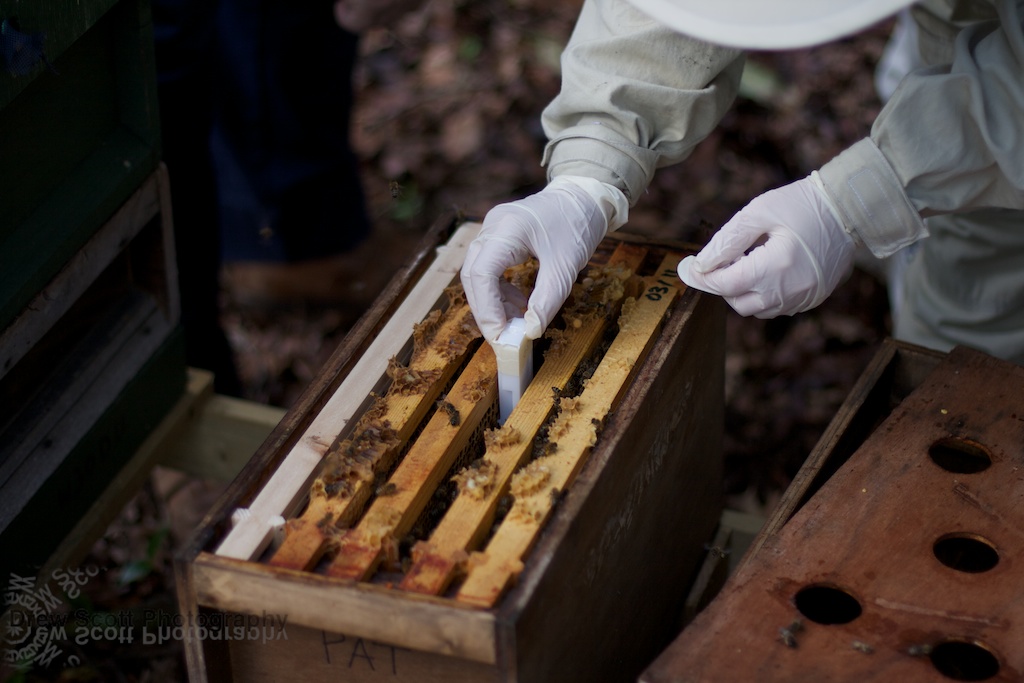
Putting a queen into a nucleus

Putting a queen into a nucleus – the traditional way

Posted in Queens, Uncategorized | 20 Comments

What’s flowering now: early June

A while ago now, on a Sunday evening, 2nd June to be precise, I went for a lovely evening walk in my local park. I had been imprisoned in a hot car all day, from Sheffield to London, watching the tarmac whir past. It felt great to venture out into the sunshine as it slowly slipped away.

Evening sky

A few wispy clouds scudded across the sky. Blackbirds rattled their evening cries and bunnies hopped.

Blue sky

Pretty pink flowers. Do bees like them? Not sure, but moths do.

EDIT: standingoutinmyfield has left a comment below to say that these pink beauties are a species of Silene (commonly known as campion). 

Do you see the moth?

Do you see the moth?

Again, not sure what these white flowers are…

White flowers
At least I can recognise Bunnies. They looked like babies, sat nibbling grass with their mother in the distance.

The babies sat very still

The babies sat very still

Buttercup yellow

Buttercup yellow

Buttercups produce a toxin which prevents them being eaten by grazing animals like ponies. They have been around a long time – 130 million years. Insects like sawflies, aphids and beetles enjoy pollinating them.

Bumblebee on nettle

Bumblebee on dead-head nettle

A bumblebee staying up late for nettles.

Plants and Honey Bees: their relationships by David Aston and Sally Bucknall (Northern Bee Books, 2004) says: “Special mention must be made of the importance of white dead-nettle as a bumblebee forage plant for queens emerging from hibernation in spring.”

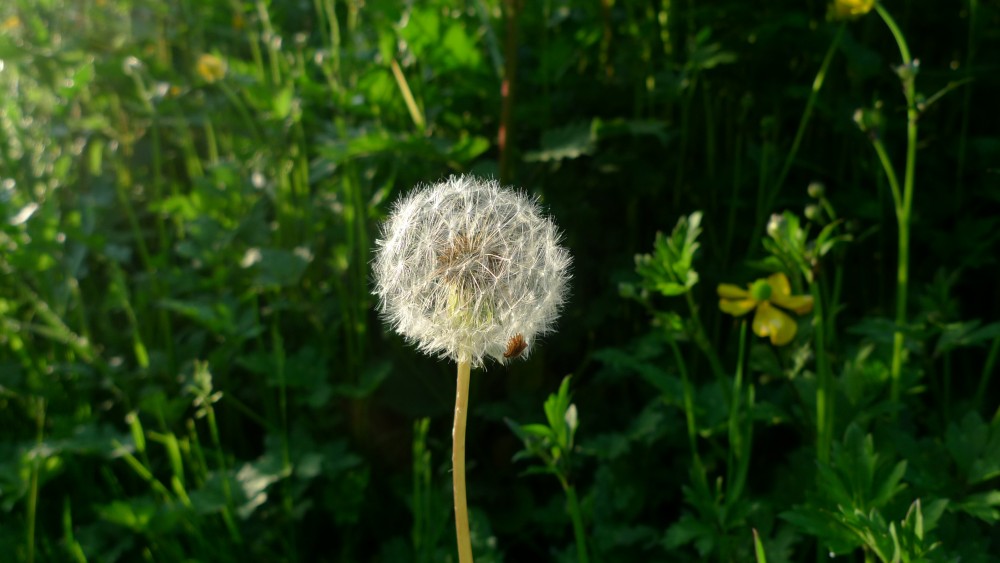
Dandelion

The dandelions’ time has passed.

Dandelion 2

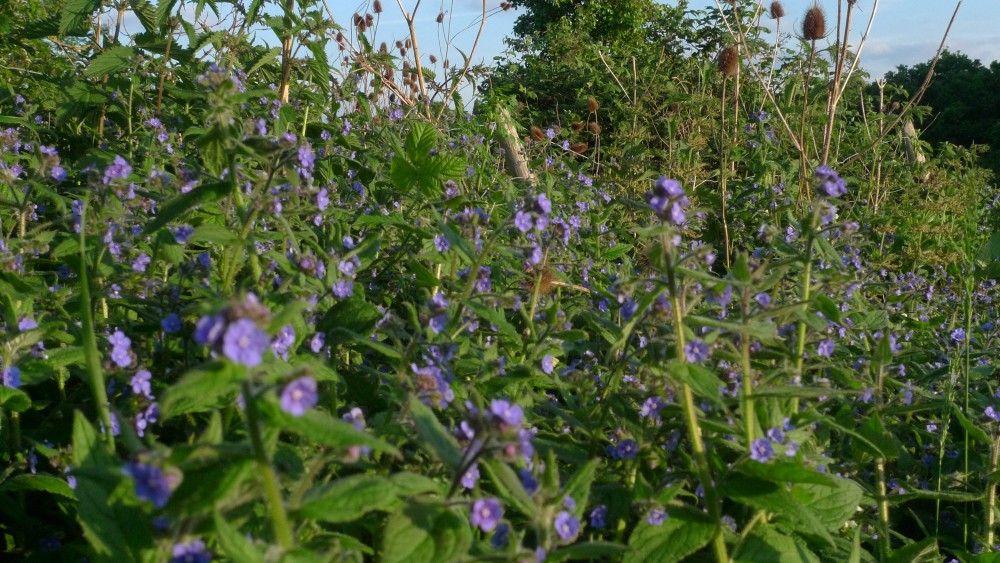
Alkanet is still going strong and attracting plenty of bee action. The bees move so fast on it – in and out of the tiny open flowers in less than a second – that I haven’t got a non-blurry photo of them enjoying it yet.

Green alkanet (also known as evergreen bugloss)

Green alkanet (also known as evergreen bugloss)

There is plenty of blossom still around. Below is hawthorn (also known as May). I know the leaves well, because my mum used to buy in silkworm larvae. She was a infant school teacher and used the silkworms to demonstrate their life cycle to her classes. Silkworms originally came from Asia; they prefer mulberry leaves, but will also eat oak and hawthorn. We collected bushels of oak and hawthorn and took them to the growing larvae, who quickly turned into plump, voracious caterpillars, mechanically munching their way to adulthood.

Hawthorn blossom

Hawthorn blossom

Unfortunately Plants and Honey Bees: their relationships tells me that “Hawthorn only secretes well when the temperature is exceptionally high, at least 25C during its flowering period” (p.31). The temperature rarely gets that high here. Hawthorn honey is said to have a sweet almond scent and taste.

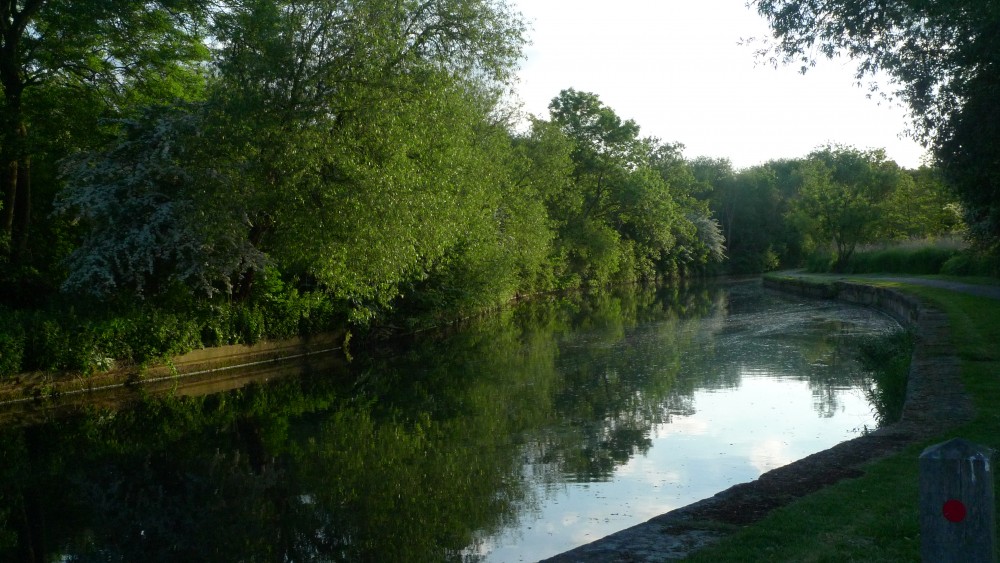
Canal

So some old favourites are over already – bluebells, dandelions. Nettles and alkanet are still going. Other June flowers include field beans, acacia and lime.

Thistles, clover and blackberry brambles should be out a little later. After them will follow rosebay willow herb, himalayan balsam and ragwort; later still michaelmas daisies and finally ivy is the last big bee-friendly forage of the year. But I don’t want those times to be here yet.

A satisfying walk. What’s flowering where you are?

Posted in Uncategorized | Tagged | 27 Comments

A Future Without Bees – a talk at the Southbank Centre

I was lucky enough to be given free tickets to this debate on ‘A Future Without Bees‘ at the Southbank Centre by artist Amy Shelton, who has been contributing to events there as part of the London Literature Festival. Amy’s website is amyshelton.co.uk and you can see her works at the Saison Poetry Library throughout the festival until 14th July 2013. Melissographia is a collaboration with John Burnside resulting in a limited edition artists’ book, while Florilegium illuminates a collection of cultivated and wild plants which are essential to honeybee health. Thanks Amy!

Part of Amy Shelton’s Melissographia art work.

Chaired by Bill Turnbull, presenter on BBC Breakfast, BBC correspondent and author of The Bad Beekeepers Club, the panel included Dave Goulson, founder of the Bumblebee Conservation Trust, Steve Benbow, founder of the London Honey Company and author of The Urban Beekeeper; and Karin Alton, co-founder of FlowerScapes Ltd, providing habitat creation and wildlife gardening solutions informed by the latest ecological research.

Of the three speakers, two were familiar to me. Karin, I’ve heard speak a couple of times before – she had a nice blue dress on. Steve, I feel like I know a little through reading his book, The Urban Beekeeper. He was a restless presence on stage in a waistcoat, turnup jeans and scruffy hair, twitching his foot up and down. Dave Goulson I hadn’t come across  before, so was pleased to discover that he’s the founder of the Bumblebee Conservation Trust, a brilliant British charity.

Bill Turnbull began the discussion by asking ‘Is there really such a threat to bees as the media makes out?’

The panel felt that plenty of bees are under threat, but other species of bees more so than the honeybee. For Dave, the biggest problem is habitat loss. In South-West China intensive pesticide use has caused bees to die out, and similarly rumour has it that parts of Brazil are now beeless. This is probably linked to farming practices there – Brazil has a huge cattle ranching industry (actually the largest commercial cattle herd in the world) which has caused destruction of the native rainforest and other habitats. All so that we can eat more burgers.

It is the specialist bees which rely on certain types of flowers which are most at risk (the honeybee is a generalist). Steve joked that honeybees are “almost like the bee pin-up of the advertising world”, but all bee species are important. However, last year was the worst weather Steve has experienced as a commercial beekeeper. To try and cope with the cold British summers he has been using a thrifty dark bee imported from Wales which finds South-East England to be “like the Mediterranean”.
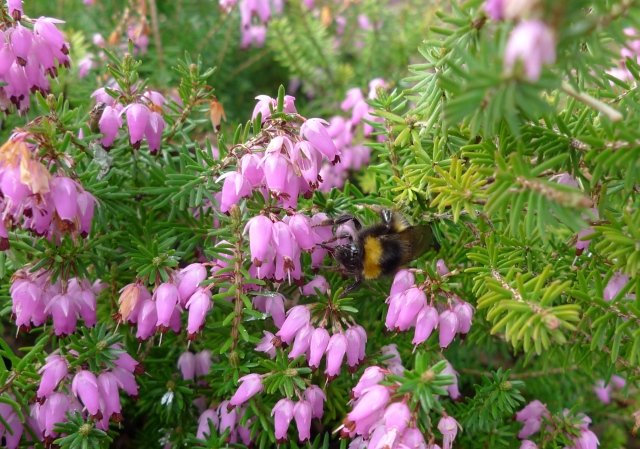
Personally, I'm very worried for the future of bumble and solitary bees - more so than honey bees

Personally, I’m very worried for the future of bumble and solitary bees – more so than honey bees

Karin reminded us that after all we live in a small, densely populated country, and food has to come from somewhere. We shouldn’t just point the finger at farmers, who are trying to make a living and often struggling doing it. Having said that, hedgerows could be increased and farmland farmed less intensively. There are taxpayer schemes available to fund bee friendly planting for farmers.

Consumers are responsible too. We must cure ourselves of the desire to have perfect looking fruit and vegetables. Karin knows an organic farmer in Spain producing carrots who ends up sending 60% of his crop to be animal feed, because the supermarkets won’t take it. But are the supermarkets really right that we won’t buy wonky or unusually shaped items, or is this idea over-paranoia on the part of the buyers? For years freezer compartments have been left without doors because supermarkets felt consumers didn’t like opening them – but Thornton’s Budgens in Crouch End tried using freezer doors (much more energy efficient) and found they made no difference to sales.

Anyone has driven around England will have seen the brash yellow of oil seed rape, its bright flowers a shock compared to the more muted colours of our native plants. It is now one of the most popular crops here, used not just for food but as biodiesel to fuel cars. Under the UK’s Renewable Transport Fuel Obligation, legally all road petrol sold has to contain around 5% fuel from sustainable sources (in reality, only 66% was proved sustainable last year, so UK drivers are now indirectly contributing to nasty things like the destruction of orangutan habitat for palm oil plantations and southern US states having been turned into endless fields of corn).

The bees love oil seed rape, but once it is over the fields are of no use. Oil seed rape honey crystallises quickly and becomes hard for the bees to eat, so is not a good overwintering honey either.  As the rape has taken over, a lot of borage production has been lost here and moved to China, which Steve feels is “a tragedy for bees”.

Field of rapeseed

Neonicotinoids

Bill moved the panel onto discussing the famous neonicotinoids ban. There is still so much we don’t know about the effects of neo-nics. Dave commented that there is no scheme in place to monitor how the ban is going, so after two years how will we know if it’s been successful? He produced a tiny test-tube from his pocket, which he told us contained enough Clothianidin, a type of neonicotinoid, to kill 250,000 honeybees. A sobering thought. 80 tonnes of Clothianidin alone are applied annually in the UK, and it has a half-life of four years. So this stuff is still going to be around in the soil at the end of the two year ban.

Pyrethroids

The reason the British Beekeepers’ Association did not support putting the ban in place was partly due to a lack of research on the issues and partly due to the worry of rural beekeepers about what might replace the neo-nics (see their press release on the EU vote). Karin told us that currently farmers do two sprayings of pyrethroids a year, but they are now likely to switch to three sprayings, with an extra time in Spring.

Pyrethroids were a British invention and have been in use for around 50 years. They were originally derived from a plant in the Aster family which contains natural insecticides to stop insects eating it, but are now produced chemically in labs. They don’t last very long in the area sprayed – a week or two. Unfortunately pyrethroids do kill fish. Karin pointed out that if we are going to farm non-organically, then whatever is used there will be deaths.

Worryingly, pesticide company sales reps are the main source of advice for farmers on what to use and how to use it. There is no independent body advising farmers. If you are a pesticide company, you obviously have an interest in selling as many of your products as possible rather than helping farmers spray minimally.

EDIT: Norman Carreck has left a comment below to say: “Actually, there is an independent body advising farmers….Members of the Association of Independent Crop Consultants are not on commission, and manage about one fifth of the arable area of the UK: www.aicc.org.uk

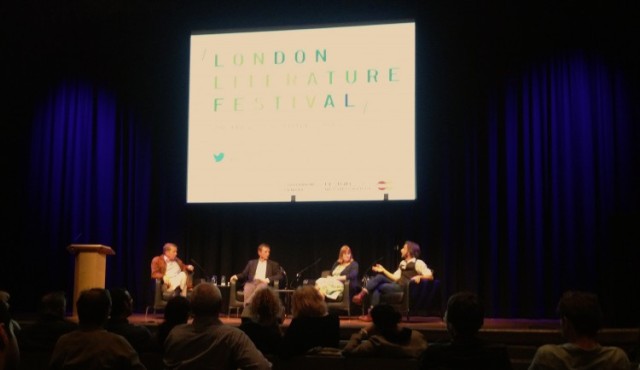
London Literature festival talk

The panel (from left to right: Bill, Dave, Karin, Steve)

Wax foundation

A member of the audience asked whether part of the problem is the wax foundation which many beekeepers use, which is recycled wax and can contain small amounts of chemicals. Steve replied that there is organic wax available from some places, for instance Bees for Development have been importing organic and fairtrade foundation from Zambia. Dave added that 20-30 pesticides are commonly found in honeybee chemicals (in tiny amounts) and that if there was one chemical behind honeybee deaths, we’d know about it by now – the issues are more complicated than that. 

Pet hates

For Karin, bedding plants are her pet hate. They are sold by garden centres in peat within plastic pots, and probably grown in heated greenhouses or shipped over from Holland. So not only are they often useless for bees, they are energy intensive to grow. If you are a gardener, please avoid them!

She added that beekeepers should be better trained, for example through taking exams or getting themselves a more experienced mentor. It’s not possible to learn beekeeping through the internet – that won’t prepare you for the nerves of steel needed to deal with aggressive bees.

Dave feels that gardeners never need pesticides. Why don’t we have a blanket ban on these in London? And the slug pellets some gardeners use are killing hedgehogs – is that really want we want?

Are there too many beekeepers in London? 

This question from Bill caused some slightly raised voices and a hint of tension amongst the panel!

Steve told us that he’d got into trouble for his one-word answer to this question before! (To find out which one word, see Deborah de Long’s infamous blog post, Tea With Fortnum’s Beemaster Steve Benbow). He took a more cautious approach to his answer this time but did say that he finds London to be a safe haven for bees, thanks to all the gardens and lime trees. He gave the example of Berlin, where around 2,500 colonies are brought in each year for the lime harvest, producing linden honey. Karin was quick to add that this is only for a very limited time and the colonies then return home.
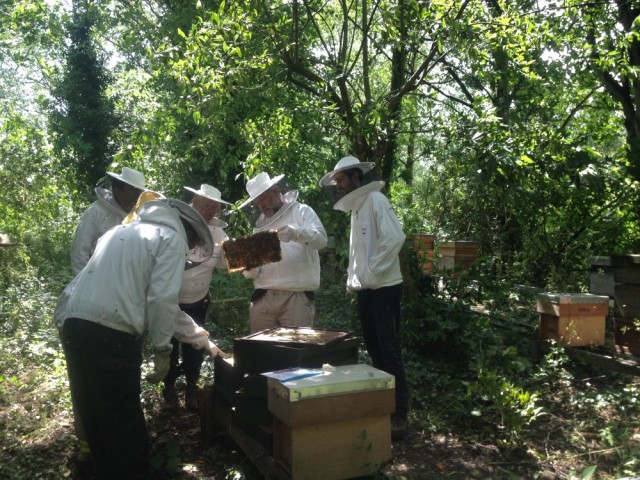
Urban beekeepers - are there too many of us?

Urban beekeepers – are there too many of us?

There was quite a funny moment when Steve quoted a figure from the Pollination Association (if I heard him right?) which did a study finding that 62% of London is green space. “Which association?” said Karin incredulously, with Steve rather lamely replying that it wasn’t his association. Anyone familiar with London’s squashed roads and concrete front gardens would be very sceptical of the 62% figure! Also, parks technically count as green space but the closely mowed grass they’re often full of is useless to bees.

EDIT: I apologise to Steve for doubting the 62% figure, as he has tweeted me a link to the Environment Agency website: Urban green space in London, which quotes a Greater London Authority figure that in London more than half (63%) of the capitals 160,000 hectares is made up of green space, gardens or water. One third of this are private gardens, one third parks or used for sports and the remaining third are wildlife habitats. So Steve was right. It seems an incredible amount – I still can’t help wondering if they are counting private gardens which may have been concreted, pebbled or decked over by now. And not all green space is equal, grass alone is no good.

EDIT 2: Angela Woods, Secretary of the London Beekeepers Association, has left a comment below to tell me that “A good reference is an excellent report by Chloe Smith who wrote London: A Garden City (2010) which shows that actual vegetated land makes up 14% of Greater London’s space. This however, is declining all the time and an area 2 1/2 times the size of Hyde park was lost annually between 1999 and 2008. The amount of hard surfacing increased by 26% and overall vegetation in gardens dropped by 12%….The full report is here and makes fascinating reading: www.gigl.org.uk/Portals/0/Downloads/LondonGardenCity.pdf“.

Steve told us he’s into guerrilla gardening, which is one thing both him and Karin agree on. He gives away clay seedbombs from his shop, which he suggested we chuck on roundabouts whilst cycling past. He also has some shaped like hand grenades that should be soaked first. Karin added that there’s no point throwing seedbombs onto grass – they need bare soil.

What can we all do to help bees?

Dave – Plant a lavender bush

Karin – “Ooh, I’d go a little bit further than that…” Dave – “plant two lavender bushes!”

Karin – Plant as many different nectar and pollen providing plants as you can. Think diversity. If you have kids, get them dirty and out in the woods, looking at the creatures and world around them.

Steve – Lobby your local government. And it’s all about being unkempt. Mow less!
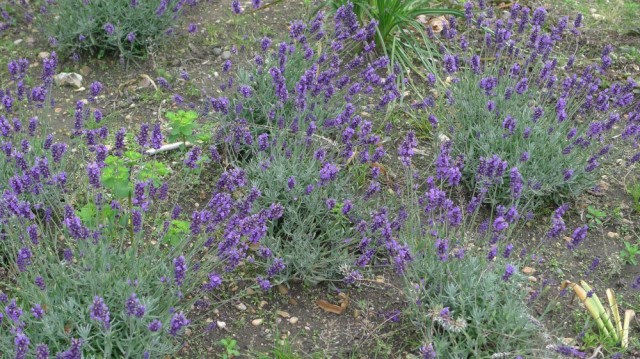
Lavender bushes - great for bees

Lavender bushes – great for bees

Conclusions

I was glad that the audience seemed very interested in bee health and how they can help bees. There were several questions asked about what beekeeping involves and the best way to attract bees to gardens. One gentleman who said he was a farmer interested in getting into commercial beekeeping optimistically asked the question “What do beekeepers do” – not an easy thing to answer!
Posted in Urban beekeeping | Tagged , | 39 Comments

Our queens come in eights

Last week Emma and I split our hive into two. Today we returned to check the progress of the two colonies – luckily the rain storms of Friday had subsided and beautiful sun ruled the skies.

At the time we split the hive we had only found two queen cells, so we had separated off the queen and put her into a nucleus, leaving the two queen cells behind. The bees obviously like the idea of swarming, because today we found… six more queen cells! Some capped and some uncapped, some on the bottom of frames and others built half way up. They really had been busy.

Queen cells

One cell was attached not to comb but to the wooden side of a frame. It was uncapped but contained a larvae with royal jelly. Given that we didn’t see this cell last week before we removed the queen, did the workers construct it the next day and move a young egg or larvae into the cell? I’ve heard of eggs being moved up through queen excluders before.

L1050503

The bees usually coat the sides of the queen cells, tending to the developing queen and keeping her warm. Sometimes they can completely obscure the cells, so you have to gently brush them out of the way to see what lies beneath. Try not to shake the bees off frames containing queen cells, as this can dislodge the queen larvae and harm them.

Walnut and honey cake

We were inspecting in the morning as Emma needed to leave early. I returned later in the day to see if any of the other beekeepers wanted some queen cells, precious objects that they are when you have no queen.

I also took time to eat a bite of cake. Above is a walnut and honey cake that I made. It looks unremarkable, but the best thing about it is the overwhelming aroma of honey you get as the cake gets close to your nose. It’s really moist – I poured a mixture of water boiled up with honey over it this morning. If anyone wants the recipe, it’s a Hummingbird bakery one, and has conveniently been put online on The Extraordinary Art of Cake blog.

Claire's chocolate cake

I also sampled this very tasty chocolately marbled sponge cake, made by Claire. In the background you can see a Victoria sponge cake. Actually there were four cakes to try today! So I was quite restrained by only eating two.

Stan said he’d like some queen cells, so he removed a frame containing two cells. That still left six cells remaining in total. We asked around and John Chapple said he’d like a cell. He advised me to keep nice long cells along the bottom of frames but located in the middle, as the bees can keep those warm more easily.

Finding a penknife in his pocket, he quickly cut out a cell on the edge of the frame, taking a portion of the surrounding cells with it. He said the developing queen would be put in a new hive quickly to keep her warm. As Stan had taken two cells and John one, that still left us with five cells.

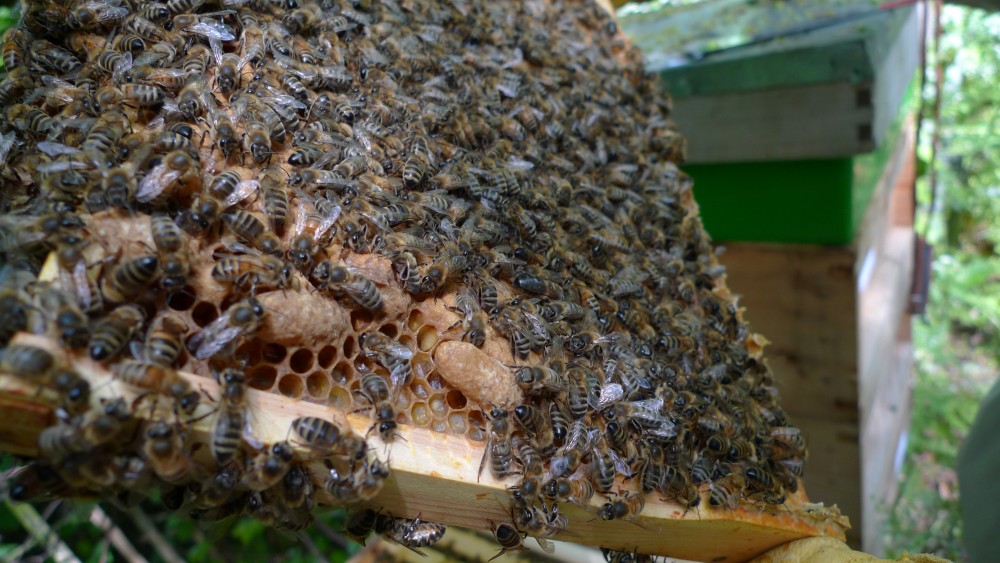
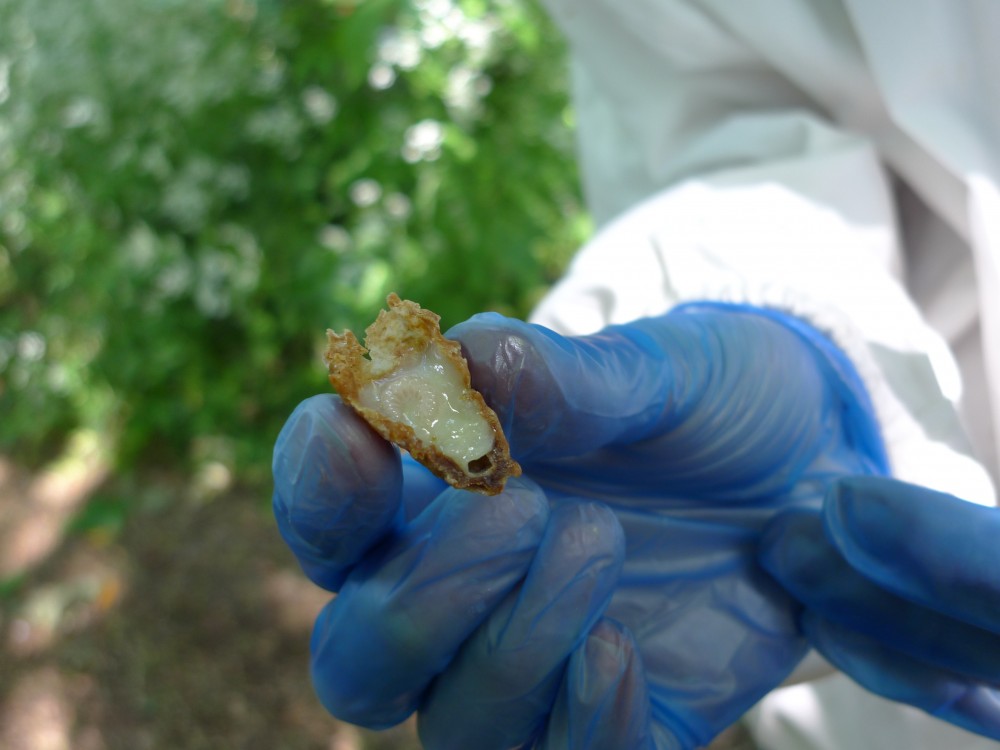
So John removed a capped one along the side of a frame. Opening it up for us, he gleefully informed the ladies watching that a taste of the royal jelly within would make us “rampant”! People pay a lot of money for fancy royal jelly products in shops, but none of us really fancied dipping our fingers into the goo. It’s actually a very rich substance, full of sugar and nutrients and possessing powerful antibacterial properties. The workers produce it from their hypopharyngeal and mandibular glands, both of which are located in their heads. Can you see the curled up queen larvae floating within?

L1050523

We now have two hives and two nucleuses down at the apiary and a tired out Emily. Please no more queen cells next week!

The split colonies should have a better chance of surviving than if they had swarmed off elsewhere. In his fascinating book Honeybee Democracy (2010) Thomas D. Seeley says

“In the mid-1970s, for three years I followed the fates of several dozen feral honeybee colonies living in trees and houses around Ithaca, and I found that less than 25 percent of the “founder” colonies (ones newly started by swarms) would be alive the following spring. In contrast, almost 80 percent of the “established” colonies (ones already in residence for at least a year) would survive winter, no doubt because they hadn’t had to start from scratch the previous summer.”

– and that was pre-varroa. It does mean that the colonies remain in the same location, which is not so good from a hive spacing point of view. But perhaps we can move one hive off to our new church location, or combine two colonies back together, or even sell a colony to a keen new beekeeper. Lots of options – having plenty of bees is a nice problem to have.

If you find a hive bursting with queen cells when you next inspect, and want to know how to choose which ones to keep (never destroy them all), here is some advice from Clive de Bruyn, author of the classic book Practical Beekeeping (1997):

“Cells should be chosen that are in a good position in the middle of the comb surrounded by worker brood. If possible, avoid those on the periphery of the nest or positioned amongst drone brood. If the cell is not yet sealed pick one with plenty of royal jelly and a large juicy fat larva. Queen cells vary in size. Generally the bigger the better but beware of excessively long cells, they sometimes contain larvae that have been separated from their food in the base of the cell…. The final criterion to use is the sculpturing of small pits on the surface of the cell. Pick the cell with the more pronounced pattern. A smooth cell may reflect a lack of attenton during construction.”

See my hive partner Emma’s post for more queen cell photos!: This could get out of hand.

Posted in Queens, Swarms | Tagged | 46 Comments

Some naughty bees cause an unexpected procedure at the apiary

Yesterday the apiary was buzzing… with beekeepers. Lots of chatting and laughing over tea, and buying of frames for rapidly expanding colonies. Emma and I got to show three completely new prospective beekeepers inside our hives – the first time they’d seen thousands of bees up close. They coped well, but kept their ungloved hands firmly in their pockets.

Here’s Emma going through the hive we bought from Charles recently. It was packed with brood. On the bottom you can see some of the drone comb the bees have been building. They’ve actually built the drone comb underneath several of the frames, making it very hard to inspect without having huge chunks of drone comb falling off.

Emma inspecting

Emma inspecting

Below Tom tries to use a magnifying glass to see eggs, the ends of his bee suit tightly curled round his fingers. I understand why beginners are afraid to have bees land on their hands, but these bees weren’t in attack mode and would have been very unlikely to sting him. If the bees are emitting a high pitched whine and bouncing off your veil, that’s the time to cover your hands up 🙂 Emma is wearing thick gloves because she has a bad reaction to stings.

Looking at eggs

The bees were finding some beautiful red-brick colour pollen. This could be from horse chestnut or blackthorn. We have rows of horse chestnut trees out around the apiary, their  candle-like white flowers pointing upwards majestically.

Here are some fun UK sites for identifying pollen:

  • Sheffield beekeepers have a Pollen chart, which is interactive with toggles for different seasons
  • Bristol Beekeeping Association also have an interactive pollen guide, access by clicking on ‘Pollen guide’ along their top navigation menu

Red pollen

No more photos after this as we got kinda distracted on frame 6 by finding a couple of uncapped queen cells with larvae inside. Uh-oh!

Luckily, finding them uncapped is a good situation to be in, as it means the bees are unlikely to have swarmed yet. Generally (but being bees, of course not always!) they will leave on the day – or day after – the first queen cell is capped, which is day 8 after the egg was first laid. However, bad weather can delay the swarm leaving. But if we had waited till next weekend to take action, the cells would have been capped and our queen would probably have been high up in a tree somewhere.

A capped queen cell, from one of our hives last year. Copyright Emma Tennant.

A capped queen cell, from one of our hives last year. Copyright Emma Tennant.

So the beginners got to see some very exciting stuff as we tried to do some quick thinking. We consulted our Beecraft advice sheets on swarming, and tried to follow the advice within and our memories of artificial swarm techniques. Emma had her queen clip with her, so we put the queen inside that and laid her on top of the hive to keep the bees calm.

We had a spare nucleus box (always have a spare nuc!). Inside this we put four frames of brood, honey and pollen stores and a frame of partially drawn-out foundation – making sure none of these contained a queen cell. We then put our queen inside and shook bees in from a couple of frames in the old hive.

The old hive now contains a couple of queen cells, brood and honey stores. This recreates the aftermath of a swarm, so the reduced population will hopefully put the bees off swarming. Some beekeepers will say leaving two queen cells is risky, but Ted Hooper suggests that the bees may choose one themselves and destroy their least preferred one. We filled in the space left by the frames we’d transferred into the nucleus with frames of foundation from the Bailey comb exchange we began recently.

With everything going on, we did do one thing wrong – we should have moved the old hive and replaced it with the nucleus. Doing this ensures that foraging bees will return to the old location and bolster the nucleus numbers. I’m going to go down and fix this today. Fingers crossed that’s all we’ve done wrong (unlikely!).

By the way, I recommend this Welsh Assembly Guide – ‘There are queen cells in my hive – what should I do?‘ – which gives you some clues about what may be going on in your hive if you spot queen cells.

Does anyone else have naughty bees intent on swarming?

Posted in Swarms | Tagged , | 27 Comments

Springing into action

The arrival of some slightly warmer weather and occasional sunshine is the cue for the wild flowers of Ealing apiary to shoot upwards. Here you can see a swarm catcher dangling amidst a sea of white and green.

Weeds in the apiary

The bees are expanding fast too. Today I went to see our new hive in Hanwell – the bees have kindly been donated to us by Ian, a nice Ealing beekeeper. This was the scene when I lifted the crownboard…

Lots of bees

Packed frames

Full hive

Each frame is fully drawn out, right down to the dummy board. My smoker went out quickly but apart from a couple of puffs at the entrance I managed to inspect the hive without smoking them. Occasionally a couple of bees buzzed round my head, but despite only wearing thin latex gloves I received no stings. Since I started I’ve gradually learnt that swamping the bees in smoke isn’t necessary. I saw the queen and no queen cells, which was a relief.

Emma and her dad had left a super by the hive earlier this week, which was a big help. I put a queen excluder and the super over the top, so that the ladies can start storing honey up there and free up space for the queen to lay.

Song for a new super, set to the tune of Missy Elliott’s Get Ur Freak On

Bees be putting it down, fill your stomachs big and round
New combs around, y’all can’t stop eating
Now
Listen to me now, y’know you can do twenty pounds
And if you want that sweet nectar then come on get it now
(YES)
Is you with me now (YES) then buzz buzz buzz it now
(SWEET!!) Bees fly around (YES)
Now honey gathers round, now beeks jump around

Go, get your super on
Go, getcha getcha getcha getcha getcha super on

Dead drone

Dead drone

Last picture – a dead, disintegrating drone I found on the ground. The tiny hooks that hold the wings together in flight have become disengaged and you can clearly see his four wings. For all his big eyes and muscles he never reached a queen.

Posted in Uncategorized | 30 Comments

What’s flowering now: early May

Each summer I like to go round the park near my house in Hanwell, West London (Elthorne park) and try to get photos of the flowers that are out, to see what the bees have to feed on. Elthorne park has a smart  (e.g. boring) bit with a children’s playground, but behind that are some wilder fields, leading down to woodland and the canal. Bunnies bounce about and occasionally you can walk for as long as five minutes without spotting another human being.  Here’s what I found yesterday.

Bluebells

Bluebells

Bluebells…

EDIT: Comments from London Beekeepers Association Forage officer Mark Patterson, via Facebook:

“the blue bells are probably Spanish blue bells Hycinthoides hispanica or hybrids of them. English blue bell H. nonscripta are smaller, scented and have a unique tone of blueness.  I would say they are deffo not English blue bell H. non-scripta, because in non-scripta they all hang downwards on one side of the stem whereas H.hispanica and its hybrids have bells hanging at all angles from all around the flower stem as it would appear in your photo. There is a growing concern over H.hispanica and its hybrids taking over the UK and replacing our native bluebell. I have dug all mine up and bough in english bulbs from specialist nursery to replace them.”

There’s a good explanation of the differences between the English and Spanish bluebells in this post by a biologist: Bluebell time!

White bluebells

Whitebells…

Pink bluebells

And pinkbells! I assume these are just unusual variations of the usual blue colour? Ted Hooper describes bluebells in his Guide to Bees and Honey (2010): “The honeybee works this flower with varying eagerness but in some years with great vigour. It provides a yellow pollen.” I haven’t spotted a single bee on a bluebell this year, has anyone else?

Forget-me-nots

Forget me not, Forget-me-nots

I think these pretty baby blue flowers with yellow centres are forget-me-nots. (EDIT: yep, confirmed by theprospectofbees in coments below.

White dead nettle

White dead nettle

This is white dead-head nettle. I like the contrast of the white flowers arrayed amongst the vibrant green leaves.

Purple flowers

Um, very tiny purple flowers?
(EDIT: theprospectofbees has suggested ground ivy in the comments below, and it certainly looks similar).

Blossom

Blossom of some kind – anyone know which? I hear apple blossom is out. Ted Hooper says “All the tree fruits – apple, pear, cherry and hawthorn or may…”None, except cherry, is a good honey plant, but they provide some nectar and plenty of pollen and are therefore useful to the beekeeper. The flowering periods cover the end of March, April and May….The honey is pale straw to medium amber and of delicate flavour. Pollen loads greenish yellow to pale yellow” (Guide to Bees and Honey, 2010, p.225). 

Dandelions

Dandelions and daisies in the sun

The under-appreciated dandelion, which looks like little yellow pom-poms to me. Recently I downloaded a helpful free online guide named ‘Twelve months of forage’ by Andy Willis from the Reading Beekeepers Association, included in their  March 2013 newsletter (scroll right to the end of the newsletter for the forage chart). Andy describes dandelion pollen as leaving a orange dusting on the underside of foragers. He also says dandelion can be a possible honey crop when it’s sunny – during dull or bad weather the flowers will close.

White flowers

Anyone have any ideas what this tall white flower is?
(EDIT: identified as garlic mustard by standingoutinmyfieldGarden Walk Garden Talk and theprospectofbees in comments below.)

White flowers

Here it is close-up.

pink blossom

Some pink blossom… I’m clueless on this too.
(EDIT: H-Appicultrice has suggested that it looks similar to Bramley apple blossom.)

carder bee

Common carder bee

And this was the only flower I actually saw bees on. It’s a common weed round here, but I don’t know what it’s called. When in a sunny spot I often see it covered with all types of bees – bumbles, honey bees and carders. This looks like a common carder bee to me.

EDIT: with help from Eddy Winko in the comments below, I’ve identified this blue flower as ‘green alkanet’ (also known as evergreen bugloss). The www.first-nature.com website tells me that “The name alkanet comes from the arabic name for henna, and the roots of Green Alkanet can be used to produce a red dye.” Indeed, this BBC article about partying in the times of Jane Austen reveals that “For rosy cheeks, alkanet and cochineal roots were used as the basis for rouge.” This blusher was used mostly by women, but also by some male officers during fancy occasions such as balls!

And a post by wellywoman gives the information that it originated in the southern Mediterranean but was imported for this red dye and was popular in medieval times with monks; it is probably from the gardens of the monks that it spread into the British countryside. It’s a member of the Borage family, which would explain why it’s so popular with the bees.

I haven’t done very well on my flower id-ing during this trip. I’m hoping some people will leave comments here to help me! Also, I didn’t see many bees, despite it being a warm, sunny day. I spotted five during a 40 minute walk and heard another two buzz past. Wonder if the rainy spring has meant a lot of bumble bee queens weren’t able to get going.

Posted in Uncategorized | Tagged | 27 Comments