Syrup for the bees, cakes for us

It’s dangerous going down to the Ealing apiary. Not because of the bees, but because of the amount of cake on offer. This week I made pecan pie, Claire made a honey show recipe cake, Matwinder brought prunes soaked in raspberry juice and Pat some chocolate fudge squares. Obviously I had to try a piece of each to test it all 🙂
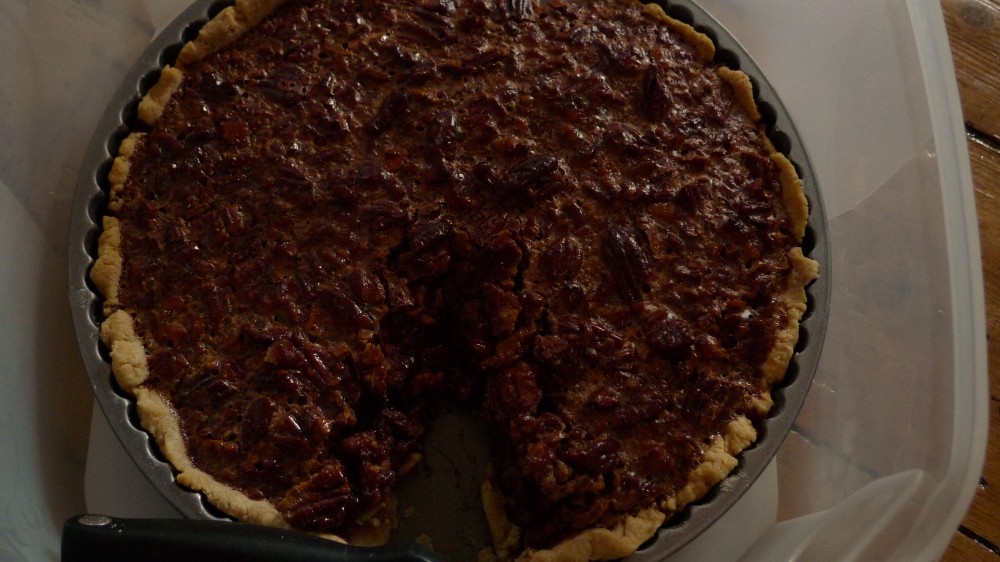
Paul Hollywood's pecan pie

Paul Hollywood’s pecan pie

Above, my attempt at Paul Hollywood’s pecan pie recipe. I made the pastry myself and everything, which is hard for me. The filling is lovely and gooey, full of golden syrup and butter.

Clare's honey cake

Clare’s honey cake

Claire is a doctor and a talented singer too. On top of that she makes a fine honey cake. She was following the National Honey Show’s honey fruit cake recipe; it tasted great but the dip in the middle would have prevented it being a winning entry. The judges are very keen on presentation!

Oh yes, and I did see some bees in-between stuffing myself with goodies. Mouseguards are on now. Here are two of John’s New Zealanders checking theirs out. There was talk of a kind of British shrew which can fit through a mouseguard, but all agreed they are unlikely to turn up in Ealing.

The bees were bringing plenty of golden yellow pollen back; John thought this was likely to be from Michelmas daisies. The Michelmas daisy takes its name because its blooms historically coincided with the Feast of St Michael on 29th September.

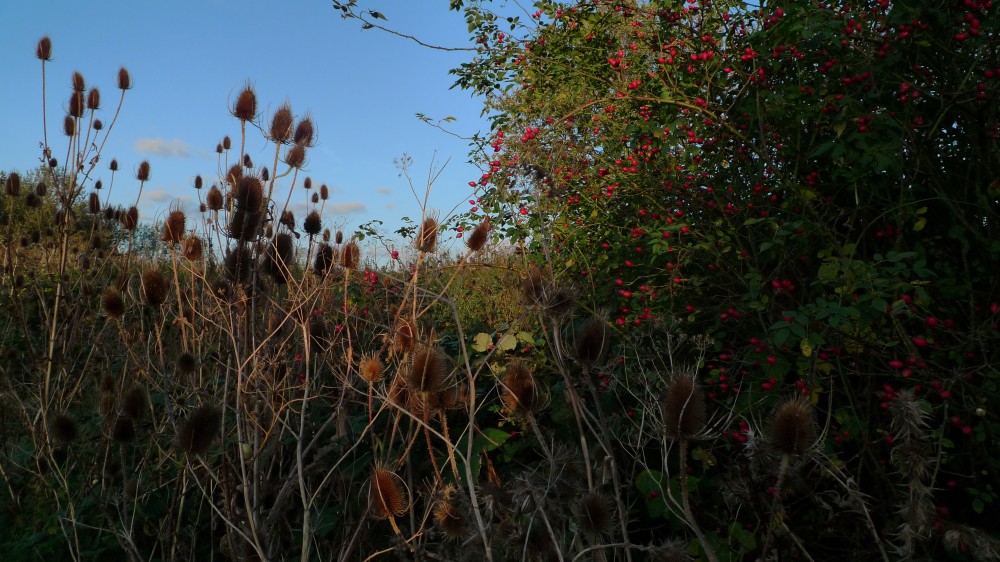
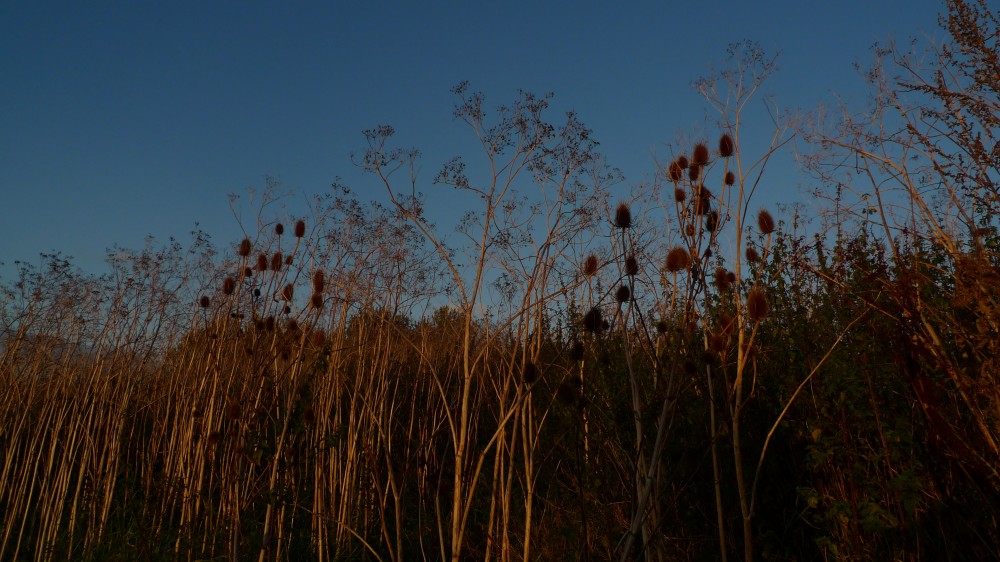
Some Autumnal pics:

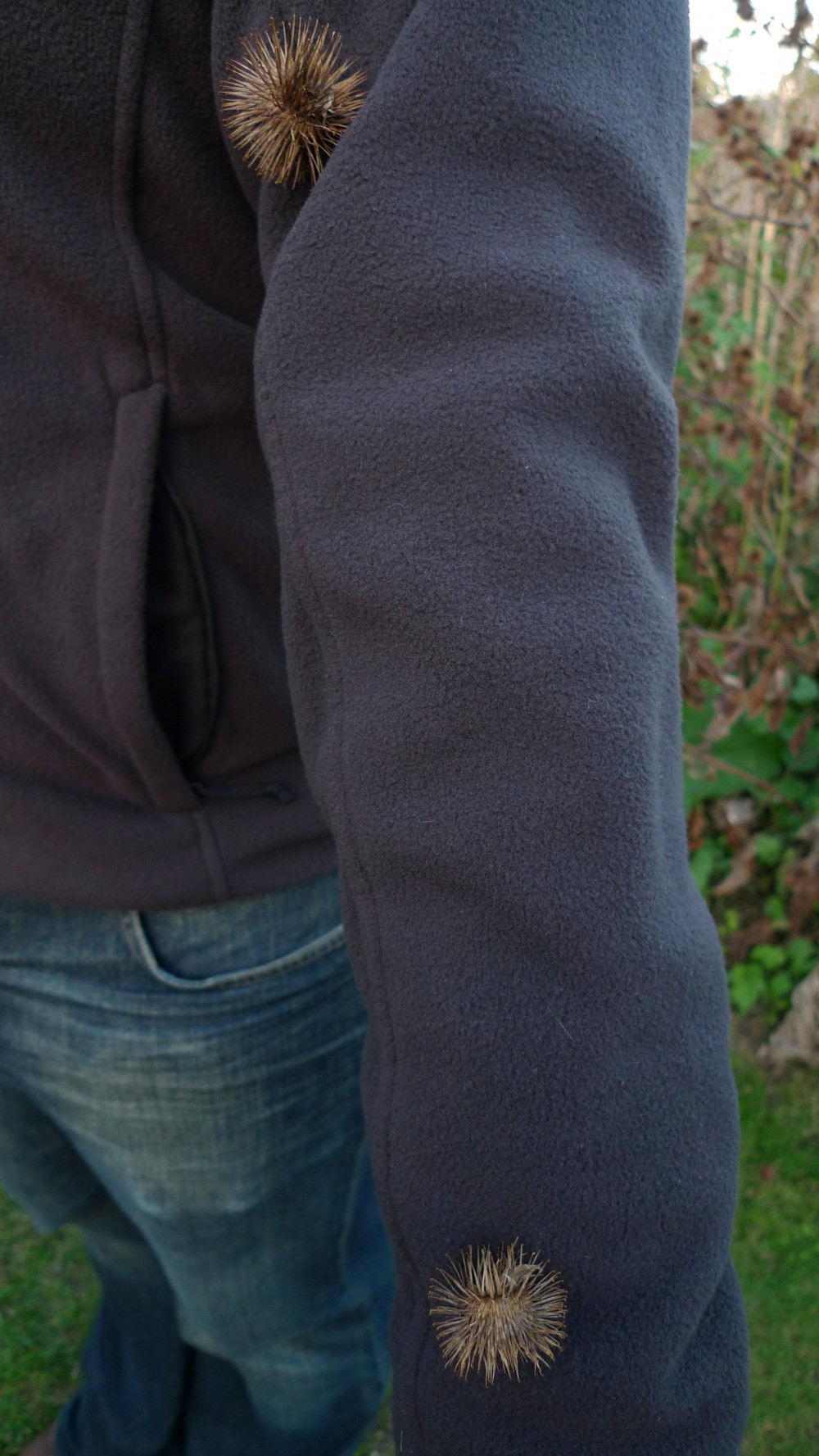
These thistle balls have sharp arms which stick wonderfully to fluffy jumpers and hair. Drew and me had a great time throwing them at each other.
Below: ivy flowers. The bees are going crazy for these up and down the country right now. Although a very useful late nectar source for over-wintering bees, ivy nectar can crystallize in the flowers or, after storage, in the honeycomb and become unavailable to the bees (Plants and Honey Bees: their relationships by David Aston & Sally Bucknall, 2009). Pollen loads are yellow-orange and the honey white.

Blog posts of the week:

Nature’s Place, ‘Stingless Sugarbag Bees
I guarantee these macro bee shots will blow you away. They are the best I’ve come across online yet. Can you see all her eyes? (here’s a clue: bees have five eyes, not two). If you want to know how Mark does it, read his ‘Macro Illustrated‘ post.

Disperser Tracks, ‘The Busy Bees – Summer 2012
Emilio J. D’Alise is based in Colorado and takes mainly (spectacular) wildlife and nature photos; he has a dry sense of humour which I appreciate, and this week has turned his talents to the bees in his garden visiting Russian sage.
Posted in Uncategorized | Tagged | 17 Comments

Secret passages for bees

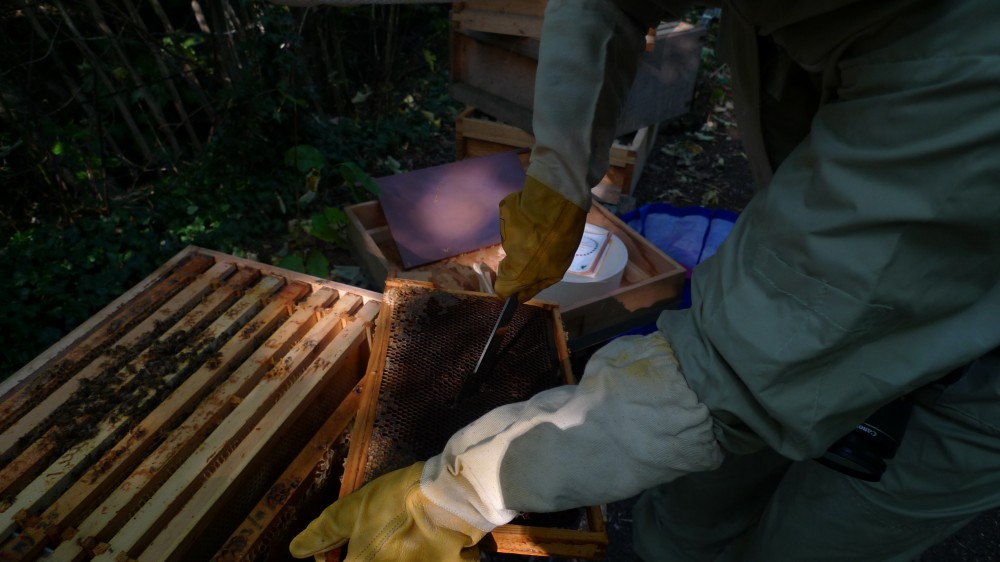
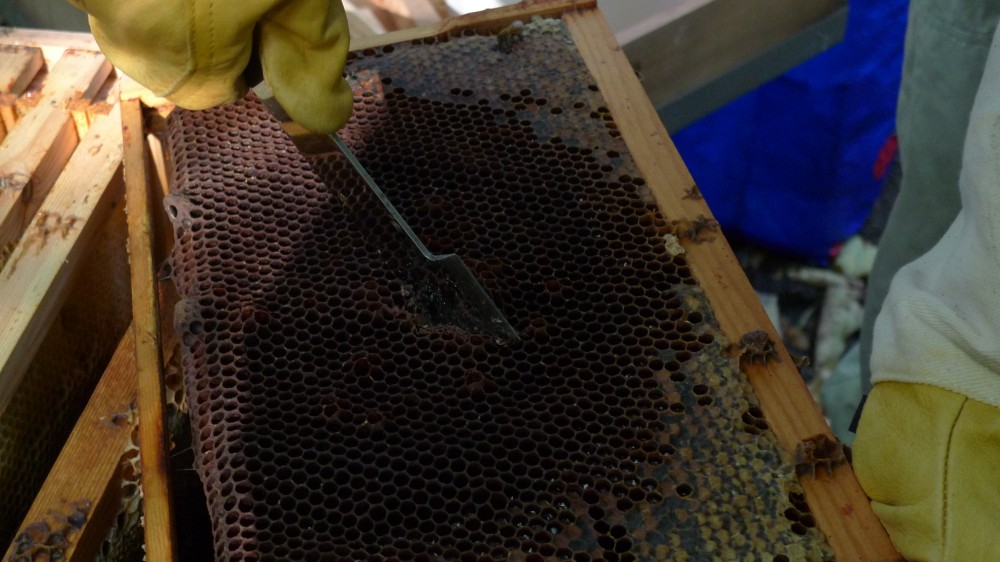
During the winter whilst bees are clustering, sometimes they can find it hard to move from one frame to another to feed on their stores without getting too cold. On John Chapple’s suggestion, yesterday we gouged a hole in the middle of our brood frames containing honey, a little passage to allow bees through.

Now the queen and her entourage can pass through with ease! These frames are older than we would like. In the spring we will do a shook-swarm or Bailey comb exchange to get the bees on new frames.

We saw Myrtle; she is still laying and we have about two frames full of brood, new bees to take the colony through winter.

Depending on the weather to come, this may have been the last time we can do a proper inspection this year (sob!). Now we are concentrating on feeding the bees sugar syrup before it gets too cold. My next blog post will probably be about the London Honey Show, which is coming up on 8th October! Anyone else going?

Posted in Uncategorized | 15 Comments

Winter is coming

Lots going on down at the apiary this weekend. Mysterious objects to identify, tea to drink, cake to eat, gossip to catch up on…

What, for instance, is this?

Unknown object

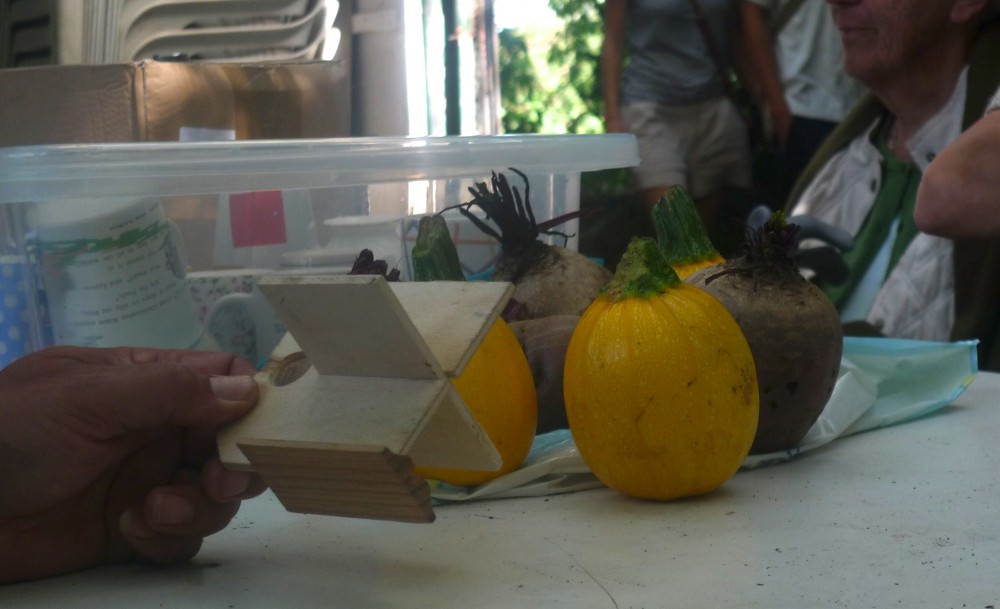
John Chapple brought this object back from his travels abroad. He said the old beekeeper who gave it to John was disgusted that he didn’t know what it was (I suspect the old beekeeper didn’t know either!). There is a prize of a jar of marmalade for anyone who can identify it for John. The piece of wood which slots in next to the round hole is removable. Emma has a close-up pic of it here: http://twitpic.com/auwyfw.

Unknown object 2

Perhaps queen rearing equipment – could a queen cell hang from the hole? Mouse guard? Bee gym? Practical joke? No-one knows!

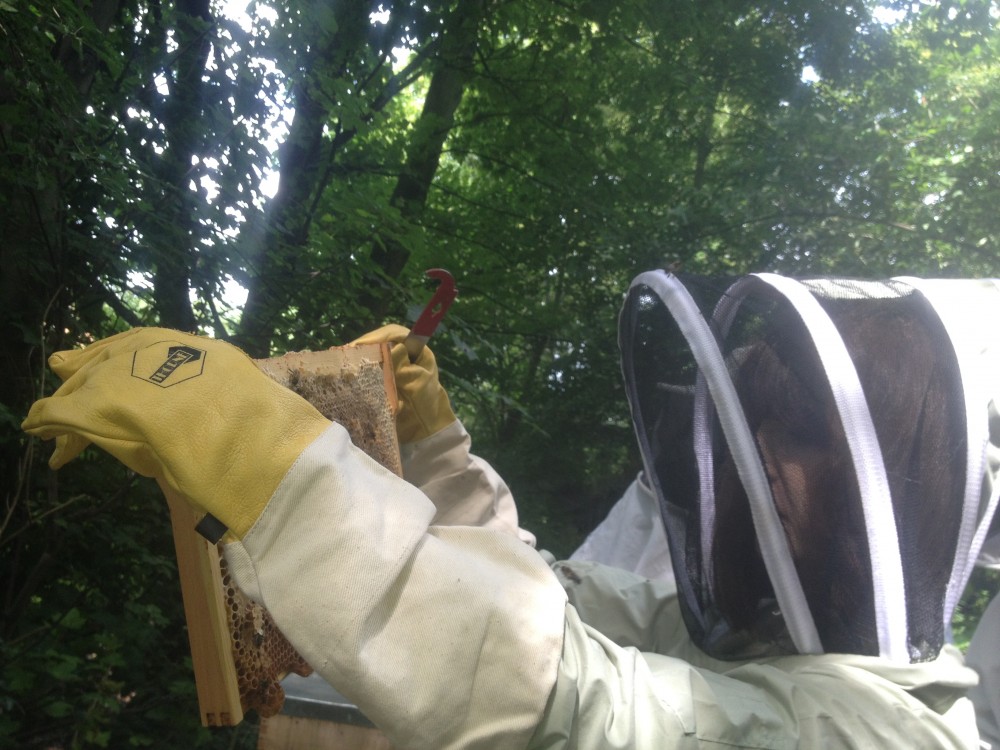
It was a nice day for inspecting, below is Emma holding a frame. We have finished the Apiguard treatment now, so we removed the trays and checked the monitoring board for fallen mites. I could only see about five, which does seem suspiciously low, but then this colony has had several breaks in brood this year, what with a swarm occurring and queen troubles. A break in egg laying and brood production gives varroa less opportunities to reproduce, so between that, the oxalic acid and Apiguard, we should be okay.

Emma holding a frame
The nights are drawing in more quickly. Soon it will be too cold to inspect, and it will be time to put the bees away for winter. No more holding up brood frames, just peeking in the top occasionally to top up feed and in December to do the oxalic acid treatment. Several months of waiting before the joy of the first spring inspections.

But for now we still have sunshine and warmth. I found this bee in the walled rose garden at Walpole Park, Ealing. I adore the smell of roses and find it very frustrating that as soon as I remove my nose from a rose the scent is lost to me, merely a gorgeous memory. I envy this bee for being able to spend time crawling inside its petals, enveloped by the intoxicating aroma.

In another part of the park I had an encounter with this White-tailed bumblebee (Bombus lucorum). We found her crawling on a concrete path, moving about slowly. One of her legs seemed to be missing. I thought that even if she was literally on her last legs, being stepped on would be an unfitting end for this magnificent creature. I attempted to pick her up with a leaf, but she had other ideas and crawled on my hand.

She felt soft and warm. I have read that bumblebees can inflict quite a nasty sting, but she did not seem at all likely to sting me. I carried her around the park trying to find somewhere suitable to leave her, and eventually chose this bush of blue flowers (kindly identified by Christina in the comments below as Caryopteris), which was being enthusiastically bombarded by common carder bees. To my surprise she perked up at once and crawled off my hand to begin feeding. Even with only five legs she seemed to hang on to the flowers and hopefully regained some energy!

A couple of lovely blog posts I’ve come across this week:

Bees of Slovenia – amazing photos of Slovenian hives, which are elaborately decorated with religious and cultural iconography, I love the naughty devils trying to steal honey from the villagers!

“In the Slovene language there is a verb to signify the death of a human. This word is shared only with bees. For all other creatures there is a separate word. Here in a little country in the Balkans, the life of a bee is respected just as the life of a human.”

What’s going on behind that capped cell? – wonderful and quite eerie photos of a developing larvae, she has perfectly formed antennae and legs but is still a translucent white colour.

Posted in Uncategorized | 20 Comments

Nothing hotter than an otter

No bees in this post, sorry. This weekend got madly busy and I didn’t go to see the bees, though I did meet several slow worms, a grass snake, lots of cute ducks and mock wrestling otters to make up for it, all at the London Wetland Centre in Barnes. Laurence Arnold, one of the centre’s staff, took us on a guided reptile walk which I really recommend. All the photos below were taken by Drew Scott.

Copyright Drew Scott

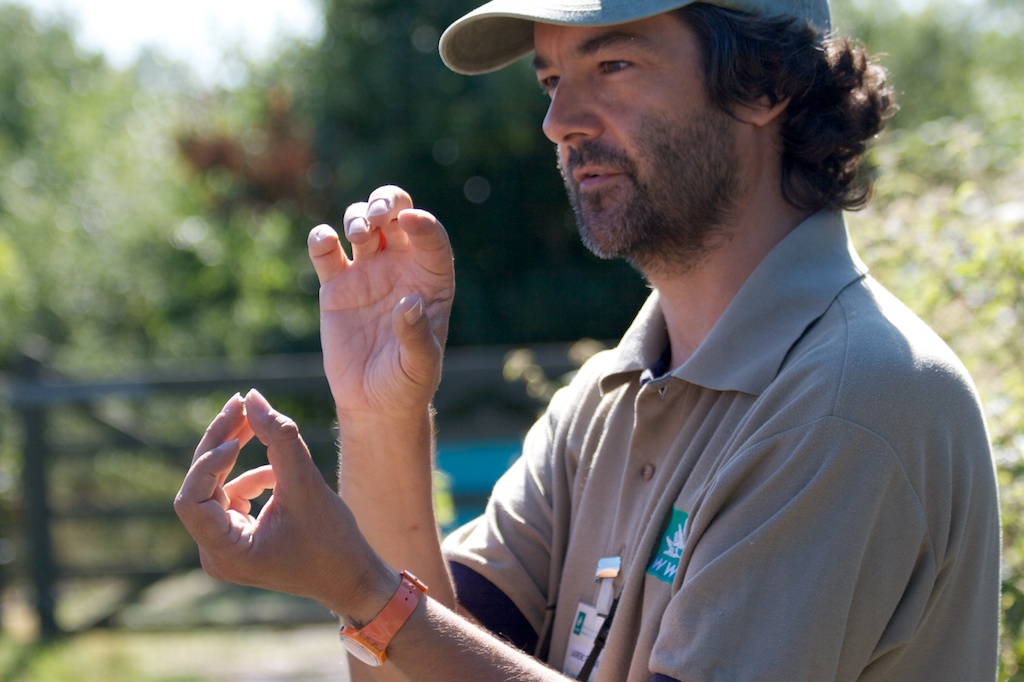
Above is Laurence, showing us some skin shed by a slow worm. After dipping our shoes in a special solution and stepping over an electric fence, we walked along a high grassy bank usually inaccessible to the public. Up here the staff do weekly surveys of reptile numbers, by lifting up specially placed shelters made from squares of felt or corrugated iron.

Slow worm

Copyright Drew Scott

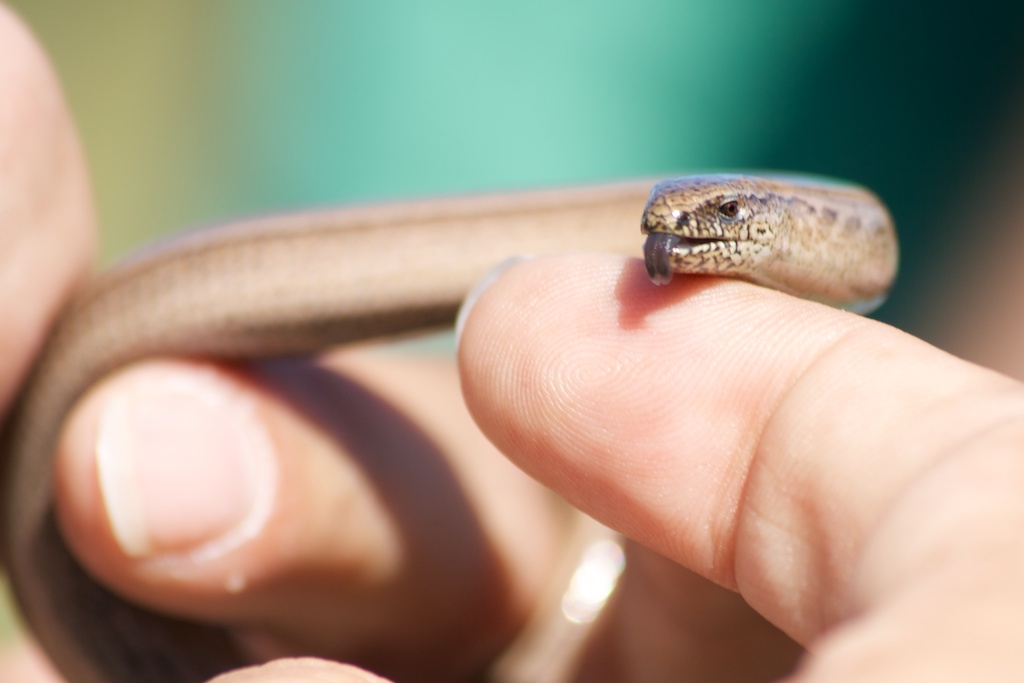
It didn’t take long before Laurence caught a wriggling slow worm under one of these shelters. She soon calmed down after he tickled her under the chin for a while. One of the ways to tell the difference between a slow worm and a snake is that the slow worms have eyelids, whereas snakes just have a clear fluid film to protect their eyes. You can see this when the slow worms blink.

Copyright Drew Scott

The way to distinguish between male and female slow worms is that males are all one colour, whereas females have a darker line along their undersides. They will eat anything they can get into their mouths, for instance slugs are a favourite treat (another reason not to use slug pellets). Mating takes place in spring, after which the females give birth to live young in September. Not all reptiles lay eggs, some give birth!

Copyright Drew Scott

Just beyond the grassy bank, outside the centre’s boundary, is a row of extremely posh houses. We saw plenty of swimming pools and conservatories. This brings the hazard of cats, who like to play with the slow worms. Birds are also keen on eating them. Luckily slow worms spend most of their time burrowed down close to the ground.

Grass snake

Copyright Drew Scott

Laurence also found a gorgeous grass snake! She produced lots of musk alarm scent as she writhed in his grip, trying to make herself seem unappetising. Laurence told us that he loves this musky snake scent, as for him it’s the smell of summer. Her tongue forked back and forth as she tried to make sense of all the human smells around her.

Grass snake

Copyright Drew Scott

I love the greeny blue pattern on her underside. I stroked her a little – she felt dry, not slimy.  It felt special to meet a creature like this close up – I wouldn’t dare to pick up a snake I found in the wild! And I suspect I’d be way too slow. Of course, grass snakes can do us no harm beyond a nip.

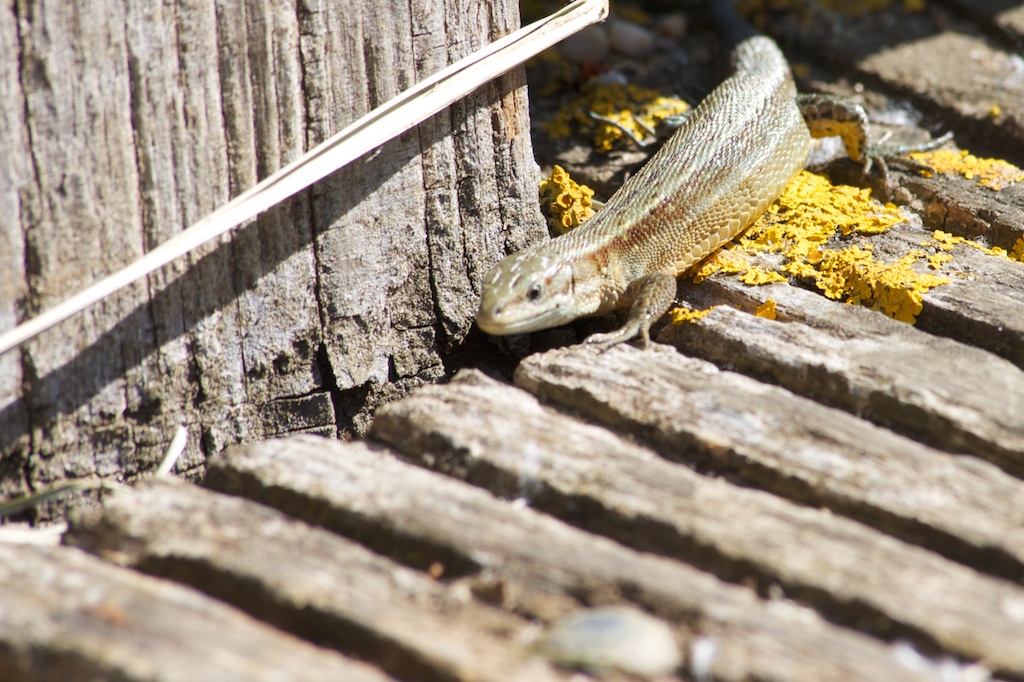
Common lizard

Copyright Drew Scott

A spotting by Drew along the footpaths – a common lizard. They like to burrow into the crevices in the wood.

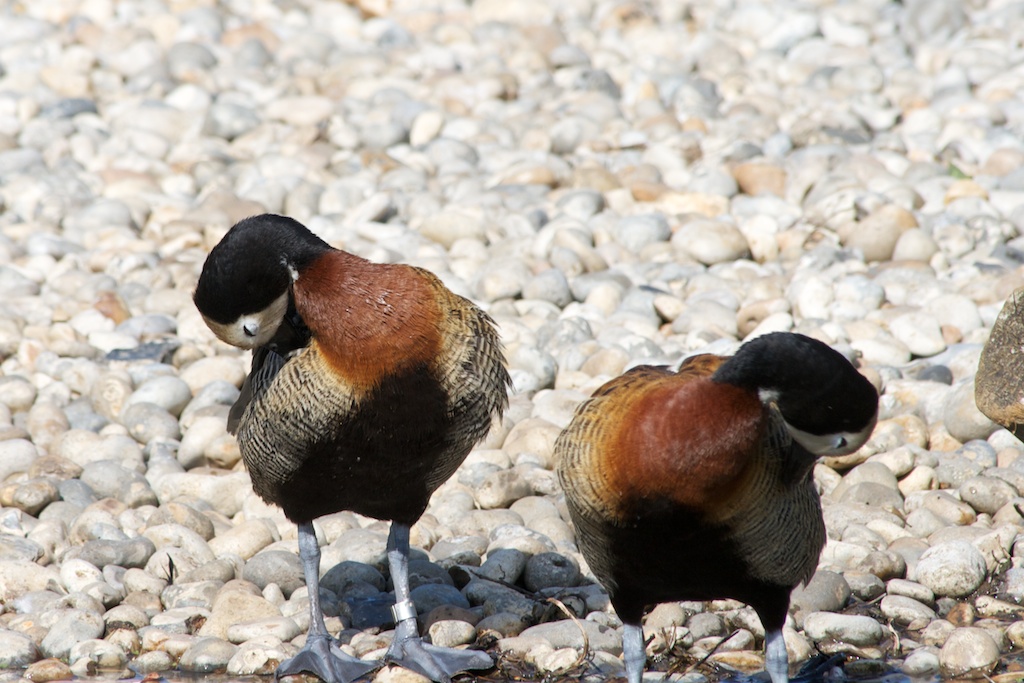
Pair of ducks

Copyright Drew Scott

Laurence taught us so much, unfortunately much more than I can possibly try to write down here! After his brilliant walk ended, we ate some lunch and went on to visit the birds. I couldn’t resist Drew’s photo of the pair above.

Copyright Drew Scott

Perfectly synchronised!

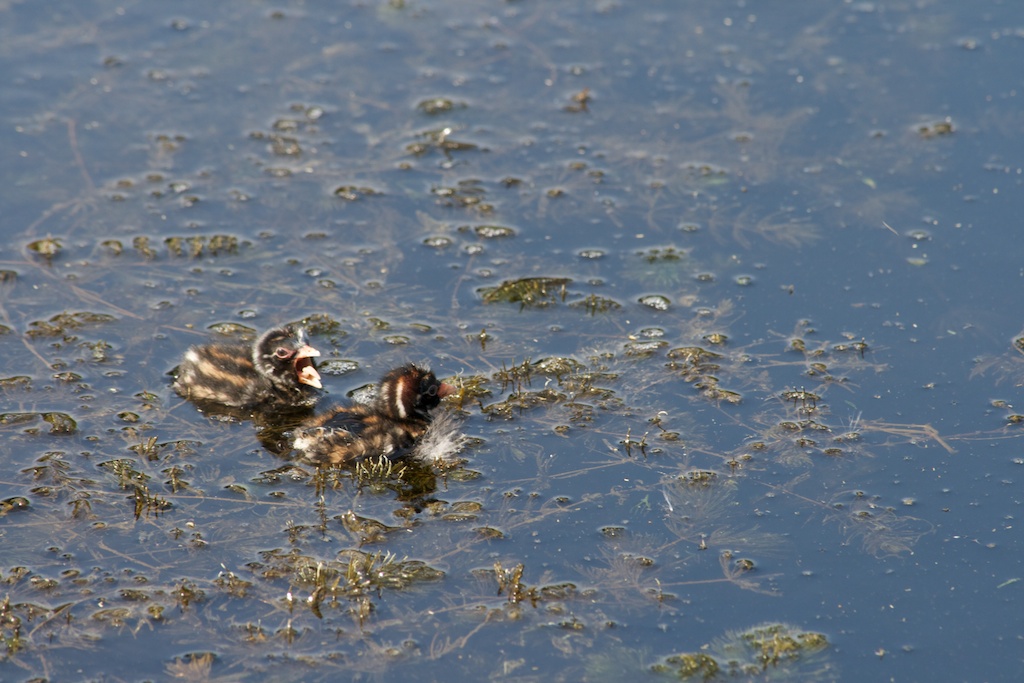
Ducklings

Copyright Drew Scott

I think these are Little Grebe young. They stayed on the surface while mum dived for food, quacking frantically when she emerged. Occasionally she gave them some, but mostly her dives seemed unsuccessful.

Where did the ducklings go?

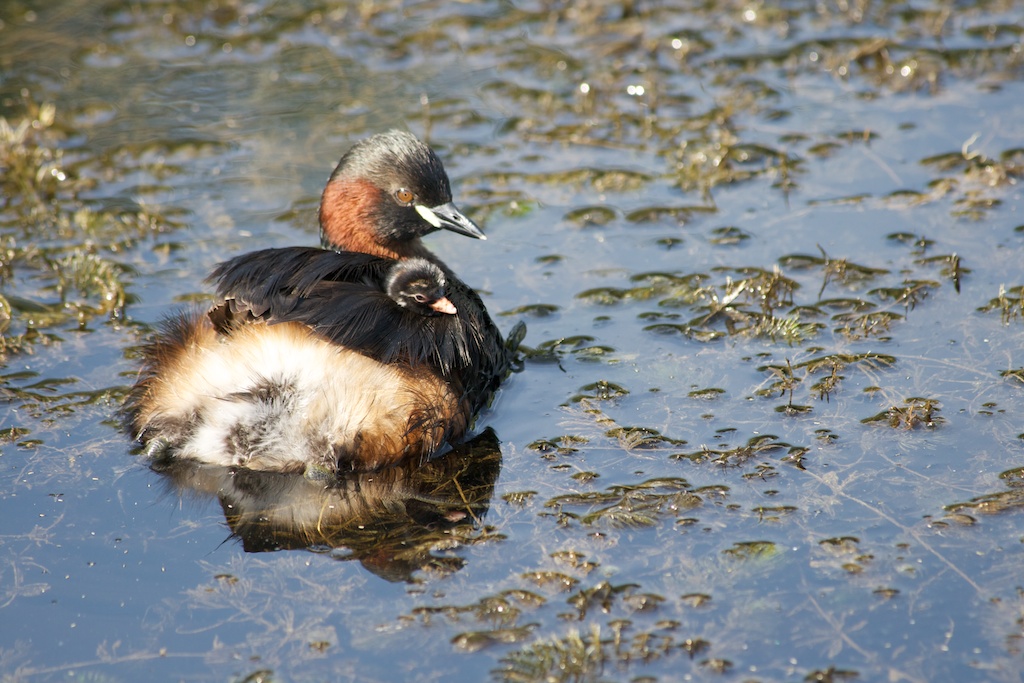
Next, the most amazing thing happened. Where did the ducklings (or should I say grebelings?) go?! Look closely at the photo above.

Peekaboo!

They hopped on mum’s back! She lifted up her wings and let them nestle under there. Occasionally a waggling foot or an inquisitive little head popped out. So cute.

EDIT: I have since come across this great blog post by Tricia – ‘Dragons, Very Little Grebes and Otters‘ – Tricia seems to have been there a day before us and has gone one (or should I say two?) better by managing to get photos of three little grebe chicks on mum’s back!

Dragonfly

Copyright Drew Scott

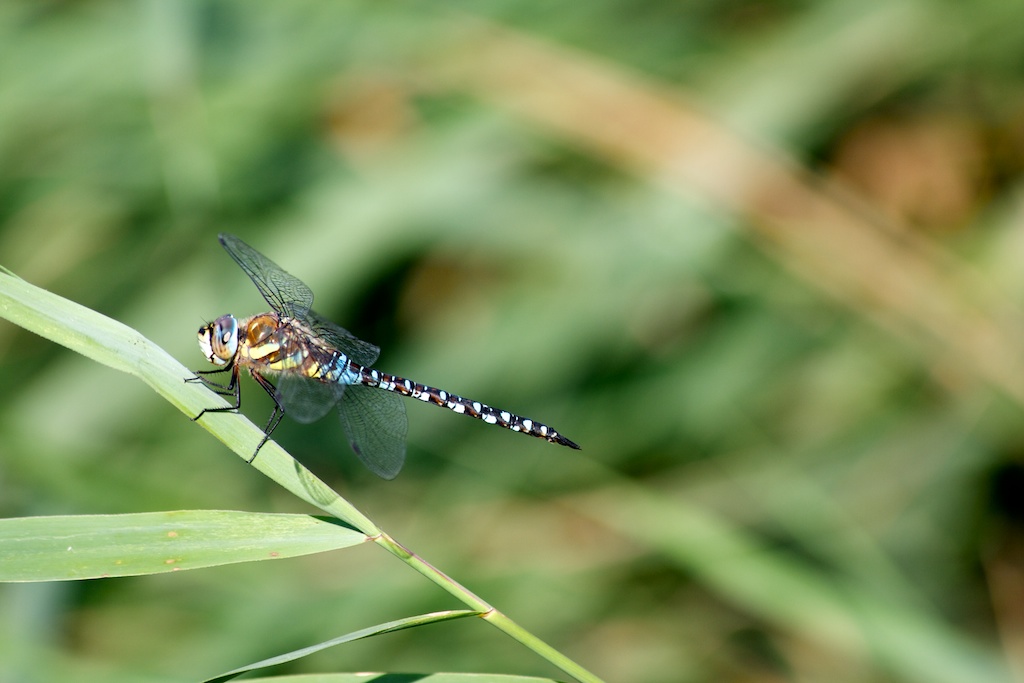
I need help identifying this gorgeous dragonfly, any ideas please? I’m wondering about it being a variety of Migrant Hawker.

Copyright Drew Scott

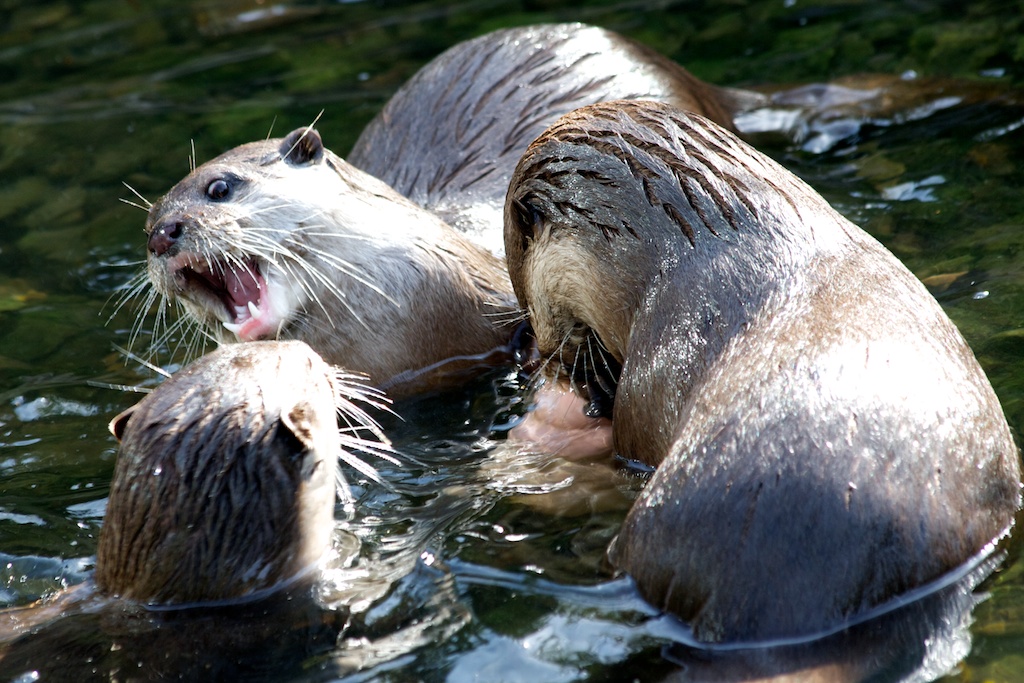
I possibly saved the best for last… the otters! A slinky new addition to the Wetlands Centre. The two pups were mock wrestling, rolling over each other, snapping and snorting as they had great fun playing with a rubber toy.

Copyright Drew Scott

Mum looked on and occasionally pinned a pup down if they got too naughty.

Copyright Drew Scott

Copyright Drew Scott

Otters are the best. Well, the best mammals. (They don’t beat bees, obviously). Thanks for a lovely day out, London Wetlands Centre! Bee posting to resume next week.

This slideshow requires JavaScript.

Posted in Uncategorized | 30 Comments

Hungry New Zealanders hunt for food

Today I had a little crowd of watchers round me as I opened up our hive, including a newbee and a professional photographer named Megan who is documenting Ealing’s ‘sub-cultures’. She is hoping to visit some Ealing monks next! I hope she got good photos of beards and tea drinking.

Our bees are doing well. I put their second Apiguard (thymol based varroa treatment) dose on; hopefully in two weeks time they will have cleaned that out and we can start feeding sugar-syrup to help them fill up the brood box with stores before winter. Sadly not all the hives in the apiary are doing so well:

I had visited earlier in the week and assumed that these piles of dead bees in front of John’s hive of yellow New Zealand bees were drones being kicked out. But as Andy Pedley pointed out, none of the other hives have such huge piles of bees in front of them, and not all of these bees are drones. Many were not yet dead but crawling around in front of the hive very lethargically. I asked Andy if they could have been poisoned; however when he inspected the hive the answer was found inside: the bees had hardly any stores – they have been dying of starvation.

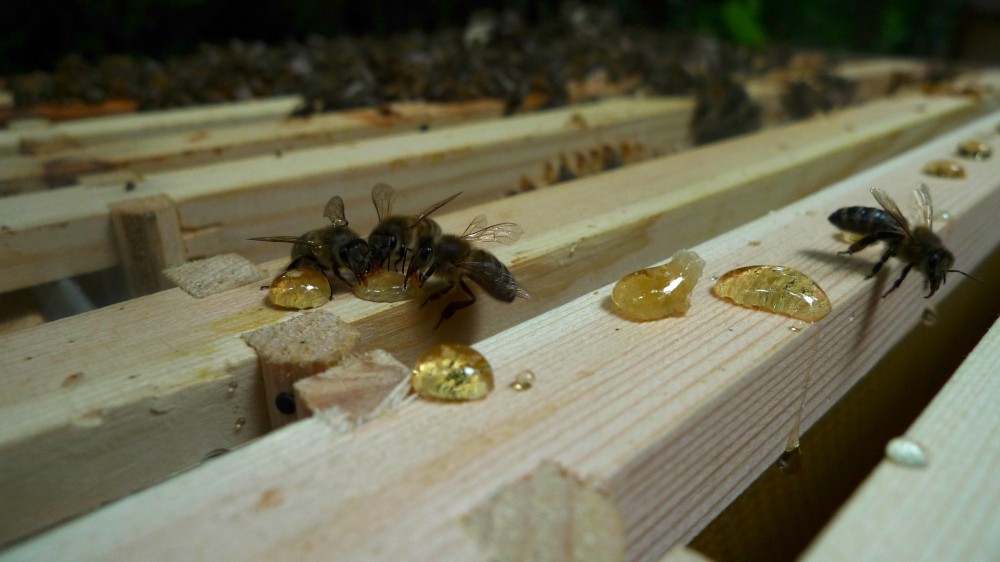
Andy showed us a very interesting technique to help bees which need emergency feeding – I will try my best to remember this. Before putting a contact feeder with sugar-syrup on top of the frames, he poured some of the syrup into a couple of empty frames and tilted the frames up and down, so that the syrup ran into the empty cells. This should be done over the hive, so that syrup is not spilled elsewhere, which could encourage robbing.

Rocking the frame back and forth, getting the syrup to fill the cells. The bees started drinking immediately. Hopefully this will save them from starvation – but unfortunately they have already started robbing other colonies for food.

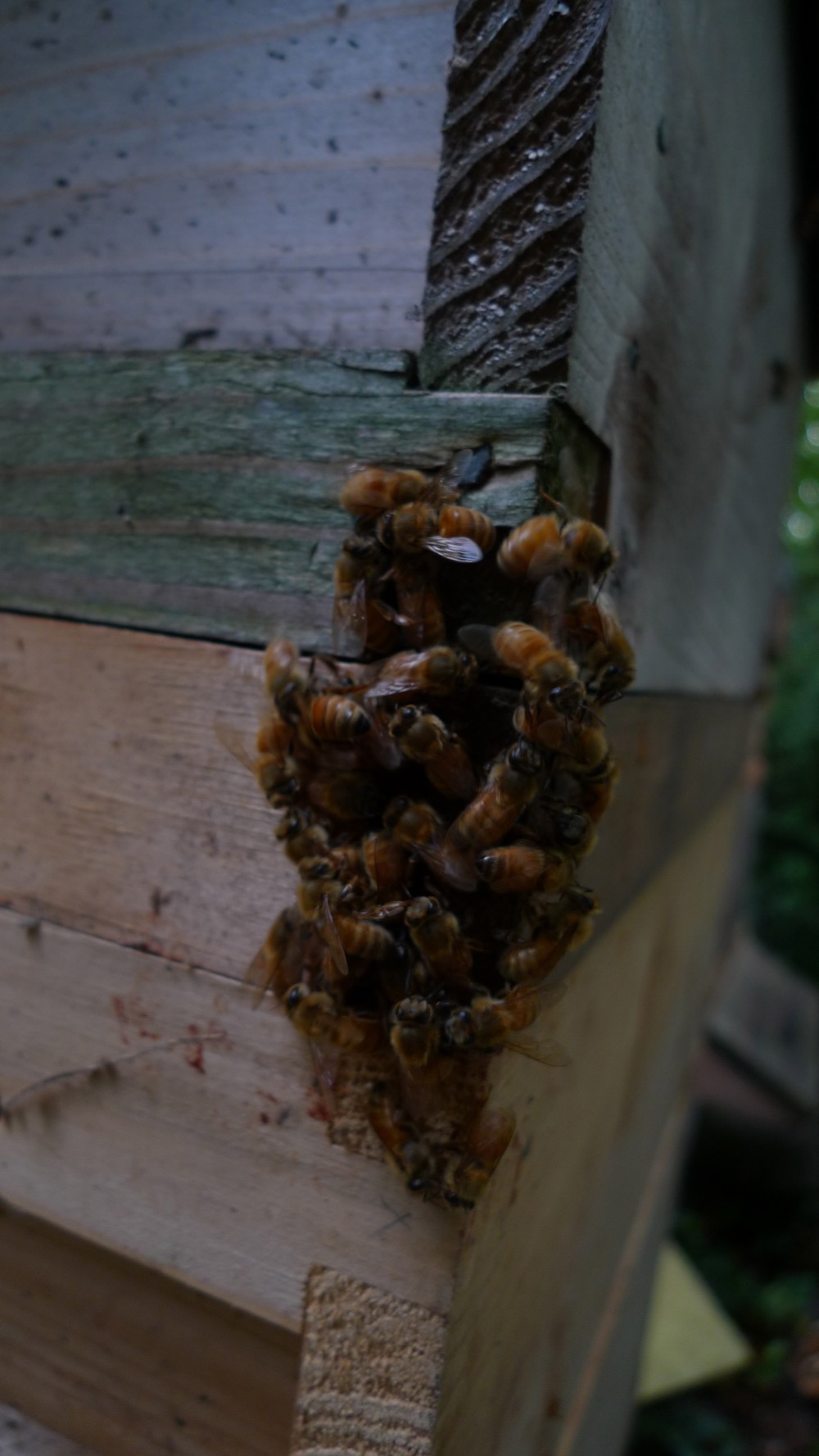
I found this cluster of New Zealand bees patroling a small gap in my hive, trying their best to force their way in through a tiny gap. Their bright yellow colour gives them away compared to our dark British mongrel bees. I stuffed some leaves in to try and put them off.

New Zealand bees trying to find a hole in our hive.

They were also trying their best to get in under the hive, but the open mesh floor should prevent that. Poor hungry ladies, but my ladies need their honey too!

I went to a talk in March on ‘Improving your bees and beekeeping‘ by Roger Patterson, in which he mentioned that he has noticed that the darker British style bees tend to pack more honey stores around the brood in the brood box, whereas the more prolific yellow Italians, such as those bred in New Zealand, tend to fill the brood combs with brood and put all their honey up in the supers. This means beekeepers need to be extra careful with Italian bees when removing supers to ensure that the bees have enough stores left in the brood box.

I’ll leave you with a few photos from a recent visit to the lovely St. Tiggywinkles Wildlife Hospital near Aylesbury.

Think she’s a common carder bee (Bombus pascuorum)?

And the bumble I see the most, the Buff-tailed bumble bee (Bombus terrestris).

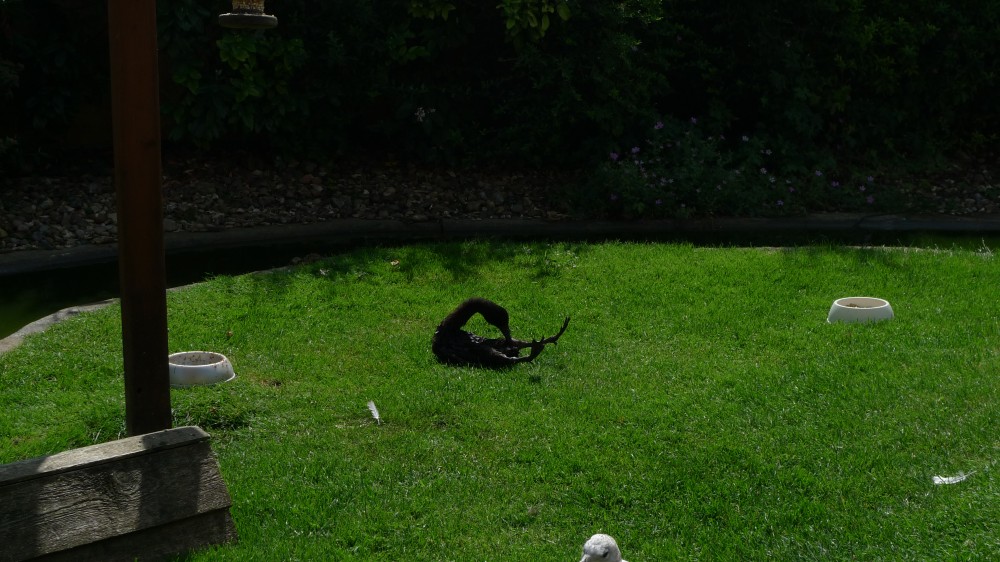
And finally, the rare great black bumble, viewed from a distance. She looks rather like a cute duck struggling to get back up on her feet, but I assure you this is a bee. Hunted almost to extinction by over-enthusiastic collectors, this species now exists in only a few isolated pockets of southern England. Do not let her waggling feet fool you, this young lady is perfectly equipped to forage from flowers using her long neck and large proboscis.

Posted in Colony management | Tagged | 28 Comments

Bees, flowers and sculpture at Chelsea Physic Garden

In 1673 the Society of Apothecaries of London founded a Physic Garden at Chelsea, so that their apprentices could learn to grow medicinal plants and study their uses. Yesterday I visited the garden, for the second time this summer, and found many new delights amongst its paths. It is a place where a sense of calm descends as you walk in, a place to shed all the bustle and cares of London and breathe in deeply from the heavy scent of evening flowers. Follow me in a walk round the garden.

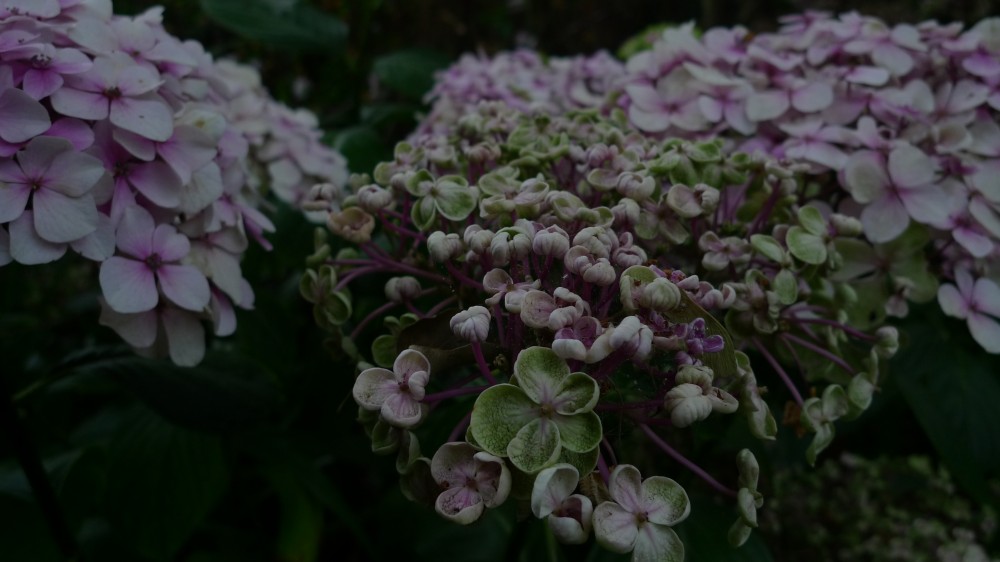
The pink dappling effect of hydrangeas, against the dark of their leaves.

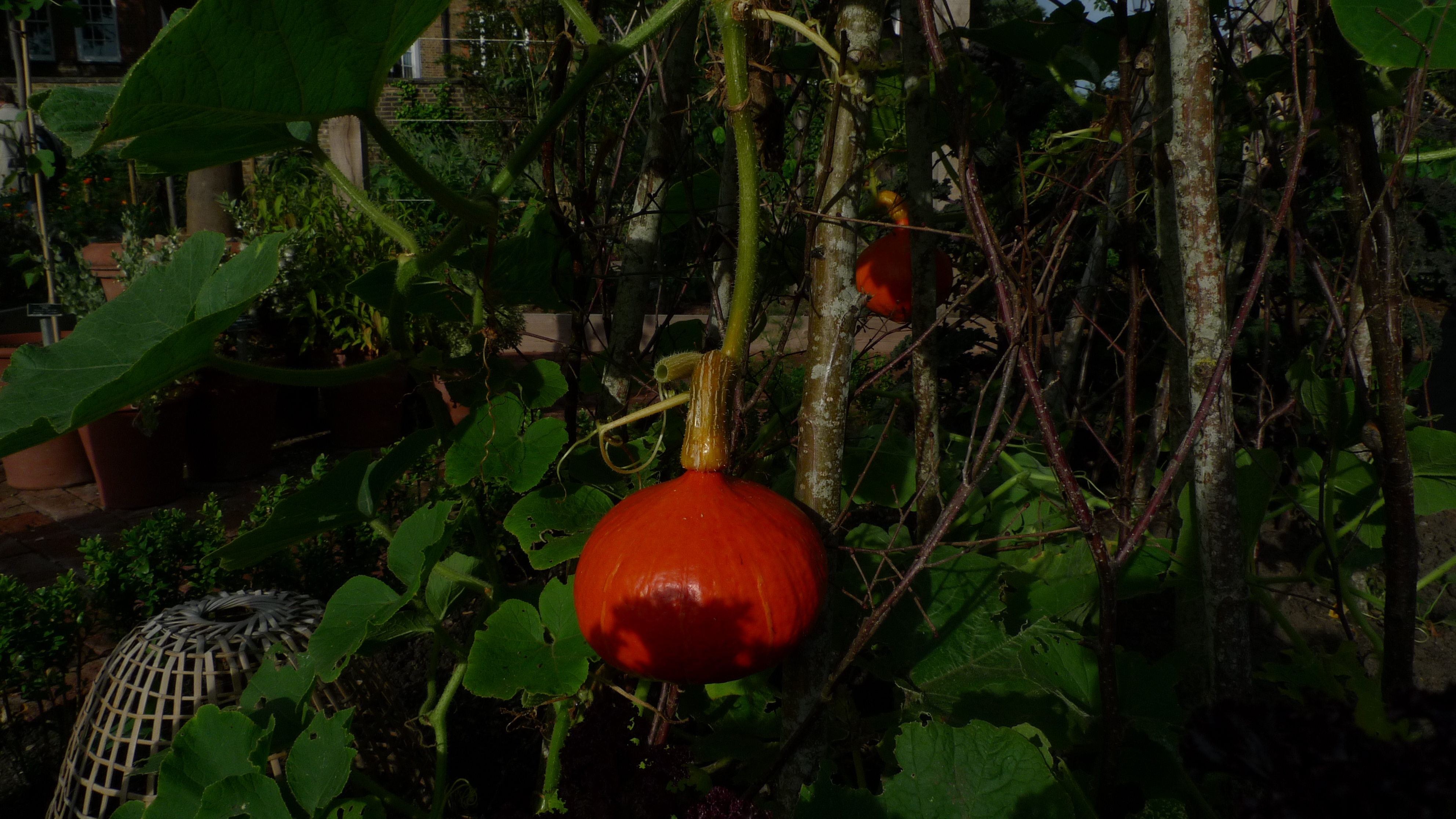
A harvest of vibrant pumpkins and gourds shone out, glowing in the evening light.

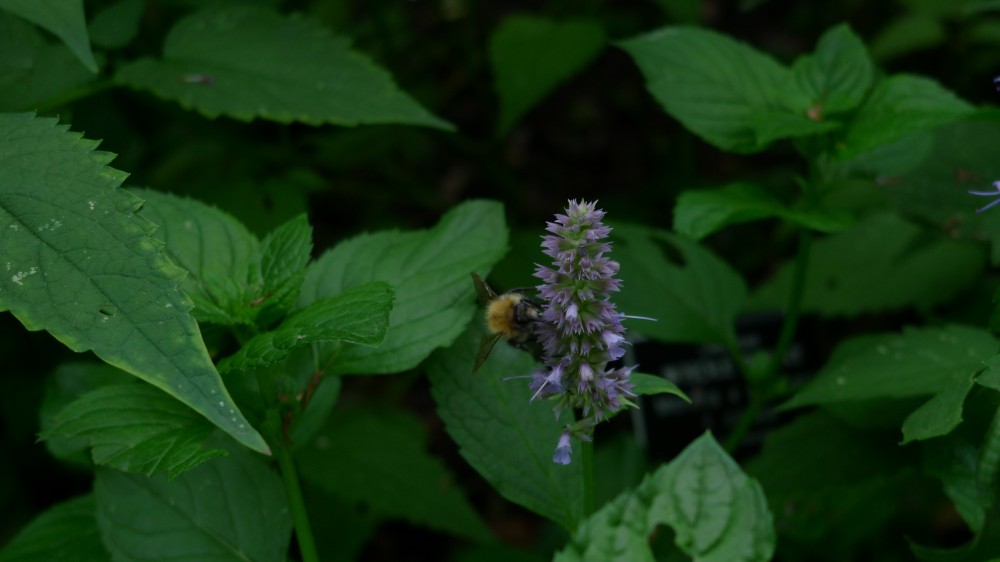
Honey bees and bumbles buzzed gently, busy using up their last minutes of light amongst the sunflowers.

Carder bee

Carder bee

A sculpture exhibition was on in the garden. Above is a seed-pod sculpture.

I was fascinated to learn about squirting cucumbers! Have any of my readers ever been squirted by one?

Bumble on blue flowers

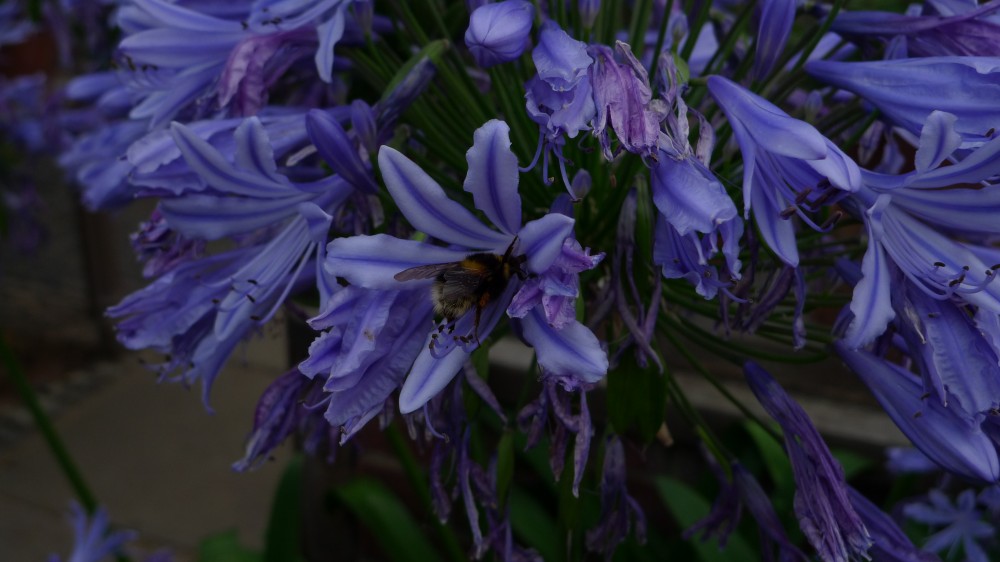
And excited to find a huge bumble, bottom wriggling in the air, on these vibrant blue flowers.

Bumble on blue flowers 2

Think she’s a buff-tailed bumble bee.

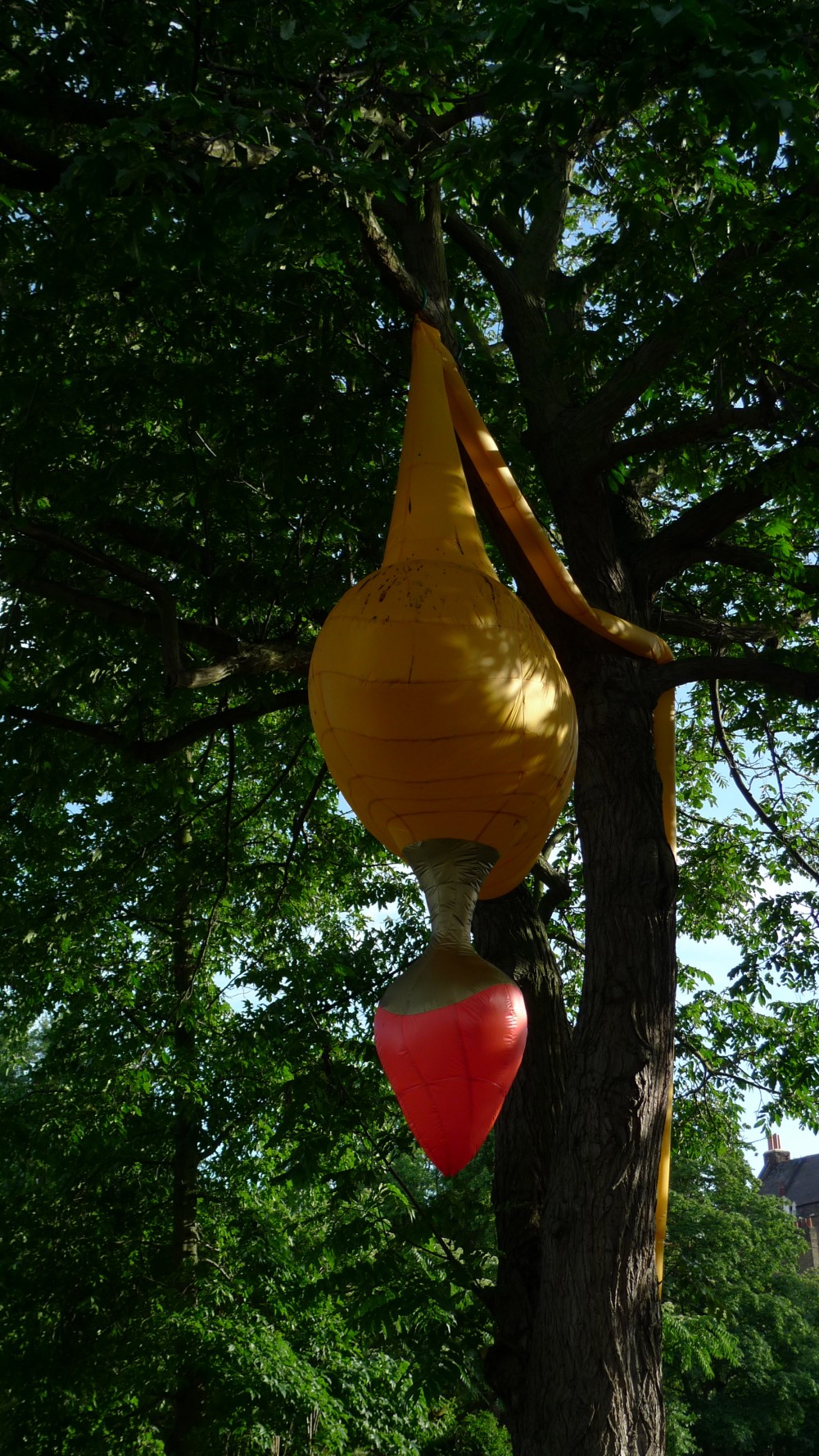
Another sculpture, this one swaying high amongst the trees.

Summer pudding

Summer pudding

Summer pudding, full of juicy berries, was the perfect dessert to eat in the garden’s Tangerine Dream Cafe as dusk fell.

Posted in Uncategorized | Tagged | 16 Comments

What’s flowering now: mid August 2012

It’s been a bad year for the bees. They have endured the very worst of British weather: rain, floods and grey skies have been passing for a spring and summer. But just in time for the Olympics, the weather has bounced back and sunshine has been restored! Are there any bees left to enjoy it? I took a look in Elthorne Park, a beautiful strip of grass and meadows bordering the canal near my home.

Bee in bindweed

Yes! They’re still here. Above you can see a honey bee rolling in field bindweed. Rusty at Honey Bee Suite has a nice blog post on bindweed as a pollinator plant – it provides a snow-white pollen which is visible on the happy bee above.

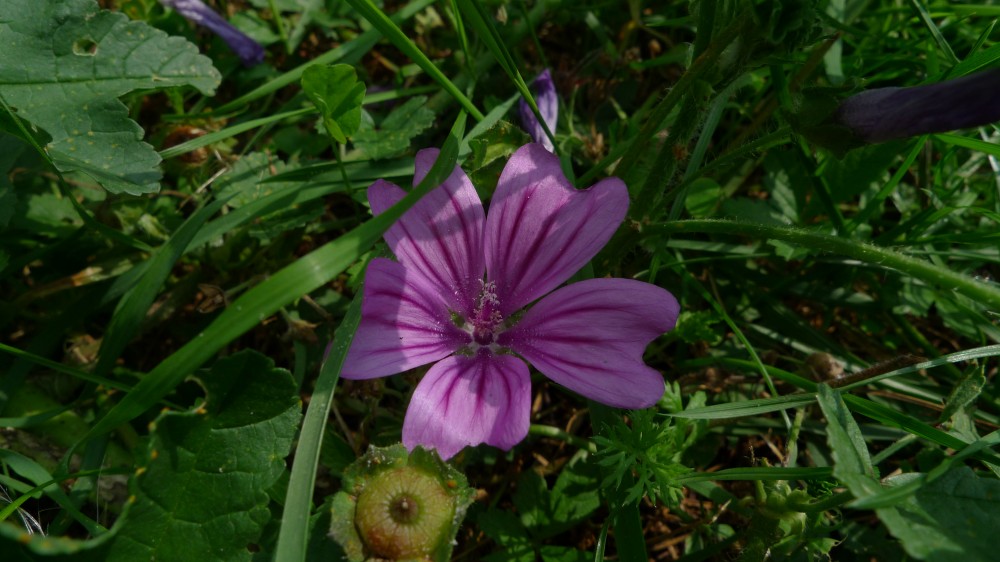
The bee above is a honey bee, but I need help identifying the pretty pink flower, if anyone has any suggestions please. Botany is not my strong point.

EDIT: AFrenchGarden in her comment below has identified this as Musk Mallow (Malva moschata). Brilliant stuff! The Daily Telegraph Musk Mallow gardening page says: “In the centre of each Malva moschata flower there’s a tall stigma surrounded by a raised collar of stamens. This arrangement, slightly similar to hibiscus, leaves the nectar-rich base of the flower wide open to bees.

They like these pink flowers too. Many of the bees I saw on them were covered with a dusting of their pale pollen. Again, I am stuck on the name of this flower!

EDIT: Helpful commenters AFrenchGardenJulia @ Boorinakis Harper Ranch and Harvest Home Farm have identifed this as a species of mallow too, probably the Common Mallow (Malva neglecta). Those nice open flowers and tall stigmas again, mallow species seem to be a good bet for a wildlife-friendly garden.

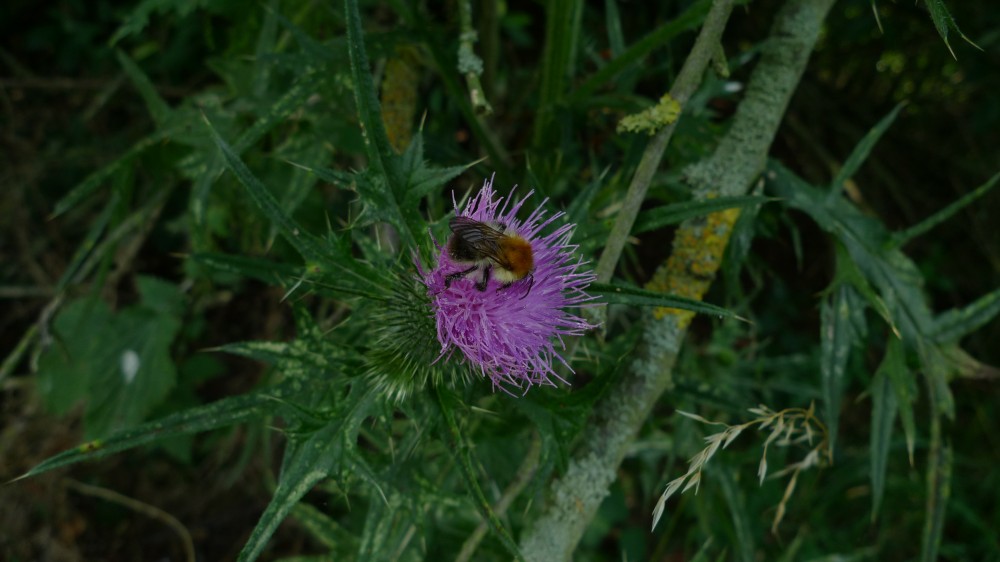
The thistle type plants are coming to the end of their season (in last year’s ‘What’s flowering now‘ August post, commenters variously identified these flowers as thistles, knapweed or burdock). Whatever the correct answer may be, the bees love these purple flowers, while I love running my hands through the soft downy fuzz of seeds left behind afterwards.

Ted Hooper in his ‘Guide to Bees and Honey‘ says of Knapweed: “This is a flower of road verges, rough areas, heathland, etc. It flowers in July and August and looks rather like a soft non-prickly thistle. The bees work it readily for both nectar and pollen. The honey is dark and very strong in flavour – like cough mixture – and is excellent for blending. Pollen loads greyish-white” (p234).

I sat down and spent some happy time watching the bees on the thistles. There were so many bees busy at work it was hard to decide which to focus my camera on. A tip for bee photographers: thistle family flowers are easy to photograph bees on. This is because the bees take their time on the flowers, crawling slowly round them and sticking their proboscis in multiple times.

Not completely sure on the lady above, but she may be Bombus hypnorum, the tree bumblebee, or the neapolitan icecream bee.

No mistaking this lady with her bottom high in the air. She’s a Bombus Lapidarius, a red-tailed bumblebee.

A honey bee with creamy pollen in her baskets.

A cute little spider waits, her web soft with thistle fuzz. I’m not going to attempt to start identifying spiders, so if anyone happens to know…

Blackberry season is here. I saw one man filling a bag up with juicy fruits. Blackberry season means autumn is coming. The bees must start preparing themselves for winter.

What flowers are out near you? Are you seeing plenty of wild bees out and about?

See these great blog posts for more photos of the flowers British bees enjoy in August:

Posted in Uncategorized | Tagged | 35 Comments

Tea, cake, sunshine and two new queens

The last time I wrote about our hives at the beginning of July, Queens Neroli and Ginger had mysteriously disappeared and we were left looking at two emergency queen cells. Three weeks later, would our new queens have mated? The weather has not been kind here.

Miraculously, the sun was out today and the apiary was buzzing with both bees and beekeepers. It was nice to see so many people happily chattering away. Emma and I had a small audience as we opened up our hives, including the reassuring company of John Chapple; although John’s presence was not so lucky for our drones, as he was there to capture them! More on that later.

Here’s Emma inspecting. We were delighted to find gorgeous new mated queens in both our hives and a small number of eggs in one. Emma has some ideas for their names, which I’ll let her reveal to you in her fab blog, Miss Apis Mellifera. Hopefully both hives can now get going again. Neither hive has managed to fill out the brood box yet, with both colonies only having managed to draw out about 6-7 frames (so no supers on). This is extremely bad for this time of this year and reflects the problems we’ve had with the rampant rain. It is too late to hope for honey, rather we will now aim to get them through the winter safely.

Bee with propolis on her legs

Wish I’d remembered to take my proper camera and not just my iphone, as Emma spotted an unusual sight – some bees who had collected glossy propolis orbs. Can you see her there sitting on the capped honey? In ‘The Honey Bee Around and About‘ by Celia F Davis (2007) she tells us:

“Collecting the loads is quite difficult and time consuming and bees occupied with this job do not collect anything else. A bee uses its mandibles to pull a small amount of the soft propolis away from the plant… Once back in the hive, the bee is unable to dislodge the loads so they have to be bitten off by other house bees. It is then used immediately and is never stored” (p134).

A colony needs around 100g of propolis each year. Some beekeepers dislike propolis as it sticks together the various hive parts and can make it tricky to inspect, but I like to see our bees using propolis as it has brilliant disinfectant properties, acting against bacteria, fungi and even viruses.

Inspections over, there were a few interesting objects to see in the apiary….

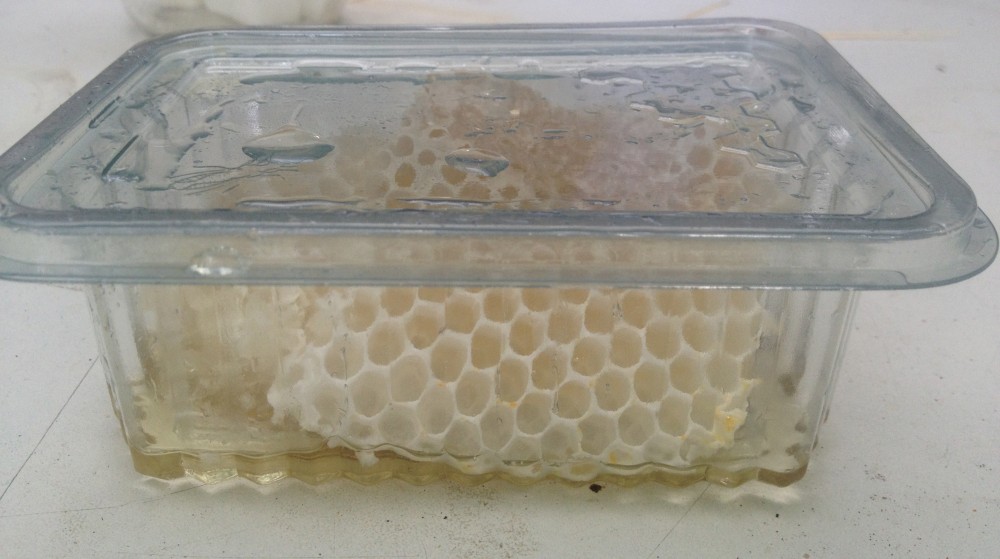
John Chapple’s comb honey, sold for £1 a box – the public are impressed by comb honey. You should see the prices comb honey goes for near my work in central London.

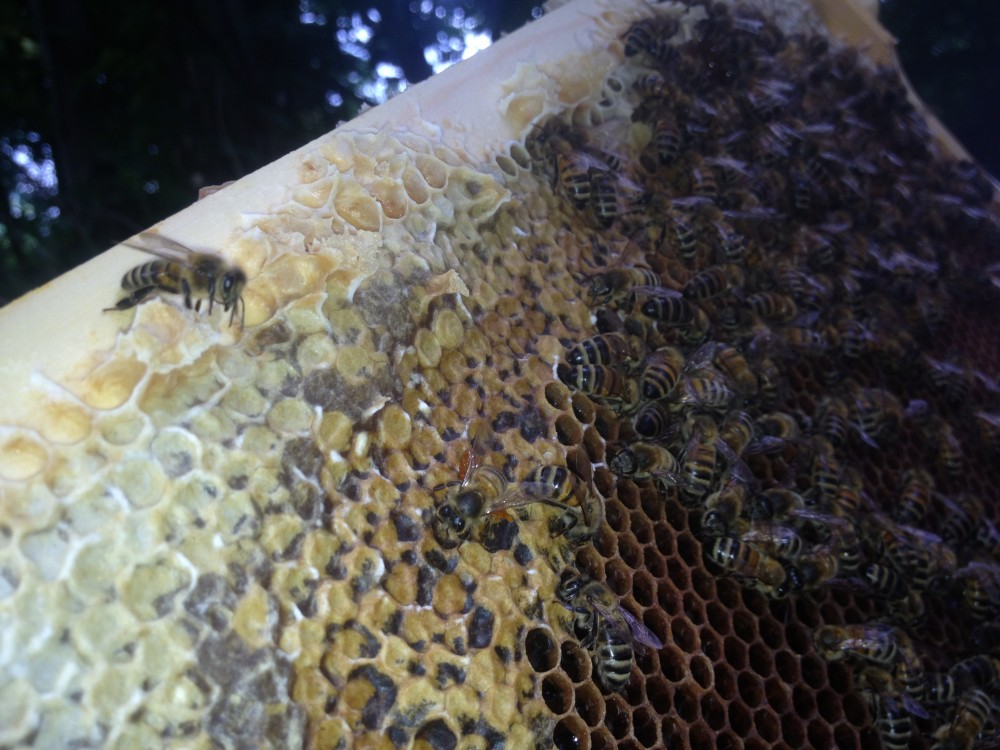
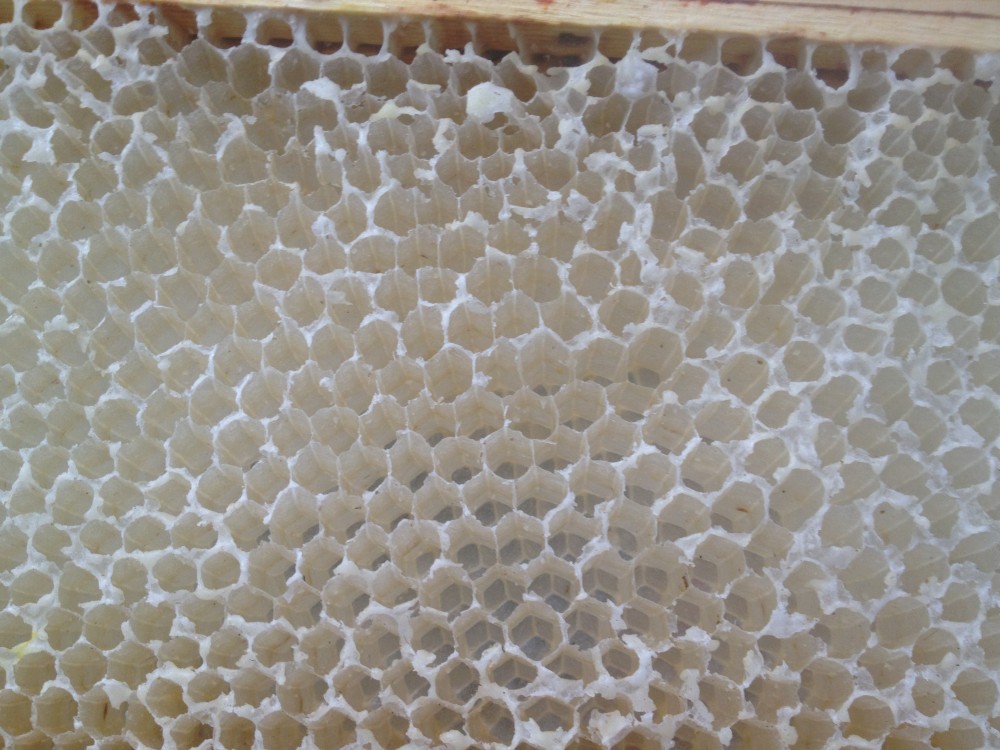
Thomas Bickerdike had a fascinating story to tell us about the above foundationless super frame from one of his hives. It was drawn out by the bees in great haste during a nectar flow. Usually honeycomb is perfectly formed, with evenly sized cells. Not so this comb – the cells varied considerably in size, which was especially noticeable when it was all capped. The cells were also angled upwards more than usual. Thomas believes these unusual variations were the result of his bees being in a hurry, wanting to get the nectar in fast!

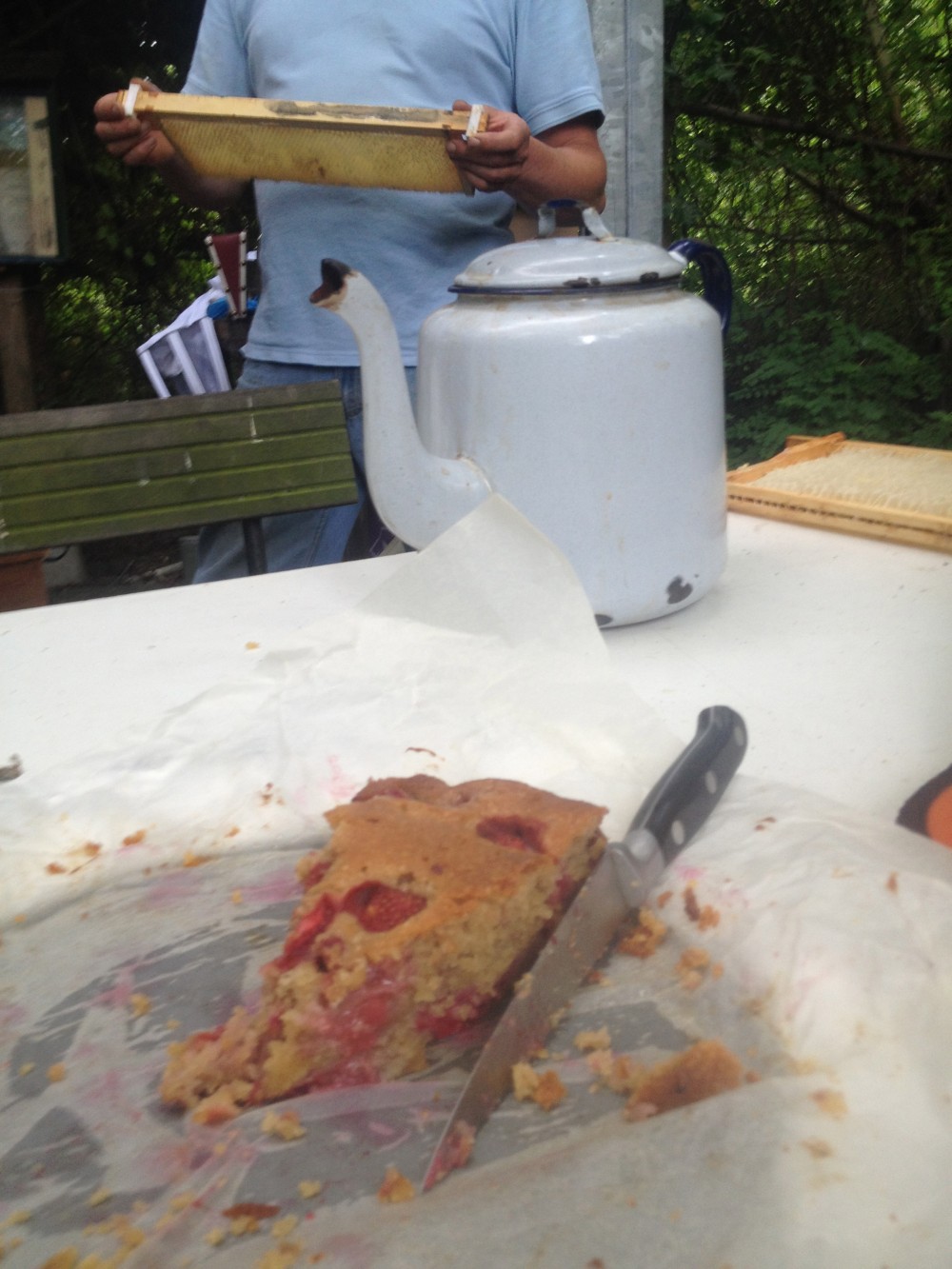
Ahh tea and cake on a warm summer’s day. This raspberry and strawberry cake was made by me, using this ‘Fantasy cake’ recipe by Lisa Faulkner: www.womanmagazine.co.uk/food/fantasy-cake. I went over the recommended fruit allowance, which made for a nice flavour but a very moist cake, a bit tricky to cut and eat! Still, the beekeepers polished nearly the whole thing off so it can’t have been too tricky…

Drones for sale!

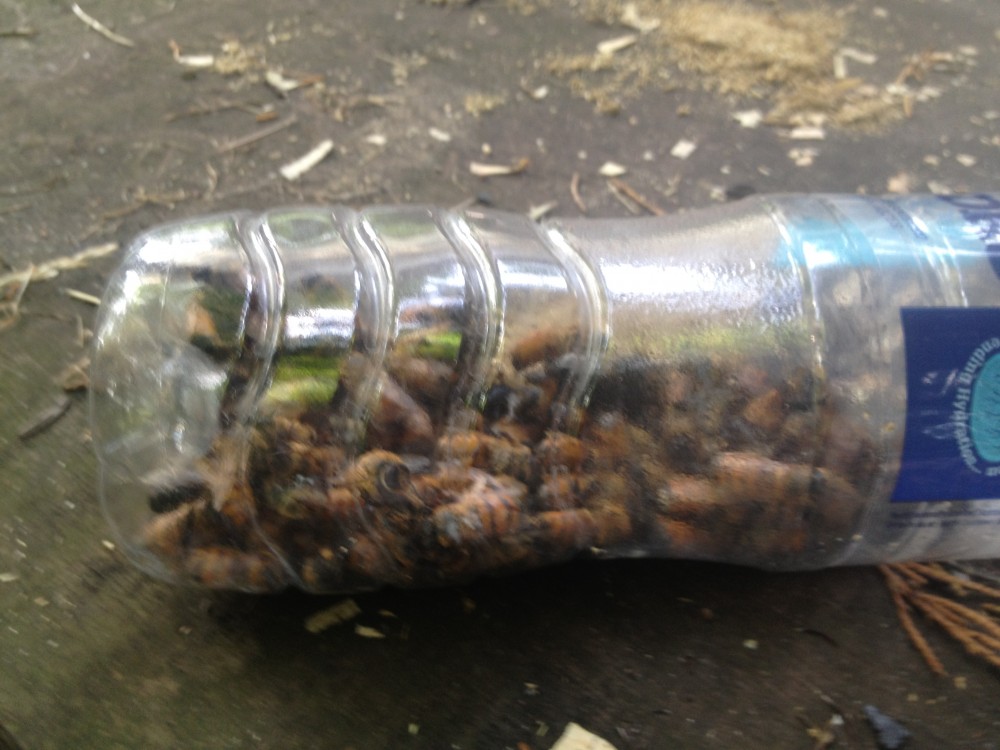
I said I’d explain why John captured our drones. Well, the reason is a bit bizarre. He sells them to a Japanese restaurant for 10p each and just can’t keep up with the demand. There’s money in drones! He says he’s been invited to eat at the restaurant but his wife refuses to go. I felt a bit sorry for our drones and wondered if I should try hiding them, but John was too quick for me.

Incidentally I had an interesting chat with Thomas about drones. He lets his bees build their own comb and finds they like to make about 20% drones. He doesn’t uncap these for varroa control because he’s working on the logic that the drones mop up the varroa to some extent; if you remove all the drone brood, the mites will hop into worker brood and  start damaging the workers instead. Would be interesting for research to be carried out into this, to settle the question of whether drone culling helps varroa control and overall hive health or not.

Finally, some pictures of the sun setting over Greenwich ships and Cutty Sark sails at the Greenwich comedy festival last night. Not bee related but happiness related.

Posted in Uncategorized | Tagged , , | 31 Comments

Book review – From A to Bee: My First Year as a Beginner Beekeeper, by James Dearsley

James Dearsley began beekeeping in 2009. Since then he has started the world’s most popular Facebook page for beekeeping (the Beginner Beekeepers page), released a ‘Beekeeping for Beginners’ video with Charlie Dimmock (famous here for her presenting slot on the TV gardening show Ground Force, making her beloved amongst British men for her striking strawberry blonde curls and habit of going braless) and now has published his first book, From A to Bee. Could you let the rest of us know your secret please James?!

James offers us an entertainingly jolly, extremely readable account of all the trials and tribulations of becoming an English beekeeper. Not only is he combining this with a hefty workload as an international travel agent and being dad to a young toddler, he has to face the worried looks of his wife and friends as he turns into a complete bee geek. The book is written in diary format and follows his challenging journey during 2009 from complete bee novicery to getting his first pot of honey.

My favourite aspect of the book is that James is fearless in poking fun at himself. At a gangly 6″5, he creates a picture of himself as a clumsy Mr Bean style character, at one point falling down a flight of steps as he leaves his beekeeping classes. On another occasion he attempts to communicate with Polish beekeepers that he is a fellow beekeeper too by running around making buzzing noises and pointing at their honey – “As I walked away, I did turn back for one last look at these moustached Polish beekeepers and they were just looking at each other with a rather strange expression; one then shrugged whilst the other started laughing.”

It is quite touching how completely absorbed he becomes in the bees, obsessively reading the nights away (a glass of red wine or whiskey at his side) and driving around trying to find out the local forage in his area. He also develops from being most interested in getting his first pot of honey to being deeply concerned with all the threats his bees and those across the world face. I think all of us beekeepers understand that feeling of wonderment at how much there is to learn, and how amazing these fascinating little creatures are.

I especially liked how he included my blog in his list of recommended beekeeping blogs at the back. The first time my name has appeared in a book – thank you so much James! He also lists bee-themed twitterers. Keeping the bee blogging community happy is a shrewd move.

By the way, if you choose to buy this book or indeed any other items from Amazon, please consider going through the Bumblebee Conservation Trust’s Fundraising page. Each time you access Amazon.co.uk via their link and make a purchase this brilliant charity receives a donation worth 8% of your total purchase, at no extra cost to you.
Posted in Uncategorized | Tagged | 21 Comments

The case of the disappearing queens

We just can’t seem to hold on to our queens this year. No sooner has one emerged than weeks of rain follow preventing her mating, or we inherit a new queen but she turns out to be poorly mated, or our nice new mated queen, who has been laying as efficiently as a German train, simply… vanishes. It’s getting hard to remember all their names!

Two weeks ago we inspected our new queen Neroli’s hive and she was laying brilliantly. Yesterday we looked in expecting to find more evenly laid biscuity brood; and instead found two capped queen cells. Her mother swarmed at the end of May, leaving behind orange Neroli, who by early June was mated and laying. Her hive is still too small to be swarming though, so why the queen cells? It was me that inspected Neroli’s hive, and I have a suspicion that I may have accidentally squashed her. We’ll never know for sure, but the timings point that way… if they started making the queen cells as an emergency measure after a queen-squashing two weeks ago, the new queen/s should emerge very soon, as queens take 16 days from egg to hatching. The break in egg laying will set the hive back 😦

Emma inspecting Neroli’s old hive. Love her pink gloves contrasted with the green trees.
They’re still very calm bees.

Dismayed, next we turned to Ginger’s hive. She was a New Zealand queen flown over this year; her hive was donated to us to look after about three weeks ago. Sadly we noticed a lot of drone brood being laid. There are rumours that bad weather in New Zealand this year has caused a lot of their queens to be poorly mated. Two weeks ago we spotted two charged queen cells in her hive, and marked the frame with drawing pins. During yesterday’s inspection we noticed one queen cell empty, and the other still capped but roughed up at the end, as if it might have been stung through by the emerged queen. We also spotted a very small ginger queen running around! We have yet to name her. Let’s hope she mates well.

Mmm honey…

So sweet…

The winter bees will get to taste the summer as they huddle through the dark days.

Bits of the weekend – a few photos

Clover is out. The red clover above is usually not appreciated by honey bees as the flower is too long for their tongues to reach its nectar, but it is by longer-tongued bumbles. Clover does best on a chalk soil and requires several days over 22C (71F) before it begins to yield. The honey is water white and has no flavour except sweetness; pollen load brown (info from Ted Hooper, Guide to Bees & Honey, p222).

Hens!

Ealing beekeeper Elsa Pawley kindly showed Emma and I her happy hens.

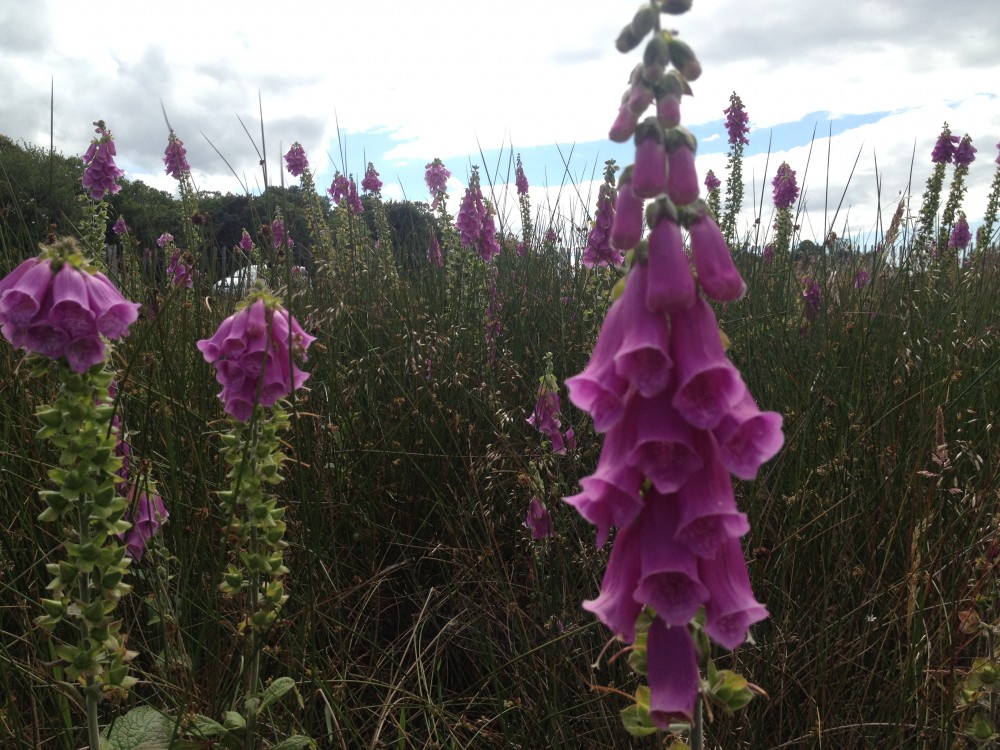
Foxgloves in Richmond Park, or Witch’s Glove, Dead Men’s Bells, Fairy’s Glove, Gloves of Our Lady, Bloody Fingers,  Virgin’s Glove, Fairy Caps, Folk’s Glove, Fairy Thimbles, Lion’s Mouth, Fairy Fingers, King Elwand, Foxbell, Floppy dock, Flowster-Docker,  all names they were also called in the past… as explained in this brilliant post ‘Wild Foxglove: The Magic and Medicine of Digitalis purpurea‘, by Pomona Belvedere. Toxic but pretty.

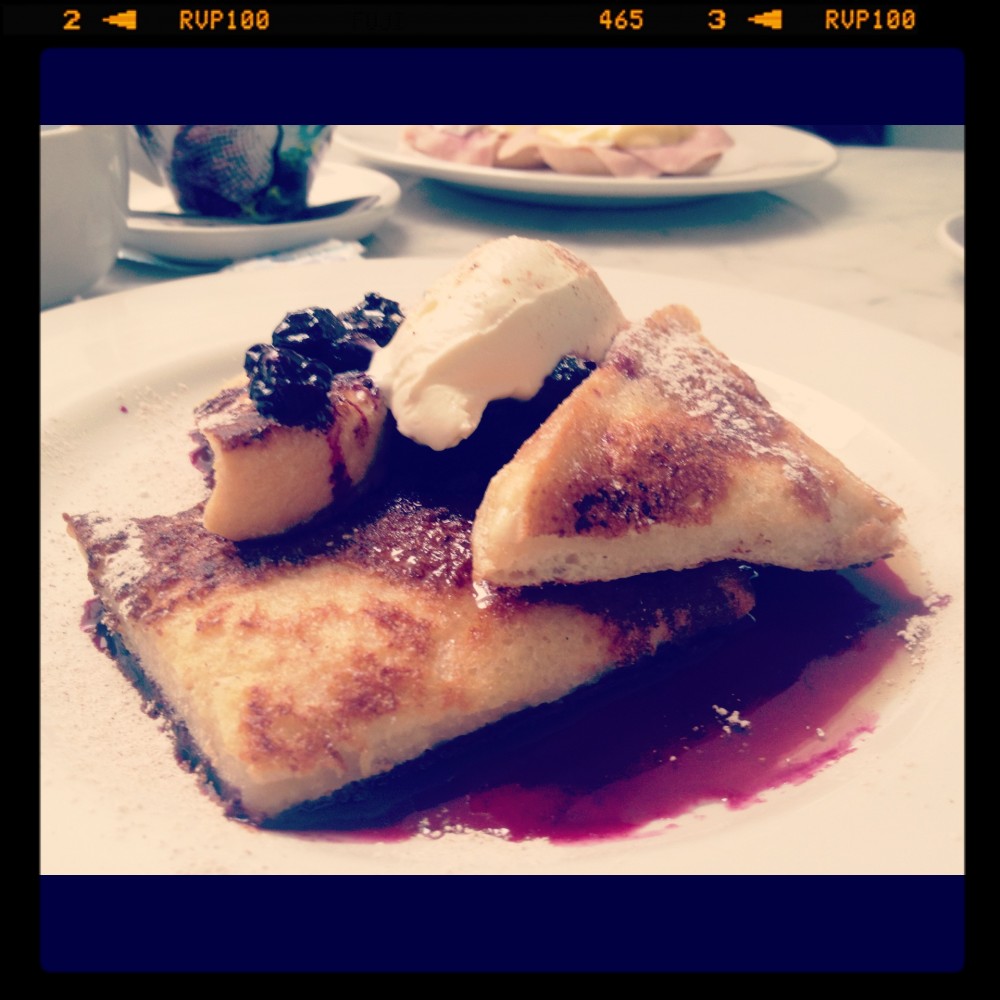
Blueberry French Toast. One of the most decadent of breakfasts.

If we get two new queens in both hives, Emma calculated that makes a total of seven queens between two hives so far this year. Can anyone beat that?!

Posted in Uncategorized | 29 Comments