Book review – From A to Bee: My First Year as a Beginner Beekeeper, by James Dearsley

James Dearsley began beekeeping in 2009. Since then he has started the world’s most popular Facebook page for beekeeping (the Beginner Beekeepers page), released a ‘Beekeeping for Beginners’ video with Charlie Dimmock (famous here for her presenting slot on the TV gardening show Ground Force, making her beloved amongst British men for her striking strawberry blonde curls and habit of going braless) and now has published his first book, From A to Bee. Could you let the rest of us know your secret please James?!

James offers us an entertainingly jolly, extremely readable account of all the trials and tribulations of becoming an English beekeeper. Not only is he combining this with a hefty workload as an international travel agent and being dad to a young toddler, he has to face the worried looks of his wife and friends as he turns into a complete bee geek. The book is written in diary format and follows his challenging journey during 2009 from complete bee novicery to getting his first pot of honey.

My favourite aspect of the book is that James is fearless in poking fun at himself. At a gangly 6″5, he creates a picture of himself as a clumsy Mr Bean style character, at one point falling down a flight of steps as he leaves his beekeeping classes. On another occasion he attempts to communicate with Polish beekeepers that he is a fellow beekeeper too by running around making buzzing noises and pointing at their honey – “As I walked away, I did turn back for one last look at these moustached Polish beekeepers and they were just looking at each other with a rather strange expression; one then shrugged whilst the other started laughing.”

It is quite touching how completely absorbed he becomes in the bees, obsessively reading the nights away (a glass of red wine or whiskey at his side) and driving around trying to find out the local forage in his area. He also develops from being most interested in getting his first pot of honey to being deeply concerned with all the threats his bees and those across the world face. I think all of us beekeepers understand that feeling of wonderment at how much there is to learn, and how amazing these fascinating little creatures are.

I especially liked how he included my blog in his list of recommended beekeeping blogs at the back. The first time my name has appeared in a book – thank you so much James! He also lists bee-themed twitterers. Keeping the bee blogging community happy is a shrewd move.

By the way, if you choose to buy this book or indeed any other items from Amazon, please consider going through the Bumblebee Conservation Trust’s Fundraising page. Each time you access Amazon.co.uk via their link and make a purchase this brilliant charity receives a donation worth 8% of your total purchase, at no extra cost to you.

Posted in Uncategorized | Tagged | 21 Comments

The case of the disappearing queens

We just can’t seem to hold on to our queens this year. No sooner has one emerged than weeks of rain follow preventing her mating, or we inherit a new queen but she turns out to be poorly mated, or our nice new mated queen, who has been laying as efficiently as a German train, simply… vanishes. It’s getting hard to remember all their names!

Two weeks ago we inspected our new queen Neroli’s hive and she was laying brilliantly. Yesterday we looked in expecting to find more evenly laid biscuity brood; and instead found two capped queen cells. Her mother swarmed at the end of May, leaving behind orange Neroli, who by early June was mated and laying. Her hive is still too small to be swarming though, so why the queen cells? It was me that inspected Neroli’s hive, and I have a suspicion that I may have accidentally squashed her. We’ll never know for sure, but the timings point that way… if they started making the queen cells as an emergency measure after a queen-squashing two weeks ago, the new queen/s should emerge very soon, as queens take 16 days from egg to hatching. The break in egg laying will set the hive back 😦

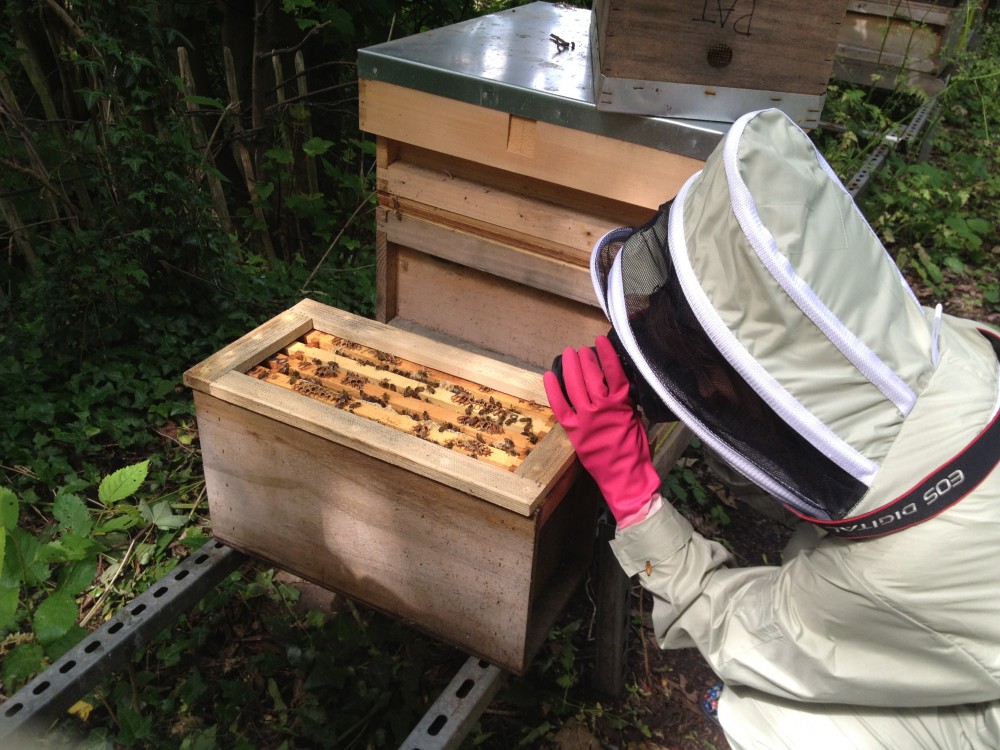
Emma inspecting Neroli’s old hive. Love her pink gloves contrasted with the green trees.

They’re still very calm bees.

Dismayed, next we turned to Ginger’s hive. She was a New Zealand queen flown over this year; her hive was donated to us to look after about three weeks ago. Sadly we noticed a lot of drone brood being laid. There are rumours that bad weather in New Zealand this year has caused a lot of their queens to be poorly mated. Two weeks ago we spotted two charged queen cells in her hive, and marked the frame with drawing pins. During yesterday’s inspection we noticed one queen cell empty, and the other still capped but roughed up at the end, as if it might have been stung through by the emerged queen. We also spotted a very small ginger queen running around! We have yet to name her. Let’s hope she mates well.

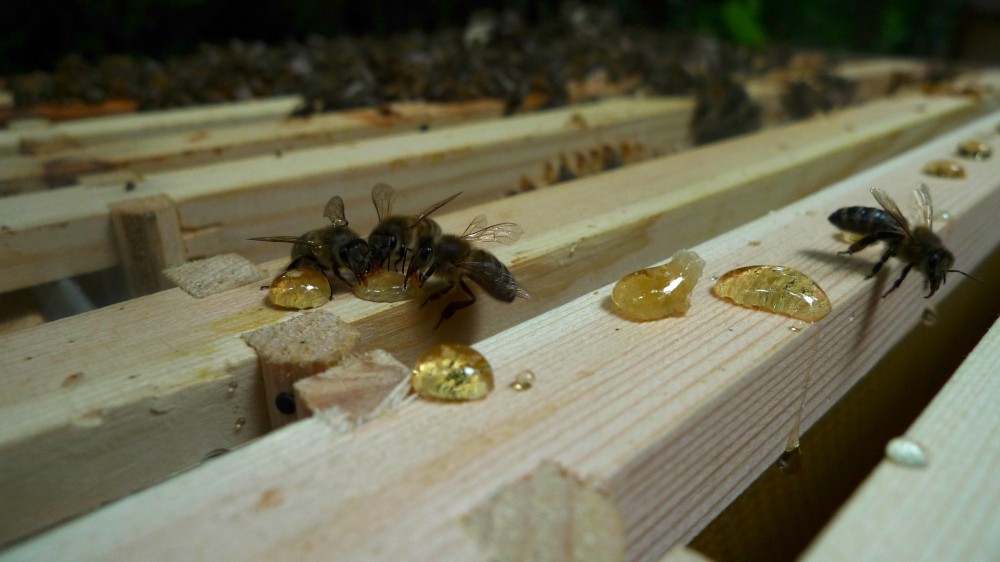
Mmm honey…

So sweet…

The winter bees will get to taste the summer as they huddle through the dark days.

Bits of the weekend – a few photos

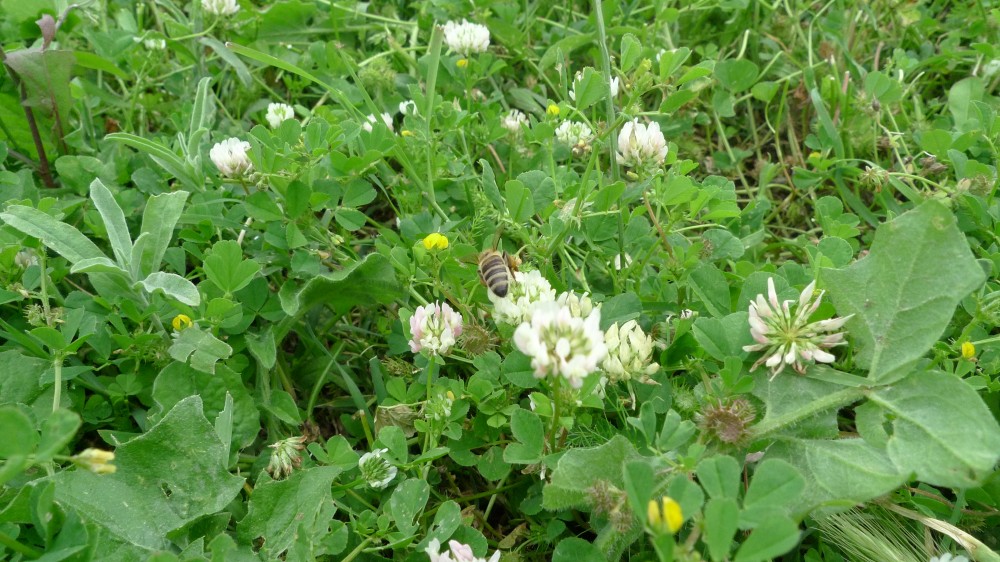
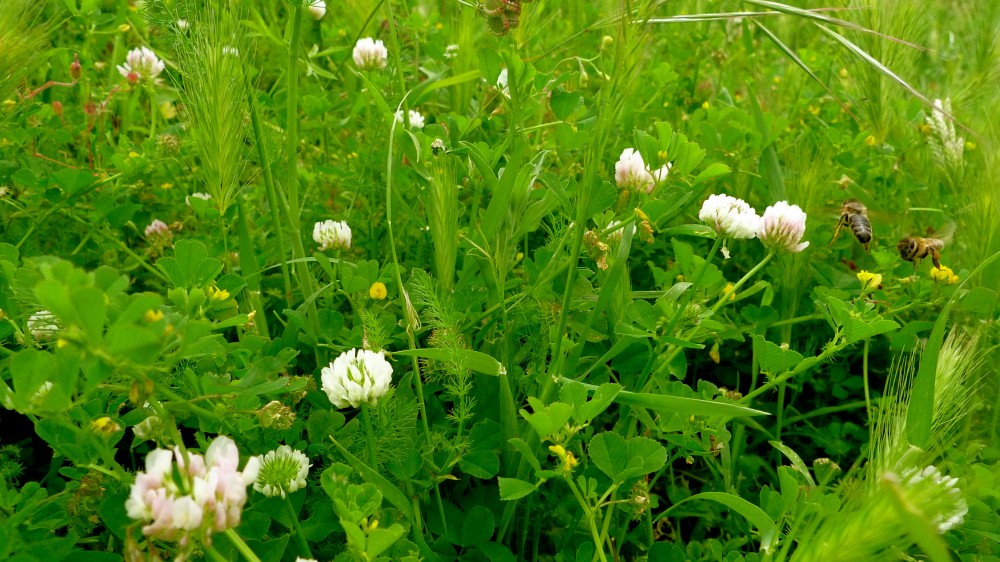
Clover is out. The red clover above is usually not appreciated by honey bees as the flower is too long for their tongues to reach its nectar, but it is by longer-tongued bumbles. Clover does best on a chalk soil and requires several days over 22C (71F) before it begins to yield. The honey is water white and has no flavour except sweetness; pollen load brown (info from Ted Hooper, Guide to Bees & Honey, p222).

Hens!

Ealing beekeeper Elsa Pawley kindly showed Emma and I her happy hens.

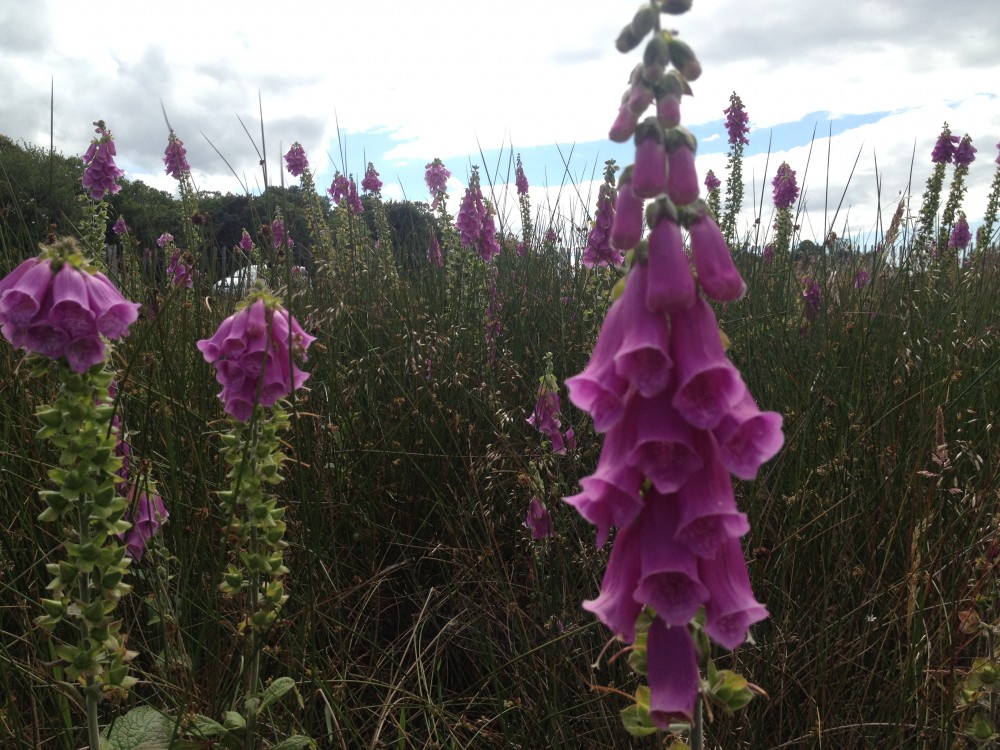
Foxgloves in Richmond Park, or Witch’s Glove, Dead Men’s Bells, Fairy’s Glove, Gloves of Our Lady, Bloody Fingers,  Virgin’s Glove, Fairy Caps, Folk’s Glove, Fairy Thimbles, Lion’s Mouth, Fairy Fingers, King Elwand, Foxbell, Floppy dock, Flowster-Docker,  all names they were also called in the past… as explained in this brilliant post ‘Wild Foxglove: The Magic and Medicine of Digitalis purpurea‘, by Pomona Belvedere. Toxic but pretty.

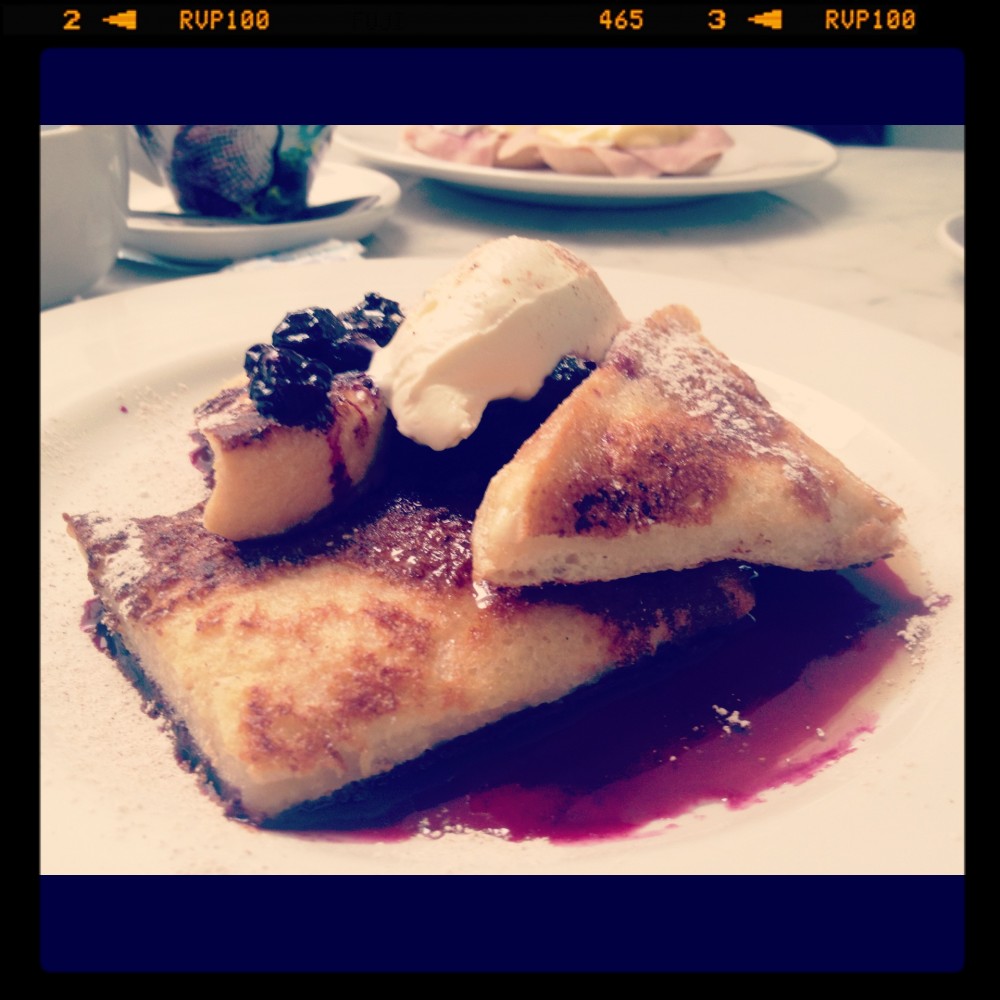
Blueberry French Toast. One of the most decadent of breakfasts.

If we get two new queens in both hives, Emma calculated that makes a total of seven queens between two hives so far this year. Can anyone beat that?!

Posted in Uncategorized | 29 Comments

Food from the Sky

This week I went on a work related trip to the innovative ‘Food from the Sky‘ project in Crouch End, north London. The project grows fruit and veg on the rooftop of Thornton’s Budgens supermarket; the food they grow then gets sold below in the store.

Even though my manager organised the trip months in advance, she somehow managed to pick the best day of the summer so far, a day the sun was shining like mad and coats could be taken off. That morning I got a call from the project’s manager, Sarah McFadden, who wanted to warn me that their honey bees had swarmed; the swarm had escaped into the distance but some of the bees left behind were being slightly more aggressive than usual. I reassured her that as a beekeeper I wasn’t afraid of a few bees up on the roof, and sent an email round to the rest of the visit attendees to let them know. To their credit, everyone still came anyway; the bees had calmed down by the time we arrived and didn’t bother us.

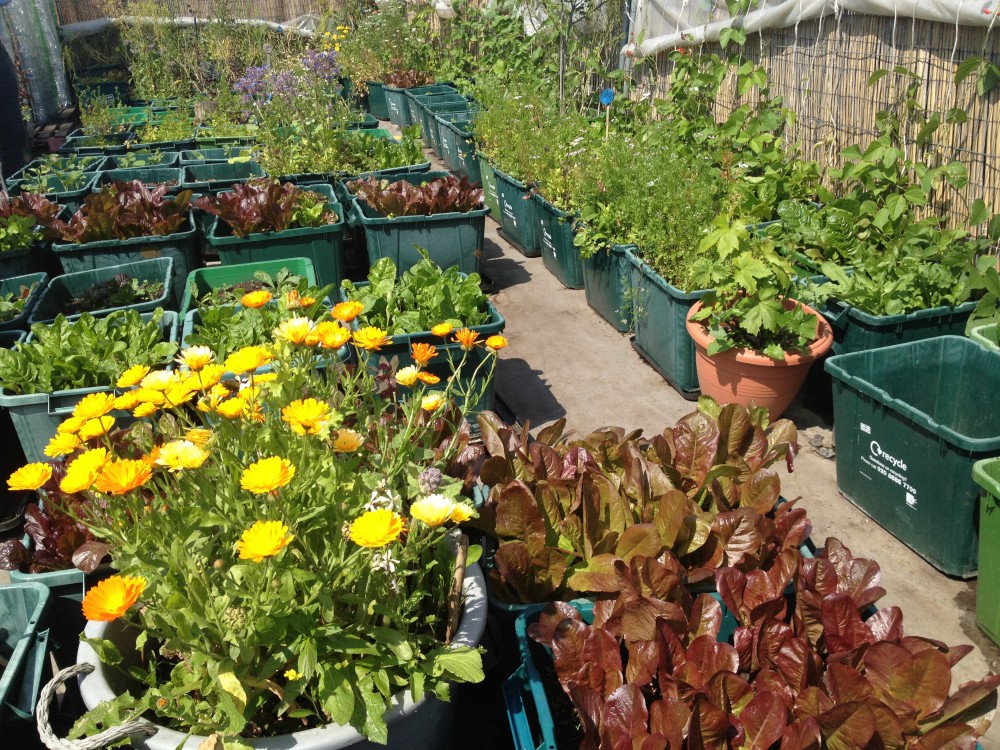
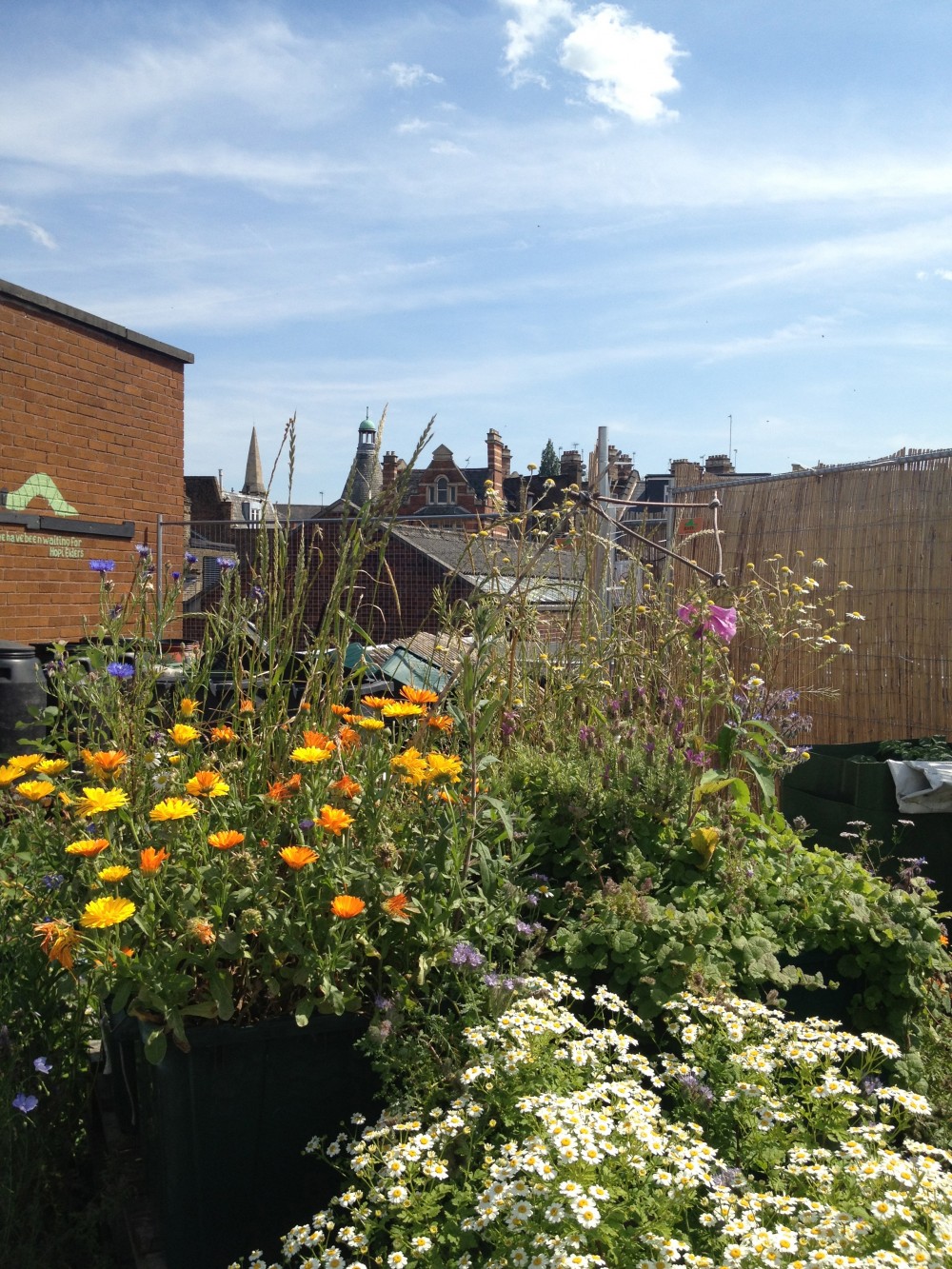
Above you can see some of the crops grown up on the Food from the Sky roof. The project has found that salad crops grow fast and sell well, so they specialise in these. During the summer they produce around 100 bags of salad a week, and in the winter 10 bags, grown in a greenhouse made of plastic bottles. They like to avoid monocrops, so a wide variety of plants are grown, some of which are just there to provide food for local bees. Sarah encouraged us to try eating the blue flowers of borage, which they slip in salad packs to add colour and prettiness. The air was humming with bumble bees going crazy for the borage.

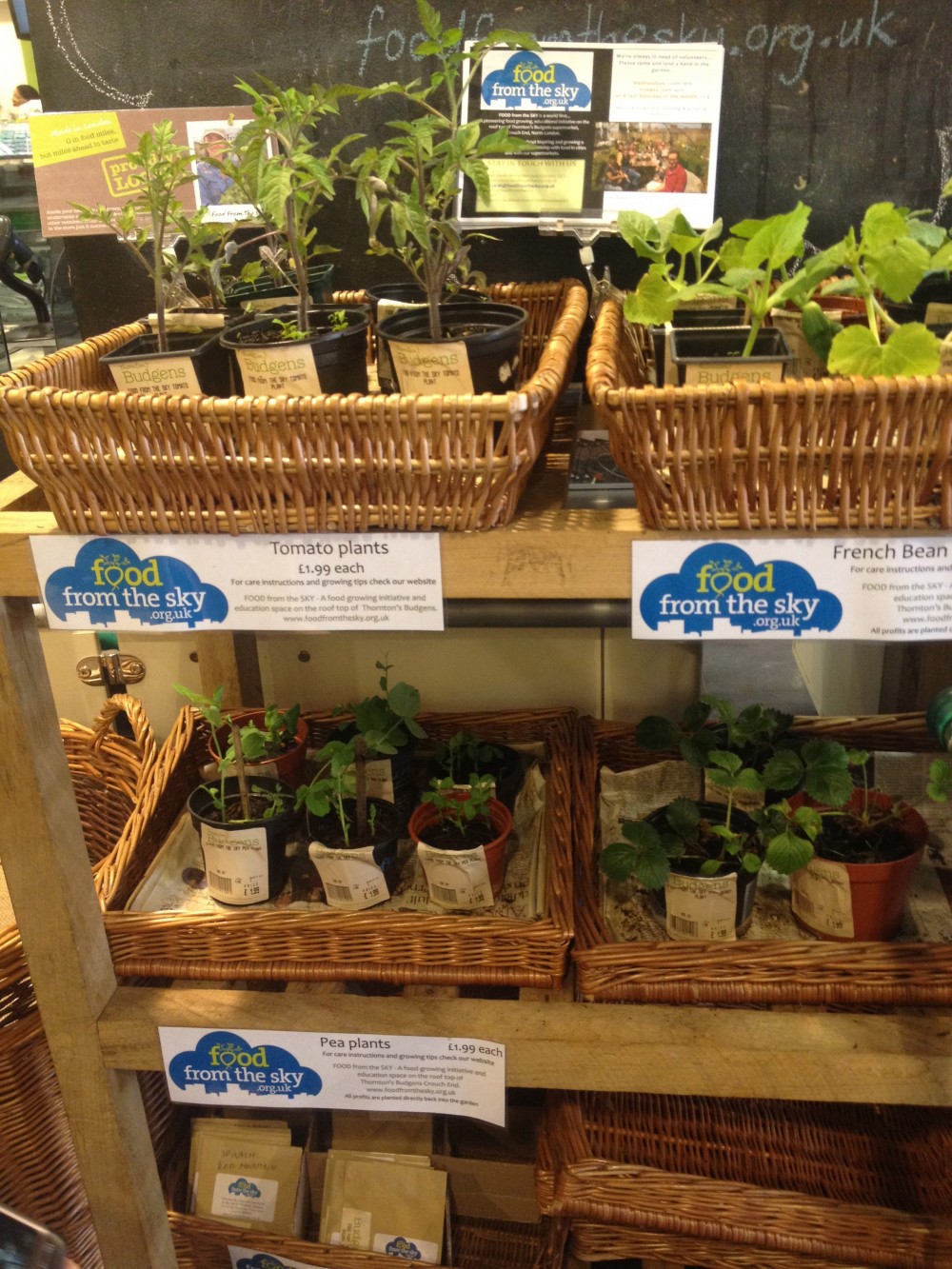
Food from the Sky plants, £1.99 each

As well as salad leaves, plants and seeds are also sold by the project in Budgens, above you can see their display in the store. The gardening work is done by local volunteers who have time spare in the week, such as retired people, people looking for work, and mums. Pesticides and nasty chemicals are not used, with slugs and snails picked off by hand and moved elsewhere. All the usual emissions from transporting food around are avoided, with the crops simply carried downstairs to the store.

Bumble bee landing on borage

Bumble bee landing on borage

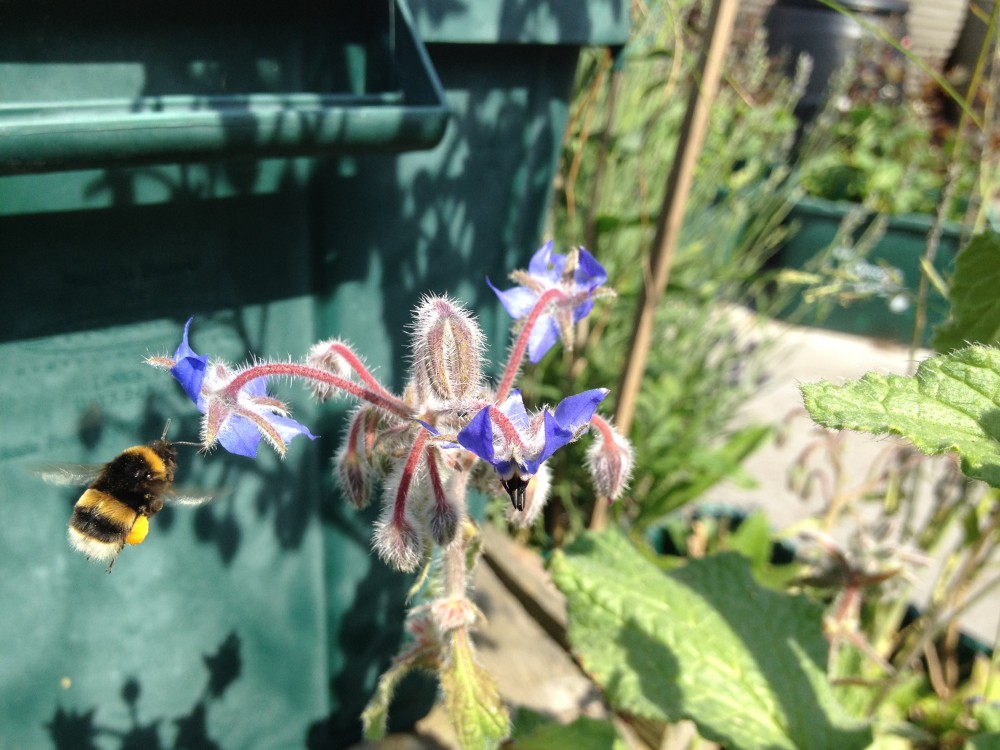
I spotted this gorgeous bumble bee zooming in to some borage. She looks like a Buff-tailed (Bombus terrestris) bumble to me. The way to tell the difference between the Buff-tails and the White-tails is that the Buff-tails have dirty golden yellow stripes whereas the White-tails have bright lemon yellow stripes.

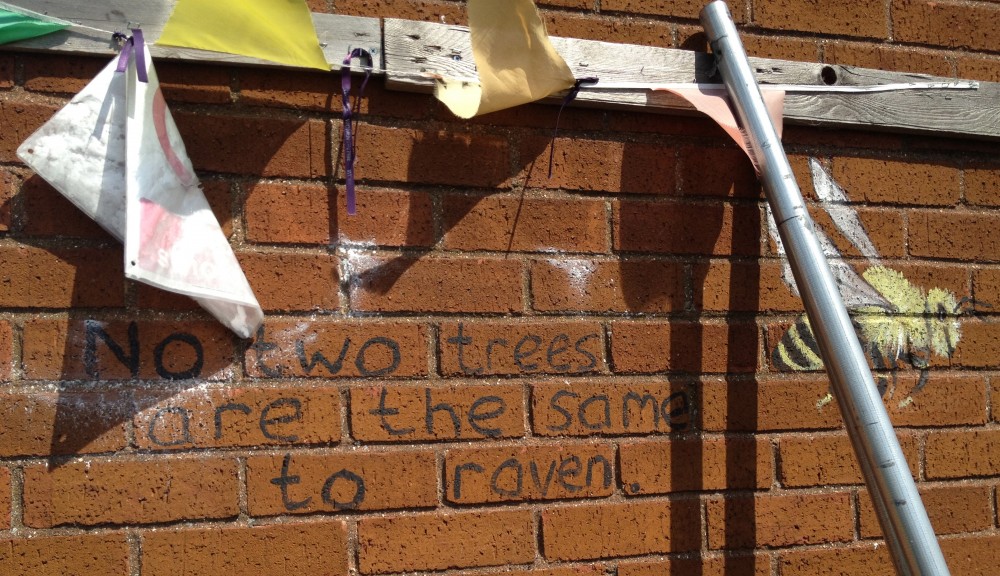
No two trees are the same to raven.

No two trees are the same to raven.

The rare British phenomenon of a blue sky.

Wish this Budgens was close to me, I would shop there for sure. It sponsors a whole lot of good projects in the local community as well as this one; for instance, the store charges 5p for plastic bags and then donates this money to local charities. Other supermarkets like Sainsburys and Asda have visited to learn more about the Food from the Sky project. Unfortunately they have concerns about the health and safety aspect of growing and packing food on a roof rather than in temperature controlled factory facilities, but are keen on the idea of giving the local communities space to grow plants for themselves.

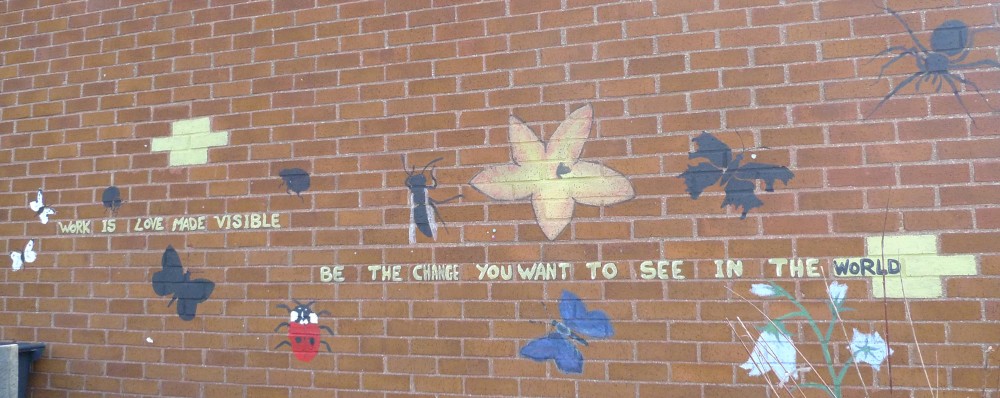
Work is love made visible

Do any of you guys have supermarkets doing projects like this near you?

Posted in Uncategorized | Tagged | 22 Comments

The lost British summer

A lot of British beekeepers must be feeling pretty fed up right now. After a few days of glorious sunshine, the rain and winds returned. My aunt’s house in Aberystwyth (Wales) was flooded after days of endless rain, so she was left pulling up sodden carpets. Now we seem to be in a pattern of occasional sunshine breaking through, combined with rain and gusty winds, usually all in one day, making it impossible to wear a nice summer dress, because it ends up over your head. The London Brockwell Park Apiary blog sums it up well in their recent post, ‘Everything goes wrong again‘: “For the last month or two, just about everyone I’ve bothered to listen to has been full of tales of queens that vanish, fail to mate, lay drones or succumb to idleness”. Yep, British beekeepers are not happy.

Yesterday was a nice day by this year’s standards, by which I mean that the sun came out occasionally and we had strong winds but no rain. Ealing beekeepers sat around eating cake and drinking tea – Emma and I also celebrated our new queen Ginger with a little supplementary gingerbeer.

Our apiary manager, Albert, has returned recently after some time away in Spain. He brought back the frame above from a Spanish hive with him (he thinks it’s either from a Dadant or Warre type hive). Isn’t it huge? They must be weight lifters over there. You can see our tea cups box in the background. Each week a nice person with a car takes them home and washes them.

Andy took this year’s beginner beekeepers from the association’s annual course round the apiary, checking on the new nucleuses and topping up their feed. Our National Bee Unit has issued another warning that inspectors are finding starving bee colonies, as the weather is stopping the bees foraging. They have a good advice leaflet on feeding here: National Bee Unit best practice leaflet on feeding bees.

Andy surrounded by attentive students

In the photo below the beginners are gathering round Andy as he inspects David’s bees, the moodiest hive in the apiary. They kept their cool regardless and I think will make excellent beekeepers.

Emma and I checked our two colonies… Ginger appears to be laying a lot of drone brood, including in the centre of the brood frames, which is a bit worrying. We spotted her, so it’s not a case of a laying worker. And she’s a New Zealand queen bought by John Chapple this year, so she should be properly mated. We’ll need to keep an eye on that. Luckily Neroli is laying like a star, just like her mum and gran did – frames packed with digestive biscuit colour brood. I’m confident we can build her colony up into a good size for winter, but not expecting any honey this year.

There was an interesting article in the Evening Standard this week, ‘Celebrity beekeepers told to buzz off‘. It’s an interview with the forthright Angela Woods, Secretary of the London Beekeeping Association, who warns that there are too many bees for the amount of forage in this city. She’s also concerned about the trend for businesses to site hives on high rooftops, where the bees have to spend a lot of energy flying up and down.

I sometimes wonder whether by being a beekeeper here I’m doing more harm to bees than good. Until fairly recent history the people of London have been rampaged by a series of disease epidemics – bubonic plague, smallpox, cholera, tuberculosis. Anywhere where large numbers of people gather together is a risk factor, and bees are no different. Emma and I obviously try our best to look after our bees and keep parasite and disease levels down, but of course the more colonies there are in an area the quicker diseases spread, due to worker drifting and drones paying visits to other hives.


Bees being inspected in an Omlet Beehaus hive on a roof, photo from thebeatthatmyheartskipped.co.uk blog

Unfortunately, more and more people taking up beekeeping isn’t the answer to help bees, because it results in lower honey yields per hive and the bees having to work harder to find the nectar and pollen. And what about the struggling native bees living here, the solitary and bumble bees, who are having to compete for a limited amount of forage with ever increasing armies of honeybees? Are city beekeepers like me doing more harm than good? Would be interested to hear people’s opinions.

Posted in Uncategorized | 52 Comments

Honeybee Management exam feedback

I applied to receive exam feedback from the British Beekeepers Association on my Module 1 ‘Honeybee Management‘ exam. Even though I passed I like to do this because it’s a chance to get comments from super-insightful expert beekeepers. This year the feedback arrived extra fast and came through my door this week.

Here it is in pdf format, if anyone’s interested: Module 1 feedback – it provides ideal answers for clipping/marking a queen, doing a Pagden style artificial swarm, making up a nucleus, confirming queenlessness, telling the difference between laying workers/a drone laying queen and outlining a ‘Introduction to beekeeping’ talk for beginners.

The examiner’s comments come from Margaret Thomas, who has been keeping bees since 1973 – nearly ten years longer than I’ve been alive. You have to respect that kind of phenomenal experience.

This is the exam paper that I sat: Module 1 March 2012 exam paper.

Posted in Uncategorized | Tagged | 7 Comments

Two hives become one… and then two again!

In my last post on Queen Neroli, our new Jubilee Queen, we had just combined our two hives, because one of the hives was weak and queenless. Yesterday we checked up on how the combining process had gone. Would our bees have chewed through the thin layer of newspaper and become friends?

At first we were worried, because the bees in the top box seemed very moody. They flew out at us, buzzing loudly.What had got them so bad tempered?

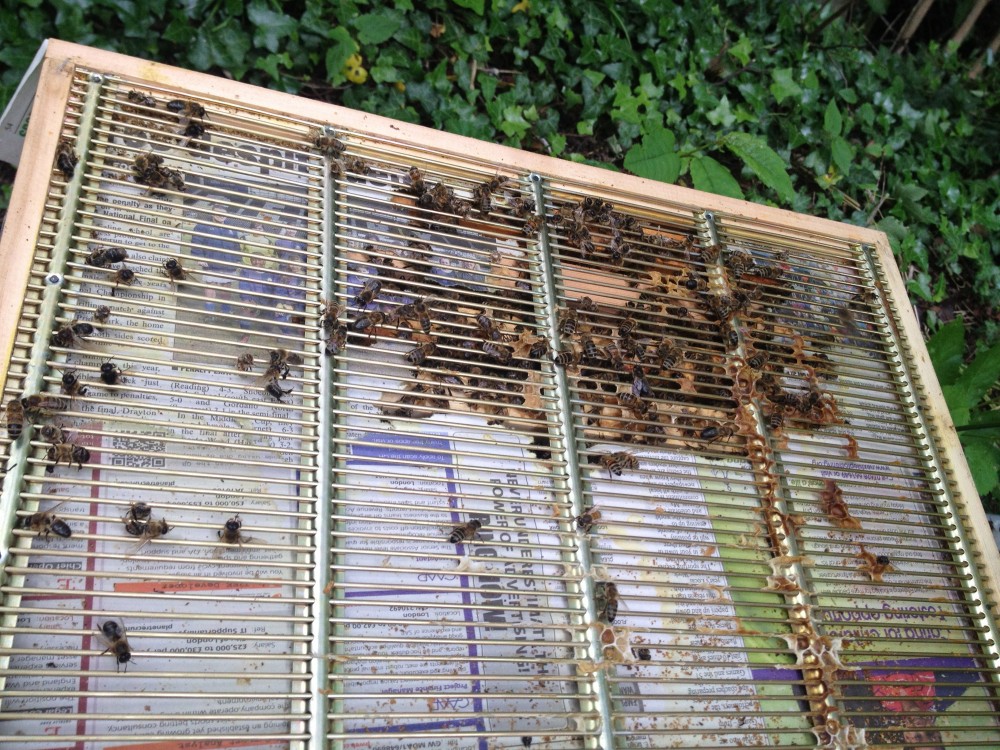
Worse was to come when we lifted the top box out. We had put the queen excluder between the two boxes to weight the paper down before putting the top box on, but we forgot this meant the big, beefy drones couldn’t get out. Several had got stuck trying to get through and had died in the process. That explained why angry bees had flown out at us. Many of them must have been drones deprived of the opportunity to do their business or chase virgin queens for a whole week, poor things.

Bees stuck in the queen excluder

Casualties of beekeeper silliness

With the help of Albert, one of the other Ealing beekeepers, Emma and I thought about what to do for a while. We had been worried by all the angry bees and were wondering if this meant the two colonies didn’t get on. Eventually we reasoned that the problem must just have been the queen excluder trapping the drones, so removed this and the newspaper. We put an empty super box between the two brood boxes, in the hope that the space will encourage the bees to think of the honey stores above as separate from the colony, so that they go up and rob the honey, storing it in the bottom brood box. We can then come along and remove the top brood box and burn up the old frames.

Once this was done, we looked at our new bees. Yes, new bees! Andy and Pat have kindly given us a nuc from Osterley Park. The deal is that they’re our bees, but in return it’ll be an apiary training hive and beginner Ealing beekeepers will be having a go at inspecting them each week. Sounds extremely fair to me 🙂

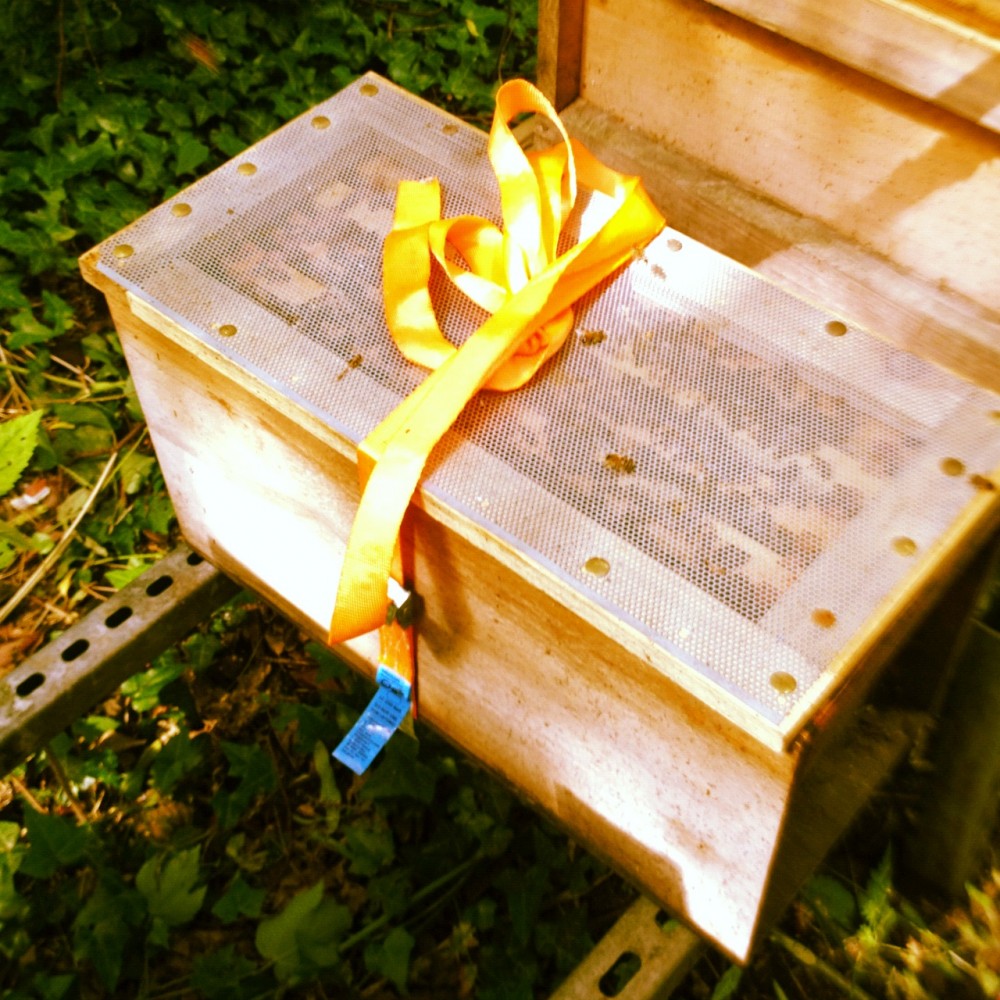
Our beautiful new bees even came “gift-wrapped”! The mesh is a travelling screen designed to allow ventilation, held down with drawing pins. The orange travel strap holds the hive together in transit.

Emma photographing our new bees

They were in a five frame nuc and had filled up every inch with comb, so we transferred them to a spare hive we had waiting, before they started getting ideas of swarming! Osterley bees have a reputation for being particularly vicious, but these ladies were surprisingly calm. Maybe they were easing us in gently. We put the first five frames in nearest to the entrance, gave them an extra frame of foundation to start drawing out, then two dummy boards to keep them warm during the forecast bad weather, followed by more foundation frames to fill in the remaining space.

As Emma moved the frames across she spotted the queen, like Neroli also a bright orange beauty! We have named her Ginger – I may have to make some Ginger beer next week to celebrate – this recipe sounds very good: http://notdabblinginnormal.wordpress.com/2012/05/26/make-your-own-ginger-beer.

Posted in Uncategorized | 24 Comments

Book review – ‘Travels in Blood and Honey: Becoming a beekeeper in Kosovo’ by Elizabeth Gowing

Recently I visited Albania, which is one of the Balkan countries. As Elizabeth Gowing explains in her book ‘Travels in Blood and Honey: Becoming a beekeeper in Kosovo‘, in Turkish, bal means ‘honey’ and kan means ‘blood’.  “The story, almost certainly untrue, goes that when the Turks arrived in the Bal-kans, they immediately saw the potential of a fertile land where you can be happy sipping sweet nectar.  Only when they had discovered how hard they would have to fight to subdue, and eventually lose, the territory, did they understand its second syllable.  And that is how the region got its full name, the land of blood and honey.”

Travels in Blood and Honey book cover

The history of Albania is one of occupation. Despite being only a small country (around the size of Wales) and protected by mountainous borders – along which wolves still roam in a few remote areas – it has long been desired by outsiders. It is bordered by Montenegro to the northwest, Kosovo to the northeast, the Republic of Macedonia to the east, Greece to the south and southeast, and separated from Italy only by the narrow Adriatic Sea. The Turks occupied the land for 500 years, extracting high taxes, and more recently a communist regime was in place until 1991. Under the Communist Party of Albania, leaving the country or owning a personal car was forbidden and many Albanians were imprisoned for years in work camps and jails. Our guide in Albania, Artem, told us that he read smuggled-in copies of 1984 and Brave New World at home in brown covered paper. He learnt English by listening to the BBC World Service on the radio.

Travels in Blood and Honey is not just about beekeeping, it is about everything Elizabeth Gowing experienced while living in Kosovo whilst her husband worked as the Prime Minister’s advisor. It’s about the people, the politics, the language and a lot about the eating. There are many traditional recipes in it involving Balkan favourite ingredients like honey, nuts, butter and yogurt. With the exception of Baklava, I had not heard of any of these dishes before, but I intend to try making some of them.

I think non-beekeepers would enjoy this book just as much as beekeepers, but for those of you who do keep bees, here’s an extract from p168:

“When we arrived at Rexhep’s house, he was bemused but hospitable. He took us around his hives, which were stacked up on the slope near his house. I got out my protective clothing and he sneered a little in the most polite way. He himself was walking round in casual black clothes – the colour I had been told bees are most likely to attack; his jumper was made of wool, apparently a material which also incites bees to sting. He offered to open up a hive, and from behind my mesh hood I accepted happily….As he got out a pack of Marlboro, I discovered that Rexhep’s was the open-necked, cowboy approach to beekeeping. Lighting up, he puffed some of the cigarette smoke out over the bees. A bit of fag ash dropped into the honey cells at the same time, but he wasn’t bothered. The smoke seemed to work, and nothing flew out on the attack as we looked at the bees busy inside the hive.”

To have a land of honey you need two key things – flowers, and bees. Of course I couldn’t restrain myself from trying to take photos of both in Albania. Poppies may grow elsewhere in Europe but they seemed to flower more intensely and exuberantly there, clinging to every nook and crevice they could find, their little heads bobbing bright red in the sun. And not just poppies but every imaginable type of wild flower too, scattered across the road edges and hill tops.

Albanian honeybee on a poppy

Albanian honeybee on clover

But flowers are constantly disappearing in Albania, as well as springing up. It’s a poor country and a certain amount of corruption goes on. One way of money laundering is to construct houses, and everywhere you go half finished or empty concrete structures loom up along the road side. Although there are national parks, the government does not police them, so logging is a serious problem. I hope in the long run the beautiful countryside and the gentle hum of bees amongst flowers is not lost completely.

Posted in Uncategorized | Tagged , | 19 Comments

Long live Queen Neroli, our Jubilee Queen

I went to Albania and a lot happened while I was away! Our naughty queen Lavender decided to swarm when our backs were turned. And Emma had to put Queen Myrrh to rest and give her hive a new queen cell, because she had not managed to mate successfully amidst all the rain. Emma has a great blog post about all this action here: The Bad Beekeepers Club. Oh yes, something else that changed while I was away…the never-ending rain finally stopped, sunshine broke out here and rain came to Albania.

So we had a lot to do during our inspections yesterday. Emma has kindly let me use her brilliant photos here.

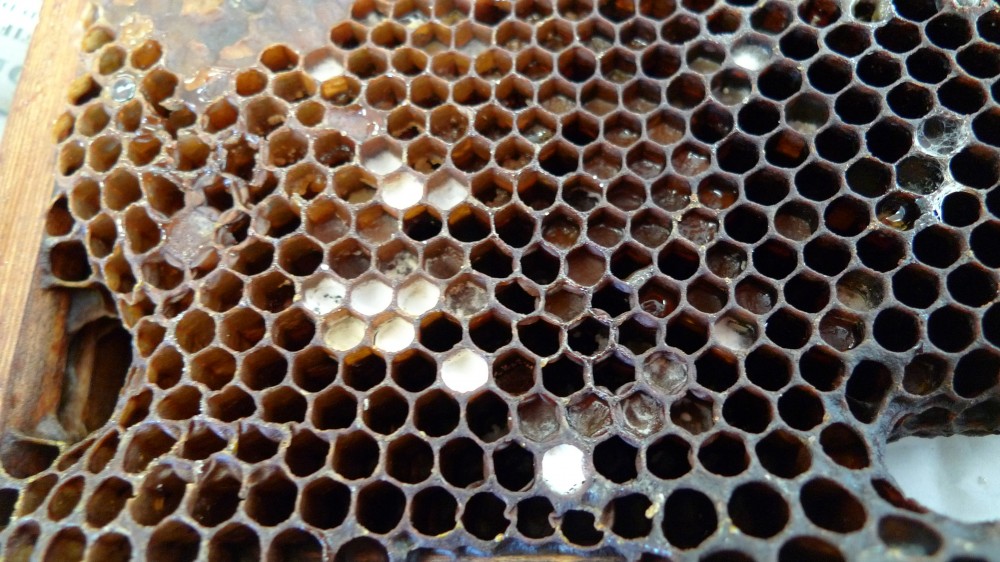
This was the queen cell Emma took from Lavender’s swarmed hive two weeks ago and put in Myrrh’s old hive. Alarm bells were ringing at the sight of it still being capped. It was already capped two weeks ago; the queen should emerge eight days after the cell is first capped. Sometimes the workers can keep adult queens trapped within the cell by thickening the wax topping, but that is generally done if the colony is considering throwing multiple casts, or after-swarms. That would not have been the case in this little hive.
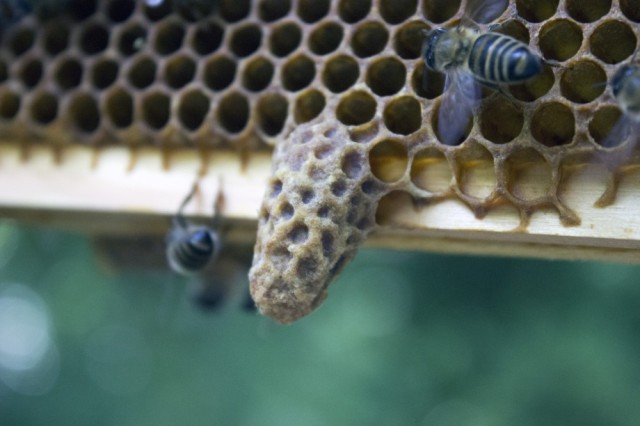
Un-emerged queen. Copyright Emma Tennant.

We asked John Chapple’s advice. He instructed us to shake the bees off the frame and then gently cut the tip of the queen cell off with a hive tool to see what was inside. The queen revealed was obviously a goner, and had been for some time. “I’m no expert” (hah!) John said, “but that looks like black queen cell virus”. Having looked it up at home, this is a virus associated with the spore disease nosema, which is worrying. You can see her tattered wings and black body below.
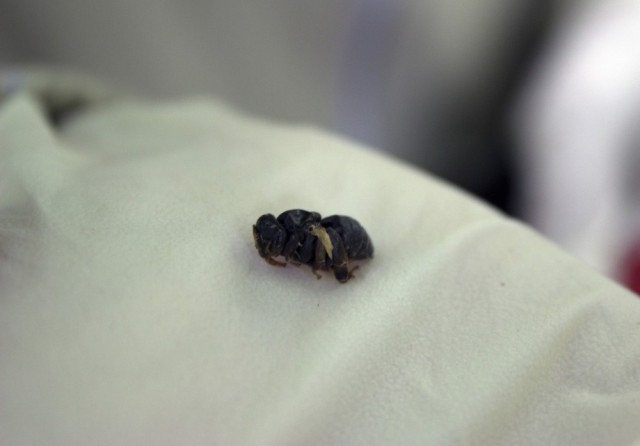
This queen possibly died from Black queen virus. Copyright Emma Tennant.

Another odd thing was found within this hive; I gave Emma quite a jump when I held it up on my hand! It’s not a monster, merely a dead bumble bee I found on the floor of the hive. I asked John about it and he explained her black, shiny body was due to our bees having pulled all her hair off whilst attacking her. She was probably hungry and our bees didn’t take kindly to a robber. A sad ending for a beautiful beast.
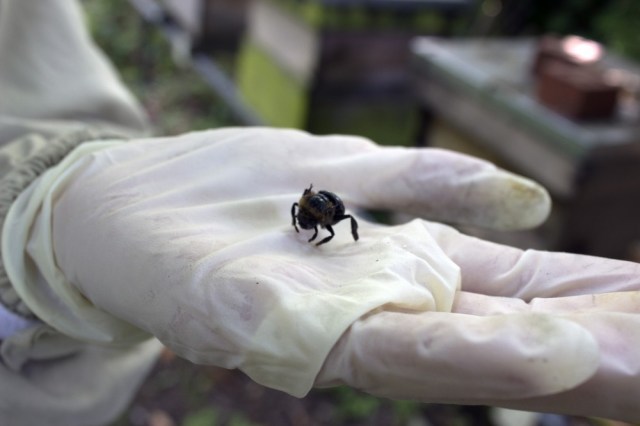
Dead bumble bee. Copyright Emma Tennant.

It has now been over a month since this hive had a properly laying queen. We had wanted them to produce their own new queen rather than buying in a queen from a different climate, but the weather was against us and this attempt failed. We decided to combine the dwindling bunch of bees with our queen-right colony, using the newspaper method. This technique is much loved among beekeepers for its simplicity and cheapness, advantages close to all true beekeepers’ hearts.
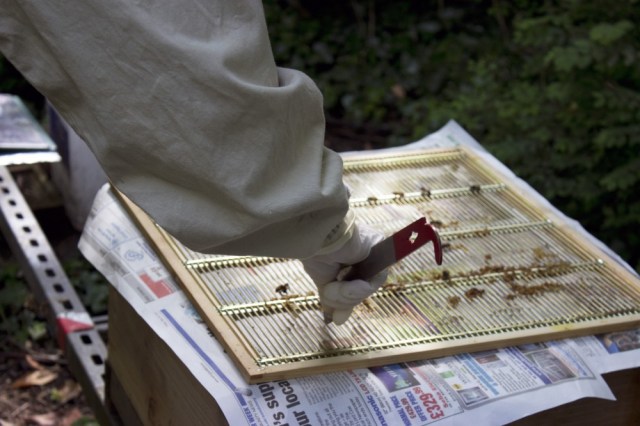
Copyright Emma Tennant.

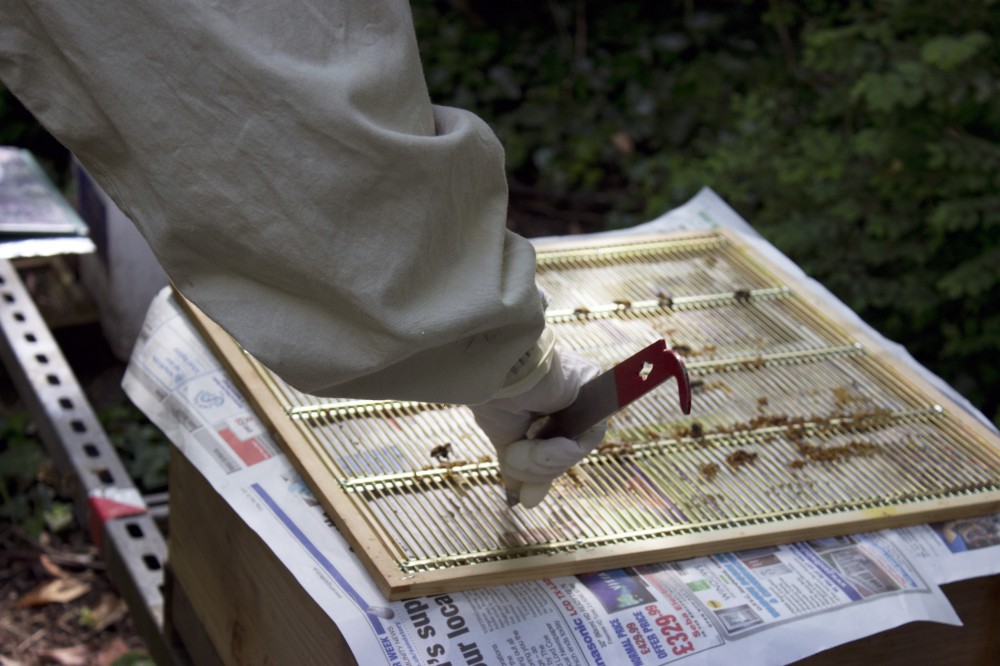
Some newspaper is placed on top of the brood box you wish to add extra bees to. “It’s not the Times”, John commented. No indeed, it was my local free newspaper. That’s how cheap I am. Next, a few little holes can be made in the newspaper with a hive tool. Don’t go too crazy with the holes, as the idea is that the bees chew though the paper gradually and slowly become accustomed to each other’s smell, preventing fighting.
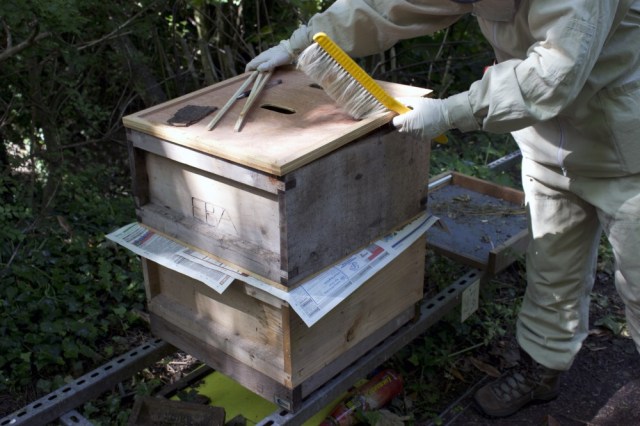
Combining two hives using the newspaper method. Copyright Emma Tennant.

Ta-da! And so two hives become one. By the time we inspect next week they should have chewed through it all and become friends.

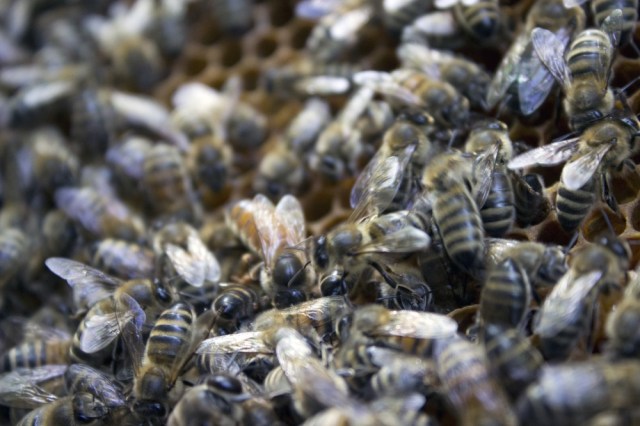
I should also introduce our new ruler in Lavender’s old hive. When her retinue decided to swarm and leave us, they left behind some queen cells, which Emma sensibly reduced down to two. I peeked in the hive last week and was lucky enough to spot our new queen. She was still a virgin, so a stubby little thing, but more shockingly than that… ginger. I mentally blinked several times, because many generations of our previous queens have been long dark beauties, black as can be. And here was a vibrant red head!

When we looked in yesterday, we were delighted to find she had mated and grown up into a spectacular queen. I am quite prepared to forgive her for being ginger. We have named her Neroli. This was Emma’s idea, as Neroli is an oil produced from the blossom of the bitter orange tree. I think it’s a beautiful name. From Wikipedia: “By the end of the 17th century, Anne Marie Orsini, duchess of Bracciano and princess of Nerola, Italy, introduced the essence of bitter orange tree as a fashionable fragrance by using it to perfume her gloves and her bath. Since then, the term “neroli” has been used to describe this essence. Neroli has a refreshing and distinctive, spicy aroma with sweet and flowery notes.”
Queen Neroli! Copyright Emma Tennant.

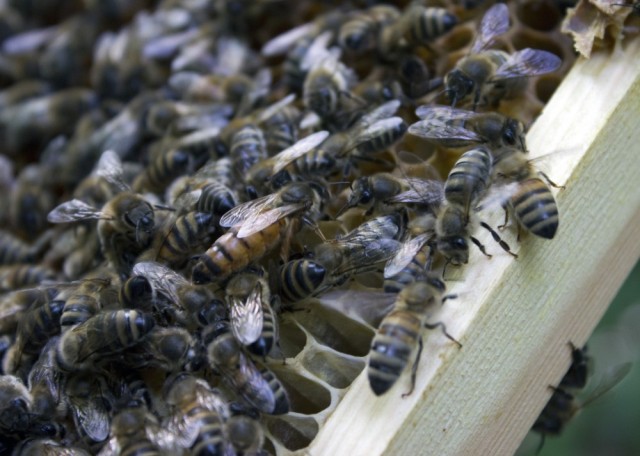
Here she is amongst her dark sisters. Her first daughters are currently mere neatly laid eggs. It will be fascinating to see what colour they turn out. Lavender had obviously mated with some New Zealand drones, but which drones will Neroli have mated with?
Copyright Emma Tennant.

And so we have a new Jubilee Queen! The Diamond Jubilee is this weekend, marking 60 years of Queen Elizabeth’s reign. The nation is celebrating with two extra days off and a lot of drinking. I’m not expecting Queen Neroli to last as long, but I’m hoping she gives life a good go.

Finally, a shout out to Roger at Talking with Bees – www.talkingwithbees.com. This is a new blog which I’ve started following recently and am really enjoying. Roger describes his beekeeping self as “relatively sane with a hint of obsessive enthusiasm”, which I think gives you an idea of his sense of humour. He is very honest about sharing his fears and trepidations on his path to ‘beemanliness’. For those of you interested in the Omlet Beehaus, he has a very nice review of it here: www.talkingwithbees.com/beekeeping/beehaus-review.
Posted in Uncategorized | 24 Comments

National Bee Unit Varroa Workshop – Part 4 – The enchanted garden

After our day of workshops on the evil little varroa mite, Emma and I were itching for a chance to catch the last rays of sunshine in the Roots & Shoots garden, a horticultural training centre for young disadvantaged students.

We were lucky enough to meet David Perkins on our way round. David runs an Environmental Education outreach programme and manages the wild part of the garden for Roots & Shoots, keeping it welcoming for wildlife. It soon became clear that he knows an incredible amount about solitary and bumble bees. Below are some shots from his garden, which would just be the best garden ever for a child, because it features all sorts of overgrown paths and even a very dangerous dragon’s den…

In the ‘safe’ part of the garden, away from the dragon’s fire, we came upon a flurry of bees feeding from an apple tree hedge. After taking several blurry shots I was quite pleased with the one below of two honeybees. Bees may not be the most dangerous subjects for a wildlife photographer but they must be one of the fastest!

Honey bees on apple flowers

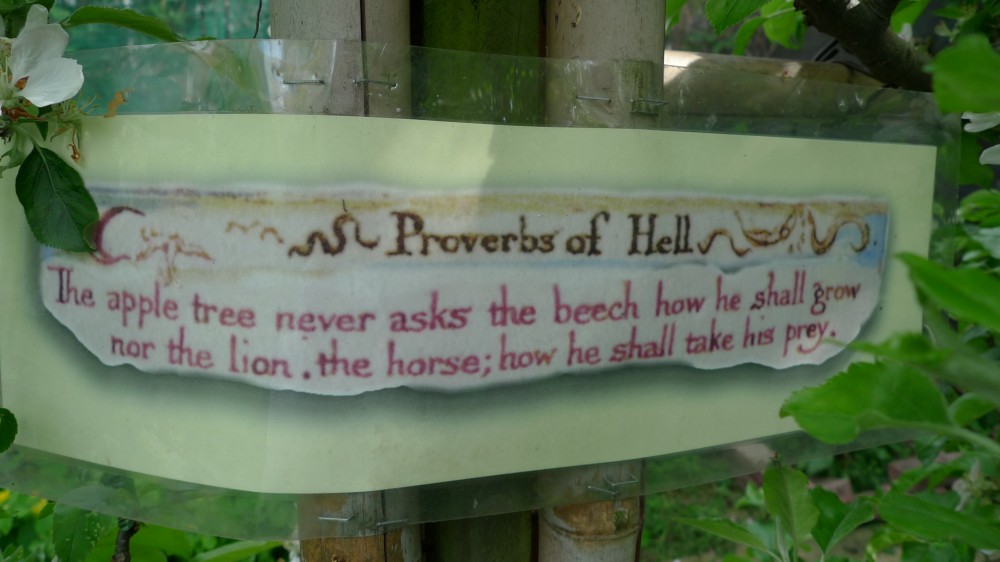
The garden was full of fascinating little signs like this. The more I read this proverb, the more I’m not sure I understand it fully; can anyone explain it to me?

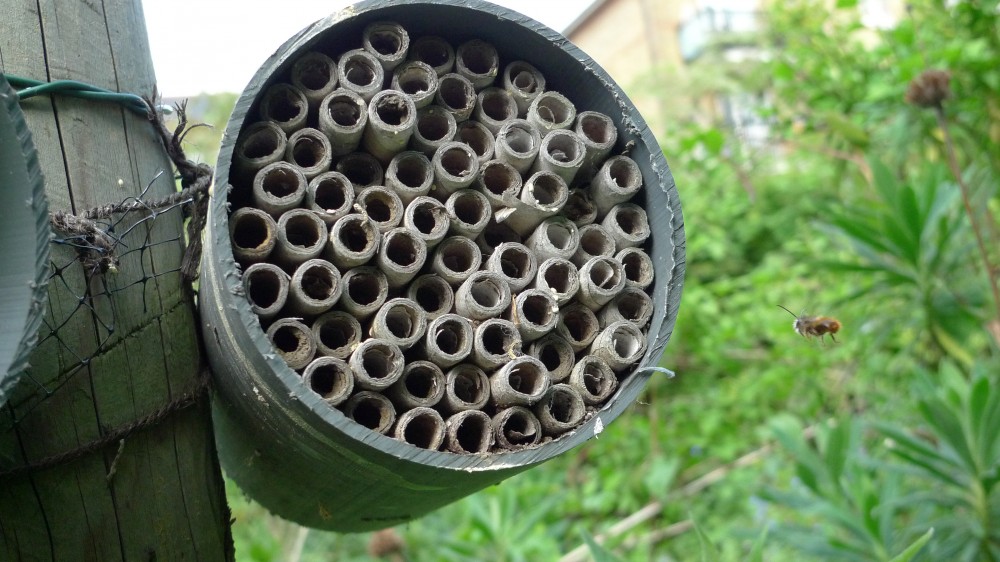
Now this, this is David’s solitary bee home, or should I say castle. It is a copy of the Trellick Tower in London. When I said David knew a lot about bees…

Below you can see how some of the holes have been inhabited and contain mud, which solitary bees collect from the nearby pond. David explained to us that in many species of solitary bees males and females need different size holes. Males are slightly smaller than females. They hatch out earlier in the year to be ready for the females, so at this time of year there’s more males than females. We saw one male trying to approach a female but she shook him off; David said this was probably because she had already mated.

In the picture below you can see a red mason bee zooming home on the right hand side of the pic. There were lots of these lovely furry red bees.

David opened up the side of the bee tower so we could see the tubes inside. He didn’t get time to tell us much about them, but I’m guessing the yellow stains will come from pollen.

I was really saddened when David told us that his camera has recently been stolen, along with hundreds of bee photos on it. He came across as such a kind, gentle man and has given so much to the local community through his work in the garden. I hope he can afford to get a new camera soon.

Posted in Uncategorized | 12 Comments

National Bee Unit Varroa Workshop – Part 3 – Honeybee viruses

Part three in this series of posts about the varroa workshops given by National Bee Unit inspectors at a special training day last Sunday. After lunch, sitting outside in the sunshine of the gorgeous Roots & Shoots garden, we went back inside for a bee viruses workshop with NBU bee inspector Caroline Washington.

Varroa mites help transmit several viruses to bees. These include deformed wing virus, sacbrood and acute bee paralysis virus. In Caroline’s opinion bee virus infection rates have got worse in the past 3-4 years. She believes the reason for this is more beekeepers, and more beekeepers not treating for varroa. This is a particular problem in big, crowded cities like London, where disease spreads fast. To help honey bees we don’t really need more beekeepers, we need better trained beekeepers prepared to look after their bees. And more flowers of course.

Sacbrood

Also known as “chinese slipper”, because the infected larvae swell up and become fluid filled sacs lacking in the segmentation of healthy larvae. They then eventually die and begin to dry out, turning a dark brown to black colour, giving rise to characteristic ‘Chinese slippers’ or ‘gondola-shaped’ scales. The NBU’s Beebase Sacbrood page has some photos. Not a serious disease, as many hives have little patches of it. If it becomes a larger problem, it’s best to requeen or shake the colony onto clean comb.

A frame of sacbrood which Caroline passed round. We used tweezers to pull the dead larvae out.

Deformed wing virus

The major virus in the UK. Bees with deformed, shrivelled wings cannot fly and only live a few days. There are two main ways of transmitting the virus: horizontal and vertical.

Horizontal transmission is when infected bees pass the virus on through feeding brood or feeding other adult workers, drones and queens.

Vertical transmission results after a queen becomes infected during mating and subsequently her eggs are infected.

Some bees with deformed wings which Caroline passed round. Their poor little wings look like withered, tattered flakes.

Deformed wing virus effects

The deformed bees were on the comb below. Note the perforated cappings, a sign that the workers have detected that something is wrong and tried to begin uncapping the larvae.
Mmm nice white mouldy pollen.

Chronic bee paralysis virus (CBPV)

If you see dark, hairless bees, they could be infected. Other workers will nibble their hair off because they smell different.

Long periods of bad weather and overcrowding in a colony can contribute to chronic paralysis. There are two forms of paralysis:

  1. Crawling bees with bloated abdomens and dislocated wings
  2. Dark, hairless, shiny bees rejected at the entrance (not to be confused with robber bees)

Both forms can appear in the same hive. Robber bees can also have a lack of hair from being involved in fights, but bees infected with chronic paralysis virus will be unable to fly properly. See the NBU’s Beebase CBPV page for photos and more information.

Has anyone reading this seen symptoms of any of these viruses in your hives? Emma and I had some sacbrood in Rosemary’s hive during the bad spring weather this year.

Related posts:

Posted in Disease prevention | Tagged , | 8 Comments